
Container Gardens
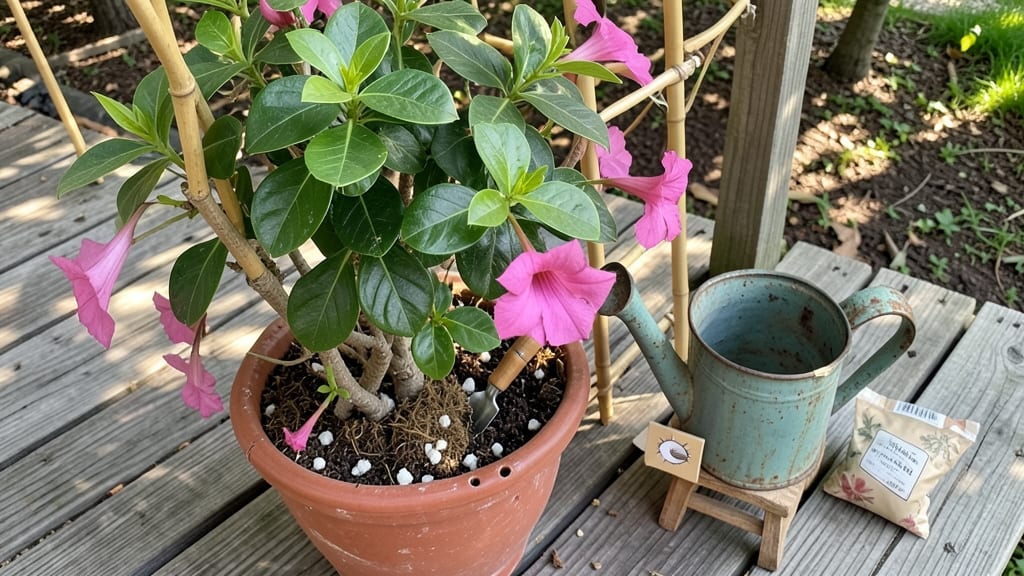
Caring for Mandevilla in pots turns your patio into a tropical paradise—nonstop blooms from spring to frost. 🌸 I’ve grown these vines for years, and the secret isn’t complicated: match their love of sun, warmth, and well-draining soil.
Skip the heavy pots, and you’ll get lush, flowering vines that climb or spill beautifully year after year.
Start with a 10-15 gallon pot (or larger for mature plants) and fast-draining mix—equal parts potting soil, perlite, and orchid bark. Mandevilla hates soggy roots, so add a 2-inch layer of gravel at the bottom.
Place in full sun (6+ hours daily)—they’ll reward you with trumpet-shaped blooms in pink, red, or white within weeks.
Water when the top inch of soil feels dry, but never let them sit in water—this is the #1 killer. Feed monthly with balanced liquid fertilizer (10-10-10) during spring and summer, and trim back leggy growth after blooming to encourage bushier, more vibrant vines.
Overwintering is easy: move pots indoors near a south-facing window or bright grow light, reduce watering, and prune lightly. Even in containers, these vines bounce back stronger every season—foolproof once you get the basics right.
📚 In This Guide
- What you need
- Instructions
- Tips and common mistakes
- Wrapping up and next steps
What you need
- ● Pot: A well-draining container with drainage holes (minimum 12-inch diameter for mature plants; larger pots for multiple vines). Opt for terracotta or fabric pots to prevent root rot.
- ● Potting Mix: A lightweight, airy blend like a 50/50 mix of cactus/succulent mix and perlite (or add orchid bark for extra drainage). Avoid heavy garden soil!
- ● Mandevilla Plant: Choose a healthy vine (bare-root or potted) from a nursery. Look for vibrant green leaves and no signs of pests.
- ● Support Structure: A trellis, bamboo stake, or obelisk (at least 4-6 feet tall) to guide the vine’s growth.
- ● Fertilizer: A balanced, water-soluble fertilizer (e.g., 20-20-20) or a slow-release granular fertilizer for container plants.
- ○ Mulch (Optional but Helpful): Orchid bark or pine straw to retain moisture and regulate soil temperature.
- ● Gloves: To protect your hands from thorns (Mandevilla can be prickly!).
- ● Trowel or Spade: For repotting or mixing soil.
- ● Watering Can or Hose with Gentle Nozzle: Avoid overwatering—bottom watering is ideal!
- ● Pruning Shears: Sharp, sterilized shears for trimming dead blooms or shaping the vine.
- ● Spray Bottle (for Humidity Lovers): If your climate is dry, mist the leaves occasionally to mimic tropical conditions.
- ● Pest Control: Neem oil or insecticidal soap (just in case aphids or spider mites pay a visit).
- ● A sunny spot (at least 6 hours of direct sunlight daily—Mandevilla is a sun-worshipper!).
- ● Access to warmth (Mandevilla thrives in USDA Zones 9-11; in colder climates, grow it as an annual or bring it indoors for winter).
- ● Patience! These vines can take a few weeks to establish and months to bloom nonstop—but it’s worth the wait! 🌸
Step-by-Step instructions for cultivating thriving mandevilla in containers
Sunlight-loving mandevilla vines reward patience with vibrant blooms—here's how to keep them flourishing in pots.
☀️ Step 1: Position for Maximum Sunlight
Mandevilla demands full sun exposure—6+ hours daily—to produce its signature trumpet-shaped flowers. Place pots in a south- or west-facing location where they receive direct sunlight. If growing indoors near a window, rotate the pot quarter-turn weekly to prevent lopsided growth toward the light source.
You'll notice the plant's leaves darken and stems thicken when sunlight is sufficient. In cooler climates, bring pots indoors before nighttime temperatures drop below 50°F, as frost will kill the plant instantly. A covered patio or greenhouse extends the outdoor season by several weeks.
💧 Step 2: Master the Watering Balance
Water mandevilla when the top 1-2 inches of soil feel dry to the touch—overwatering is the fastest way to kill these tropical vines. Stick your finger into the soil; if it's damp at that depth, wait another day. Use room-temperature water to avoid shocking the roots, and ensure pots have drainage holes to prevent soggy soil.
During peak summer heat, you may need to water every 2-3 days, but reduce frequency in winter when growth slows. Yellowing leaves often signal overwatering, while crisp edges indicate underwatering. Adjust your schedule based on the plant's response—mature mandevilla can handle brief dry spells better than soggy conditions.
🪴 Step 3: Fertilize for Continuous Blooms
Feed mandevilla with a balanced liquid fertilizer (10-10-10 or 20-20-20) every 2-4 weeks during active growth (spring through fall). Dilute to half-strength to avoid burning delicate roots. I switch to a low-phosphorus formula (5-1-5) in late summer to encourage more blooms rather than leafy growth.
Stop fertilizing in winter when the plant enters dormancy. You'll see new flower buds form within 4-6 weeks of consistent feeding. For container-grown plants, I add a slow-release granular fertilizer at planting time to provide steady nutrients without frequent applications.
✂️ Step 4: Prune for Shape and Health
Prune mandevilla after the first flush of blooms in spring and again in midsummer to maintain shape and encourage bushier growth. Cut back leggy stems by one-third to promote branching. Use clean, sharp pruners to make cuts just above a leaf node—this is where new growth will emerge.
Remove any yellow or brown leaves immediately to prevent disease. You'll notice new shoots appear within 2-3 weeks of pruning, signaling the plant is responding well. In colder climates, prune back by half before bringing pots indoors for winter.
🌿 Step 5: Overwinter with Care
When nighttime temperatures drop below 50°F, move mandevilla indoors to a bright location with 50-60°F temperatures. Reduce watering to every 10-14 days and stop fertilizing entirely. You'll see growth slow dramatically, but the plant remains alive and ready to rebound in spring.
Keep the plant away from drafts or heating vents, which can dry out the leaves. Mist occasionally if indoor air feels dry. In late winter, resume regular watering and fertilizing as new growth appears—this is your cue that the plant is breaking dormancy and ready for another blooming season.
Tips & tricks for thriving mandevilla in containers
Real talk: Mandevilla might look delicate, but it’s a tough survivor once you get the basics right. These small adjustments make all the difference between a struggling vine and one that blooms nonstop.
Container Upgrade: While terracotta pots are ideal, plastic containers work too—just add extra drainage holes and use a cactus/succulent mix (amended with perlite) to improve airflow. I’ve seen mandevilla thrive in hanging baskets with 3-4 inch holes drilled in the bottom, but they need weekly checks for root rot since they dry out faster. The key is matching the container’s material to your climate—terracotta in humid areas, plastic in dry ones.
Light Strategy: If you’re in a high-rise apartment with limited outdoor space, supplement natural light with a grow light (12-14 hours/day) during winter. Position it 12-18 inches above the plant and use a timer to mimic daylight. I’ve kept mandevilla blooming indoors all winter this way, but watch for stretched stems—this means it’s reaching for more light. Rotate the pot weekly to prevent lopsided growth toward the window.
Watering Wisdom: The 10-minute drainage test in Step 1 is non-negotiable, but here’s what I’ve learned: If your tap water is hard (high mineral content), use it to water the soil first, then drain and refill with fresh water. This reduces salt buildup that can damage roots over time. For indoor plants, I add a drop of dish soap (mild, no fragrance) to the water monthly to prevent fungal growth—it’s a gardener’s secret.
Pruning Payoff: When pruning in Step 4, save those cuttings! Dip them in rooting hormone and place in moist perlite for 4-6 weeks to propagate new plants. I’ve grown three new mandevilla vines from a single pruning session this way. Just keep them in bright, indirect light until roots form—you’ll see new growth within 3-4 weeks if done right. The bonus? These baby plants bloom faster than seeds!
Pro Tips for Care For Mandevilla In Pots
- Real talk: Mandevilla might look delicate, but it’s a tough survivor once you get the basics right.
- Container Upgrade: While terracotta pots are ideal, plastic containers work too—just add extra drainage holes and use a cactus/succulent mix (amended with perlite) to improve airflow.
- Light Strategy: If you’re in a high-rise apartment with limited outdoor space, supplement natural light with a grow light (12-14 hours/day) during winter.
Frequently asked questions
Got questions about keeping your potted Mandevilla thriving?
Here are answers to the most common ones—so you can enjoy those stunning blooms all season long!
How cold can Mandevilla tolerate in pots before it dies?
Mandevilla hates cold—anything below 50°F (10°C) can damage it, and frost (32°F/0°C) will kill it instantly. If temps drop near freezing, move pots indoors or cover them with frost cloth. Pro tip: Even mild chills (40s°F) may slow growth and budding.
Why are my Mandevilla leaves turning yellow?
Yellow leaves usually mean overwatering or poor drainage. Check the soil—if it’s soggy, let it dry out before watering again. Yellowing can also signal nutrient deficiency (try a balanced fertilizer) or too much sun (move to partial shade). Brown edges? That’s often underwatering or dry air.
Can I grow Mandevilla indoors year-round?
Yes, but it needs bright, indirect light (like near a south-facing window) and high humidity (mist leaves or use a pebble tray). If indoors, reduce watering slightly—potted plants dry out slower inside. Warning: Mandevilla craves outdoor heat; indoor blooms may be sparse without proper conditions.
When and how should I prune my potted Mandevilla?
Prune in early spring (before new growth) to shape the plant and encourage bushiness. Cut back 1/3 of the stems to healthy leaves or buds. Deadhead faded flowers regularly to promote more blooms. Pro tip: Wear gloves—Mandevilla sap can irritate skin!
What pests should I watch for on potted Mandevilla?
Keep an eye out for aphids, mealybugs, and spider mites. Wipe leaves with soapy water or spray with neem oil for mild infestations. Prevention tip: Inspect new plants before bringing them home, and avoid overcrowding pots (which attracts pests).
How often should I fertilize potted Mandevilla?
Feed every 2–4 weeks during spring and summer with a balanced liquid fertilizer (like 20-20-20). Cut back in fall and winter—over-fertilizing can burn roots. Bonus: A phosphorus-heavy fertilizer (like 10-30-20) boosts blooms!
Wrapping up and next steps
Caring for Mandevilla in pots is all about balancing sunshine, water, and a little TLC—and the reward? Stunning, continuous blooms that’ll make your patio the talk of the neighborhood! 🌸 With the right container, well-draining soil, and a few seasonal tweaks, your vine will thrive year after year.
Now that you’re armed with the know-how, roll up your sleeves and give it a try—your future self (and your plants!) will thank you.
Ready to level up your container garden? Next, explore how to propagate Mandevilla or check out creative ways to train your vine for even more drama! 🌿