
How To
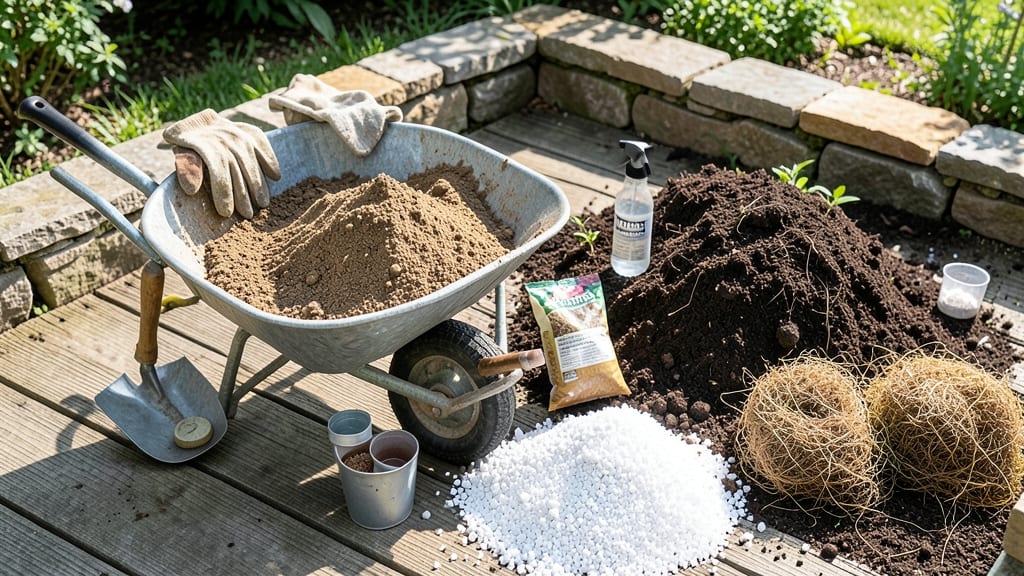
Making potting soil at home saves money and grows stronger plants. 🌱 I used to buy bags of store-bought mix, but after my ferns kept wilting, I discovered the secret: custom-blended soil holds moisture better and drains just right. The right combination keeps roots happy and plants thriving—no more guesswork.
Start with a base of peat moss or coconut coir (both hold moisture well), then add perlite or vermiculite for drainage. Mix in compost for nutrients, and adjust with sand if your plants need extra aeration.
My favorite ratio is 50% peat, 20% perlite, 20% compost, and 10% sand—but tweak it based on what you're growing. The payoff is immediate: plants grow faster, stay healthier, and you avoid the mystery ingredients in store-bought mixes.
Plus, you can repurpose coffee grounds, crushed eggshells, or even shredded newspaper for extra nutrients—zero waste, all gain. Works for seedlings, houseplants, or container gardens. Here's how to mix it right the first time—no fancy tools needed!
What Makes Store-Bought Soil Fall Short
Even the best commercial potting mixes can’t compete with custom-blended soil tailored to your plants’ needs. If you’ve ever wondered why your plants thrive in homemade soil but struggle in store-bought mixes, the answer lies in three key factors: nutrient depletion, poor drainage, and lack of organic diversity.
Let’s break down why standard potting soil often fails—and how you can fix it at home.
Store-bought potting soil is designed for short-term use, not long-term plant health. Here’s why it loses nutrients fast:
- Sterilization kills microbes: Commercial mixes are often heat-sterilized to prevent weeds and pests, but this also destroys beneficial bacteria and fungi that break down organic matter into plant-available nutrients. Without these microbes, your plants miss out on critical nitrogen, phosphorus, and potassium cycles.
- Limited organic matter: Most pre-made soils rely on peat moss or coconut coir as a base, which are inert and don’t replenish nutrients. Over time, these materials leach out minerals (like magnesium and calcium) when watered, leaving your plants hungry.
- No compost or worm castings: Homemade soil includes aged compost or worm castings, which are packed with micronutrients (zinc, iron, copper) and slow-release organic matter. Store-bought mixes often skip these, forcing you to rely on synthetic fertilizers.
Actionable fix: Boost your homemade mix with 10–20% compost or 5–10% worm castings to restore microbial activity and nutrient density.
If your plants wilt after watering or develop root rot, the issue is likely poor aeration and water retention. Here’s why commercial soil often fails:
- Too much peat or clay: Peat moss holds water but doesn’t allow oxygen to reach roots. Clay-based soils, while nutrient-rich, can become waterlogged and anaerobic, suffocating roots. Many store-bought mixes use these as fillers without balancing them with permeable additives.
- Lack of perlite/vermiculite: These porous minerals create air pockets for roots to breathe. Skipping them in homemade soil is a common mistake, but commercial mixes often underuse them to cut costs.
- No coarse material for structure: Sand or chopped bark improves drainage, but many pre-made soils rely on fine, dense particles that compact over time, reducing oxygen flow.
Actionable fix: Add 20–30% perlite or coarse sand to your mix to prevent compaction. For heavy clay soils, mix in chopped pine bark or rice hulls for long-term structure.
Plants don’t just need nutrients—they thrive on a diverse ecosystem of organic materials. Here’s what’s missing in most store-bought soil:
- No biochar or charcoal: This porous carbon-rich material improves water retention and microbial activity. Many commercial mixes exclude it because it’s expensive, but it’s a game-changer for long-term soil health.
- Limited plant-specific amendments: A succulent mix needs gritty sand, while a tomato plant craves nitrogen-rich compost. Generic potting soil can’t cater to all needs, leading to stunted growth or pests.
- No mycorrhizal fungi: These beneficial fungi form symbiotic relationships with plant roots, enhancing nutrient uptake. They’re often absent in sterilized commercial soil but thrive in homemade compost.
Actionable fix: Customize your mix with plant-specific amendments:
- For vegetables/herbs: Add alfalfa meal or fish emulsion for nitrogen.
- For succulents/cacti: Mix in pumice or lava rock for drainage.
- For acid-loving plants (azaleas, blueberries): Use pine bark fines and sphagnum peat.
By understanding these three core weaknesses in commercial soil, you can craft a custom blend that outpaces store-bought mixes in nutrients, drainage, and microbial life. The result? Healthier plants, fewer pests, and less waste—all from your backyard!
Quick Fixes for Common Soil Mix Mistakes
When your homemade potting soil isn’t quite right, don’t toss it out—just tweak it! Below are practical solutions for the most common issues, paired with prevention tips to keep your mix perfect next time. 🌱✨
Cause: Overpacking organic matter or using too much clay-heavy soil. Fix:
- Fluff it up: Gently loosen the mix with a garden fork or your hands. Avoid compacting it further.
- Boost aeration: Stir in perlite, vermiculite, or coconut coir (10–20% of the mix). These add air pockets without altering moisture retention.
- Prevention tip: 💡 Use a 50/50 ratio of organic (compost/peat) to inorganic (sand/perlite) materials to start. Test drainage by squeezing a handful—if water drips slowly, add more perlite.
Cause: Overusing sand, bark, or pine fines, which repel water. Fix:
- Bind it together: Mix in 1–2 cups of compost per gallon of soil or add 1 part peat moss or coconut coir to balance drainage.
- Try a "glue" hack: 👨🍳 Wet the mix, then add 1 tbsp of unsalted butter or a spoonful of hydrogel crystals (expands to hold water).
- Prevention tip: ✨ For sandy mixes, pre-wet components before combining to encourage even distribution.
Cause: Excess peat moss, compost, or lack of coarse materials. Fix:
- Dry it out: Spread the mix in a thin layer on a tarp and let it air-dry for 1–2 days. Break up clumps with a fork.
- Add grit: Blend in coarse sand, perlite, or chopped pine bark (20–30% of the mix). For heavy clay soils, crushed gravel works too.
- Prevention tip: 🎯 Store finished soil in breathable burlap sacks or cardboard boxes to prevent moisture buildup.
Cause: Overly wet soil, old compost, or lack of oxygen. Fix:
- Sun-bake it: 🔥 Spread the mix in a shallow tray and leave it in direct sunlight for 2–3 days to kill pathogens.
- Vinegar rinse (optional): For stubborn odors, lightly mist the mix with a 1:10 vinegar-water solution, then let it dry.
- Prevention tip: ⏰ Use fresh compost (no older than 6 months) and avoid overwatering during storage.
Cause: Missing key nutrients (nitrogen, phosphorus, potassium) or over-relying on one ingredient. Fix:
- Layer nutrients:
- Nitrogen (green growth): Add alfalfa meal, blood meal, or worm castings (1 tbsp per gallon).
- Phosphorus (roots/flowers): Mix in bone meal or rock phosphate (½ tbsp per gallon).
- Potassium (strength): Use wood ash or greensand (1 tsp per gallon).
- Prevention tip: 📊 Keep a "soil journal" to track what you add—rotate nutrients seasonally for different plant needs.
Cause: Contaminated compost, old soil, or outdoor debris. Fix:
- Heat treatment: 🌡️ Microwave a small batch (1–2 cups) for 2 minutes to kill pests—test first to avoid burning plants.
- Barrier method: For large batches, cover with a black plastic tarp for 4–6 weeks to solarize and kill weeds/seeds.
- Prevention tip: 🌱 Always sift compost through a ¼-inch mesh screen before mixing to remove weed seeds or insect eggs.
Pro Tip: 💡 Test your soil’s pH (aim for 6.0–7.0 for most plants) with a cheap kit. Adjust with lime (to raise pH) or sulfur (to lower it) if needed.
Frequently asked questions
Can I reuse old potting soil from last year?
Reusing soil is fine if your plants were healthy and pest-free, but it loses nutrients over time. Refresh it by mixing in 20% fresh compost or worm castings and 10% perlite to restore structure. Avoid reuse if you had diseases like damping-off or fungal issues—sterilize it first with sunlight or a 2-minute microwave treatment for small batches.
What’s the best ratio for seed-starting mix vs. regular potting soil?
Seedlings need lighter, more sterile soil than mature plants. Use a 50% peat moss/coco coir, 30% perlite, and 20% compost ratio for seeds. Regular potting soil can be 50% peat, 20% perlite, 20% compost, and 10% sand. Seed mixes must drain faster to prevent rot while still holding moisture.
How do I know if my homemade mix is too sandy or too clay-heavy?
Test drainage by squeezing a handful: if water drips immediately, it’s too sandy (add compost or peat); if it holds water like a sponge, it’s too clay-heavy (add perlite or coarse sand). For texture, aim for a crumbly, fluffy consistency—like a damp sponge that breaks apart easily.
Are coffee grounds really good for potting soil?
Yes, but use them sparingly—only 5–10% of your mix. Coffee grounds add nitrogen and improve moisture retention, but too much creates compacted, sour soil. Mix them with perlite or sand to balance. They’re great for acid-loving plants like blueberries or azaleas, but avoid overdoing it for veggies.
Can I make potting soil without compost?
Technically yes, but your plants will lack nutrients. Replace compost with worm castings (10–15%) or alfalfa meal (5%) for nitrogen. For a mineral-heavy alternative, add biochar, rock dust, or kelp meal. Just know your plants may grow slower without organic matter—compost is the gold standard for long-term health.