
Container Gardens
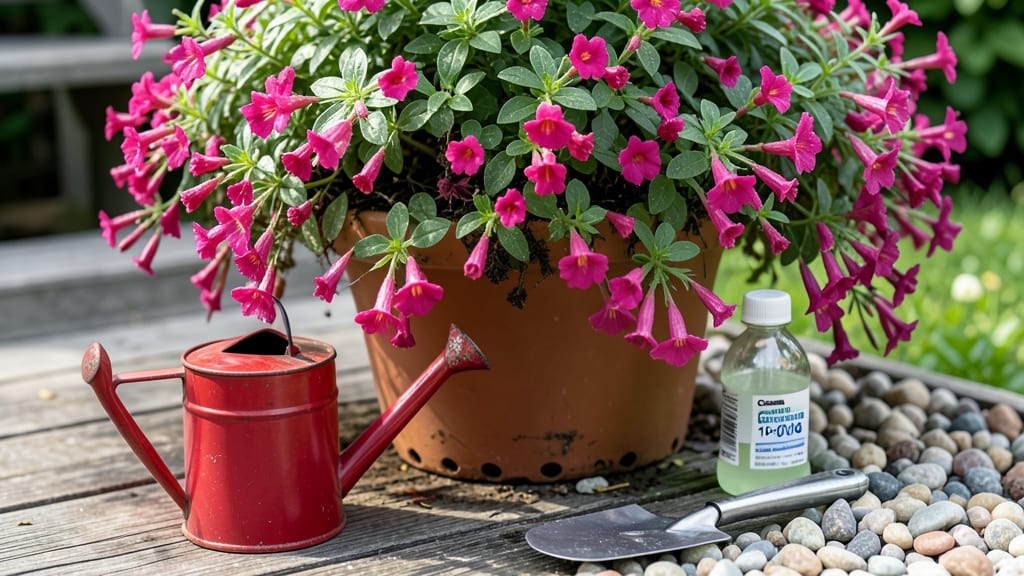
If you've ever dreamed of hanging baskets bursting with petunia-like color all season long, calibrachoa 🌸 is your secret weapon—but only if you care for it the right way. These tiny powerhouses thrive in containers but demand precise attention to sunlight, water, and feeding to reward you with nonstop blooms.
The key to success starts with placement: calibrachoa craves 6-8 hours of direct sun, but afternoon shade in hot zones prevents wilting. Watering gets tricky too—these spillers dry out fast, so morning soaks keep roots happy without drowning them.
I'll show you exactly how to fertilize monthly (yes, even in summer), prune for bushier growth, and troubleshoot common issues like leggy stems or pests. With these year-round bloom secrets, your calibrachoa will outshine every neighbor's petunias.
Let's dive into the simple steps that'll transform your baskets into cascading color machines—no green thumb required!
Calibrachoa hanging basket care: light, watering, and soil essentials for nonstop blooms
Calibrachoa thrives in hanging baskets when given the right conditions, but their delicate nature demands attention to light exposure, watering frequency, and soil composition. Unlike hardy perennials, calibrachoa needs consistent moisture and bright sunlight to produce those iconic, petunia-like blooms.
One wrong move—like overwatering or placing them in shade—and you’ll end up with leggy, sparse plants instead of a lush, cascading display.
I’ve learned through trial and error that calibrachoa’s roots need aeration to prevent rot, while their leaves crave direct sunlight to fuel vibrant colors. The key is balancing these factors without smothering the plant. Let’s break down the essentials so your calibrachoa baskets become the envy of the neighborhood.
| Care Factor | Requirements | Pro Tips |
|---|---|---|
| Sunlight | 6–8 hours direct sun daily | Morning sun > afternoon (prevents wilting) |
| Watering | Daily deep soak (500ml) | Bottom-water baskets to avoid leaf burn |
| Soil Mix | 50% peat moss, 30% perlite, 20% compost | Add orchid bark for aeration |
| Container Size | 12–18 inches diameter per plant | Use self-watering baskets for travel |
For sunlight, calibrachoa demands full sun exposure—think south-facing patios or balconies where they’ll bask in 6–8 hours of direct light daily. I’ve noticed that afternoon sun can scorch their leaves, so if your climate is brutal (like Zone 9+), provide afternoon shade with a sheer curtain.
Without enough light, your plants will stretch toward the sun, producing fewer blooms and more bare stems—a common mistake I’ve seen even among experienced gardeners.
When it comes to watering, calibrachoa’s shallow roots mean they dry out fast in hanging baskets. I water mine daily in summer, soaking the soil until water runs out the drainage holes.
A spray bottle isn’t enough—these plants need a deep drink. Pro tip: Use a bottom-watering tray to encourage even moisture distribution and prevent root rot from overwatering.
The soil mix is just as critical as water. Calibrachoa hates soggy roots, so I blend 50% peat moss for moisture retention with 30% perlite and 20% compost to keep it airy.
Adding a handful of orchid bark improves drainage and mimics their natural habitat. If you’re repurposing old soil, sterilize it first to kill fungi or pests lurking from last season.
One common mistake is using regular potting mix—it compacts and suffocates roots. I’ve seen calibrachoa in dense soil develop root rot within weeks. To test your mix, squeeze a handful: it should crumble easily, not stay in a tight clump.
Amend with sand or coconut coir if it feels too heavy.
Finally, container size matters. A single calibrachoa plant needs a 12–18 inch basket to support its sprawling habit. Overcrowding leads to competition for water and nutrients, stunting growth. For travel-friendly setups
By nailing these three pillars—light, water, and soil—your calibrachoa will reward you with nonstop blooms from spring to frost. Next, we’ll tackle fertilizing and pruning to keep that floral firework show going all season long. 🌸
Step-by-step fertilizing and pruning guide to extend calibrachoa blooms all season
To keep your calibrachoa blooming nonstop, fertilizing and pruning are non-negotiable tasks. I’ve learned that monthly feeding with a balanced fertilizer (like 10-10-10) is the secret to vibrant flowers, while strategic pruning prevents leggy growth.
Start with a light feed in spring to wake up roots, then ramp up during summer when blooms peak.
For pruning, I always use clean, sharp scissors to snip back leggy stems by one-third after blooms fade. This encourages bushier growth and more flowers. Deadheading spent blooms daily keeps plants looking tidy and promotes continuous flowering—my baskets stay lush all season this way.
🌿 Step-by-Step Fertilizing & Pruning Guide
- Spring (April-May): Apply light fertilizer (½ tbsp per basket) to encourage new growth after last frost.
- Summer (June-August): Feed every 4 weeks with 1 tbsp of balanced fertilizer (10-10-10) per basket.
- Prune leggy stems: Cut back 1/3 of stem length after blooms fade to promote bushiness.
- Deadhead daily: Remove spent blooms with clean scissors to redirect energy to new flowers.
- Fall (September): Reduce feeding to light doses as growth slows.
- Winter care: Skip fertilizing entirely—let plants rest in dormancy if indoors.
One mistake I made early on was over-fertilizing in fall, which led to weak stems and fewer blooms. Now, I follow this seasonal schedule religiously—my calibrachoa thrives with strong stems and abundant flowers from spring to frost. Always water before fertilizing to avoid root burn.
For winter care, I move baskets indoors near a south-facing window and reduce watering to bi-weekly. If overwintering outdoors, I wrap baskets in bubble wrap to protect roots from freezing. This simple step keeps plants alive for next year’s showstopping display.
Pro tip: Mix slow-release granules into the soil at planting for steady nutrition without monthly fuss. I combine this with liquid feeds for optimal results. Always fertilize in the morning to prevent leaf burn from afternoon sun.
Watch for yellowing leaves, a sign of over-fertilizing, and adjust your schedule. With consistent care, your calibrachoa will reward you with nonstop blooms from spring to fall—just like a pro gardener’s secret! 🌸