
Lawn
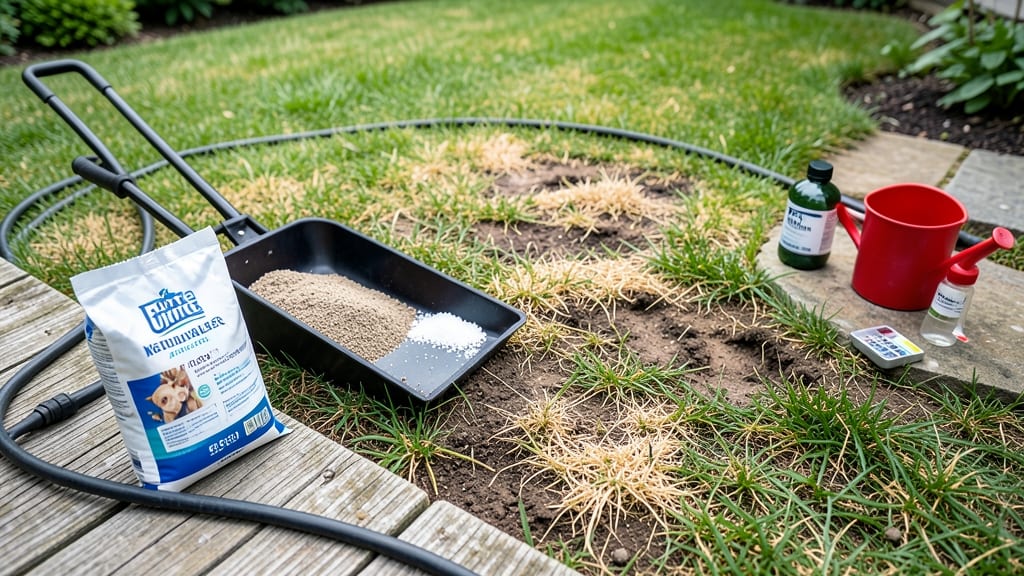
How to fix the lawn killed by dog urine—my once-lush yard was turning into patchy brown deserts until I discovered this lime-and-overseed revival trick. The acidity from frequent pee spots kills grass roots, but the right approach brings it back to life in weeks. No more sacrificing your lawn to your pup's bathroom habits.
First, test your soil pH—if it's below 6.0, sprinkle pelletized lime (about 10 lbs per 500 sq ft) to neutralize the acid. Then overseed with a dog-friendly grass mix like tall fescue or Kentucky bluegrass, which handles foot traffic better. Water lightly daily to keep seeds moist until germination.
Within 3-4 weeks, you'll see new green shoots pushing through the damaged areas. Keep the lawn well-watered (1 inch per week) and avoid fertilizing until new growth is established. This method worked for my yellowing front yard—now it's thick enough to handle my Labrador's daily patrols.
For long-term protection, train your dog to use a designated potty spot with peat moss or artificial turf, or apply a urine-neutralizing product like Urine Off to high-traffic areas. The key is acting fast—once the grass dies, recovery gets harder. Your lawn (and your dog) will thank you.
The Hidden Culprits Behind Dead Grass
If your once-lush lawn now has patchy, yellowed, or dead spots where your dog frequently urinates, the damage isn’t just from the urine itself—it’s a perfect storm of chemistry and biology.
Understanding why this happens is the first step to reviving your grass. Let’s break down the science behind the destruction.
Dog urine is highly concentrated in urea, which breaks down into ammonia when it hits the soil. Ammonia is alkaline (pH > 7), and when it reacts with your lawn’s soil, it raises the pH levels dramatically. Here’s why that’s bad:
- Nutrient Lockout: High pH (often 8.0–9.0 in urine-affected areas) binds essential nutrients like iron, manganese, and phosphorus into forms that grass roots can’t absorb. Even if you fertilize, your lawn starves.
- Toxic Buildup: Excess ammonia can directly burn grass roots, while high pH encourages harmful soil microbes that outcompete beneficial ones.
- Weakened Roots: Most lawn grasses (like Kentucky bluegrass or fescue) thrive in slightly acidic soil (pH 6.0–7.0). A sudden pH spike stresses plants, making them vulnerable to drought, disease, and foot traffic.
Pro Tip: 🔍 Test your soil’s pH with a DIY kit—if it’s above 7.5 in urine spots, that’s your smoking gun.
You might think urine = fertilizer, but the reality is far worse. While urine contains nitrogen (N), phosphorus (P), and potassium (K), the nitrogen-to-phosphorus ratio is wildly off-kilter for grass needs:
| Nutrient in Urine | Typical Ratio in Dog Urine | Ideal Ratio for Lawn Grass |
|---|---|---|
| Nitrogen (N) | ~90% | 30–40% |
| Phosphorus (P) | ~5% | 10–20% |
| Potassium (K) | ~5% | 10–20% |
This imbalance leads to:
- Leaf Burn: Excess nitrogen promotes rapid, weak top growth while starving roots, making grass prone to breakage and disease.
- Salt Stress: Urine also contains sodium and chloride, which act like tiny salt crystals in the soil, dehydrating grass cells.
- Fungal Invitation: Weakened grass becomes a buffet for fungal pathogens like brown patch or dollar spot, which thrive in high-nitrogen, high-moisture conditions.
Fun Fact: 🐕 A 50-pound dog produces enough urine to raise soil nitrogen levels 10x the recommended rate for lawns in a single spot!
Urine doesn’t just harm soil chemistry—it also disrupts the water dynamics of your lawn:
- Compaction & Runoff: Frequent urination can compact soil where your dog stands, reducing water infiltration. This creates "dry zones" where grass can’t absorb moisture, even if you water thoroughly.
- Osmotic Shock: High salt and urea concentrations draw water out of grass roots (a process called osmotic stress), causing wilting and cell death.
- Drought Vulnerability: Grass in urine-affected areas rely on deep watering to survive, but compacted soil prevents roots from reaching lower moisture layers.
Key Insight: 🌡️ If your lawn feels spongy in urine spots but hard in others, compaction is likely the culprit.
Healthy soil is a balanced ecosystem, but urine disrupts this harmony in two ways:
- Harmful Microbes Win:
- High pH and ammonia favor pathogenic bacteria and fungi*, which outcompete beneficial microbes (like mycorrhizae) that help grass roots absorb nutrients.
- Example: Pythium and Fusarium fungi thrive in urine-soaked soil, causing root rot.
- Nitrogen-Loving Weeds Take Over:
- Weeds like crabgrass or clover love high-nitrogen conditions, while your grass struggles. Suddenly, your lawn becomes a weed magnet.
Warning Sign: 🚨 If you see mushroom-like growths or slime on soil in urine spots, fungal activity is likely the root cause.
Here’s how these factors create a self-perpetuating loop of lawn death:
- Dog urinates → Ammonia raises pH.
- High pH locks out nutrients → Grass weakens.
- Weak grass roots → More susceptible to disease and drought.
- Disease spreads → More dead patches → More urine hits bare soil.
- Repeat.
Break the cycle: The good news? You can reverse each of these issues with targeted fixes—starting with soil pH adjustment and smart reseeding. Stay tuned for the revival steps!
Revive Your Lawn in 3 Steps
Now that you understand why dog urine damages grass, let’s tackle the problem head-on with practical, step-by-step solutions tailored to the root cause. The good news? Your lawn can bounce back—often faster than you think—with the right approach.
Below, we’ve mapped out fixes based on the most common issues (pH imbalance, soil compaction, and dead patches) along with prevention tips to keep your yard thriving long-term.
Dog urine is highly acidic, and over time, it can turn your lawn into a sulfur-soaked wasteland—leaving grass yellow, weak, or dead. The fix? Lime to the rescue! Lime raises soil pH, balancing the acidity and giving your grass the chance to recover.
How to Do It:
🔥 Test Your Soil First (Optional but Recommended)
- Grab a soil test kit (available at garden centers) to check your lawn’s current pH.
- Ideal pH for most grasses: 6.0–7.0. If it’s below 6.0, lime is your best friend.
🍳 Apply Pelletized Lime
- When: Early spring or fall (avoid summer heat).
- How much? Follow package instructions, but a general rule is 20–50 lbs per 1,000 sq ft for severely damaged lawns.
- Spread evenly with a broadcast spreader or by hand (wear gloves—lime can irritate skin).
👨🍳 Water It In
- Lightly water the lawn after application to help lime dissolve into the soil.
- Avoid heavy watering for 24–48 hours to prevent runoff.
⏰ Wait and Watch
- Lime takes 4–6 weeks to fully adjust soil pH. You’ll see greener grass in about a month if the pH was the main issue.
💡 Pro Tip: If your lawn is extremely patchy, mix lime with compost (1 part lime to 3 parts compost) for extra nutrients.
If your lawn has bald spots where grass refuses to grow, overseeding is your best bet. This fills in gaps with new grass seed while improving soil health.
How to Do It:
🔥 Prep the Soil
- Rake the dead patches to loosen soil and remove debris.
- Loosen compacted areas with a garden fork or aerator (if soil feels hard like concrete).
🍳 Choose the Right Seed
- Pick fast-growing, dog-friendly grass like:
- Tall fescue (drought-resistant, tough)
- Perennial ryegrass (germinates quickly, great for repairs)
- Kentucky bluegrass (if your climate supports it)
👨🍳 Plant the Seed
- Sprinkle seed evenly over bare spots (or use a spreader for larger areas).
- Lightly cover with ¼ inch of soil or compost to protect seeds.
- Water gently to keep soil moist (not soggy) until germination (~7–14 days).
⏰ Maintain Until Growth
- Water daily (early morning is best) for the first 2 weeks.
- Avoid walking on new seeds until grass is 2–3 inches tall.
💡 Pro Tip: For fastest results, use a starter fertilizer (low nitrogen, high phosphorus) to help seeds root quickly.
Frequent urination can compact soil, leading to poor drainage and muddy, uneven patches. If your lawn feels squishy or water pools after rain, aeration and organic matter are key.
How to Do It:
🔥 Aerate the Lawn
- Rent or buy a core aerator (or hire a lawn service if DIY isn’t your thing).
- Best time: Late summer or early fall (when grass is actively growing).
- Process: Run the aerator over the entire lawn, pulling out plugs of soil (leave them on the lawn—they’ll break down naturally).
🍳 Add Organic Matter
- Top-dress with 1–2 inches of compost or peat moss after aerating.
- Spread evenly and lightly rake into the soil.
- Water thoroughly to help it settle.
👨🍳 Encourage Deep Roots
- Reduce frequent watering to prevent shallow root growth.
- Mow high (3–4 inches) to shade soil and retain moisture.
⏰ Monitor for Improvement
- Aeration + compost should improve drainage in 2–4 weeks.
- If muddy spots persist, consider installing a French drain or sanding low areas.
💡 Pro Tip: Dog urine spots dry faster than the rest of the lawn—water those areas separately to prevent further damage.
Once your lawn recovers, prevent future damage with these easy habits:
✅ Dilute the Problem
- Train your dog to pee in one spot (or a gravel area) and rinse with water immediately after.
- Walk your dog after rain—wet grass dilutes urine’s acidity.
✅ Fertilize Smartly
- Use slow-release, nitrogen-rich fertilizer (like milorganite) to outcompete urine damage.
- Avoid over-fertilizing—too much nitrogen can worsen urine spots.
✅ Mow High & Often
- Taller grass (3–4 inches) resists urine damage better than short grass.
- Sharpen mower blades to prevent tearing grass (which invites disease).
✅ Test Soil Regularly
- Check pH annually (especially if you have multiple dogs).
- Reapply lime if pH drops below 6.0.
✅ Choose Dog-Friendly Grass
- Tall fescue and perennial ryegrass tolerate urine better than Kentucky bluegrass.
- Clover mixes (yes, really!) are urine-resistant and nitrogen-fixing (great for lawn health).
Final Thought: 🌟 With these fixes, your lawn can fully recover in 3–6 months—and stay resilient against future urine attacks. The key is acting fast (lime + overseeding) and preventing recurrence with smart habits. Your dog will love the new turf too! 🐕💚
Frequently asked questions
How quickly can I see results after applying lime?
You’ll typically notice improved grass color in 4-6 weeks after applying lime, though full recovery depends on soil conditions. The lime neutralizes acidity, allowing existing grass to recover faster. For severely damaged areas, combine lime with overseeding for quicker green-up.
What's the best grass type to plant after urine damage?
Choose tall fescue or perennial ryegrass—both tolerate urine better than Kentucky bluegrass. These varieties recover faster and handle foot traffic well. For extreme cases, consider clover mixes, which are naturally urine-resistant and improve soil health.
Can I use vinegar to fix urine-damaged lawns?
No, vinegar is not recommended—it further lowers soil pH, worsening the problem. Instead, use pelletized lime to raise pH and restore balance. Vinegar’s acidity creates the same issues as dog urine but in reverse.
How do I prevent future urine damage?
Train your dog to use a designated potty area with peat moss or artificial turf, or immediately rinse urine spots with water. Also, mow high (3-4 inches) and use slow-release fertilizers to strengthen grass resilience. Regular soil testing helps too.
Will my lawn ever fully recover from urine damage?
Yes! With proper lime application, overseeding, and soil aeration, most lawns fully recover in 3-6 months. The key is acting quickly—once grass dies, recovery becomes more challenging. Consistent care prevents permanent damage.