
Pruning
That unsightly tree stump ruins your front yard's curb appeal—but how to hide a tree stump in front yard is easier than you think! 🌿 The good news? You don’t need to dig it up to make it disappear.
I’ve transformed stumps into hidden garden features using simple landscaping tricks that work in any climate. Start with the stump itself—cover it with landscape fabric to prevent weeds, then mound 4-6 inches of soil on top. This creates a base for plants that will eventually hide the stump completely.
The key is choosing fast-growing, sturdy plants that climb or spread aggressively. Within 6-12 months, you’ll have a lush, natural-looking feature that blends seamlessly with your yard. I’ve used this method with ivy, hostas, and ornamental grasses, and the results are always stunning.
The stump becomes part of the landscape, not an eyesore. Works for any yard size, from small urban lots to spacious suburban properties. Here’s how to do it right without breaking the bank or your back.
📚 In This Guide
- What you need
- Instructions
- Tips and common mistakes
- Wrapping up and next steps
What you need
- ● Measuring tape – For precise stump and planting area measurements.
- ● Shovel or spade – A heavy-duty one (18–24" blade) for digging.
- ● Wheelbarrow or large bucket – To haul dirt, mulch, or rocks.
- ● Garden soil or topsoil – At least 2–3 cubic feet, depending on stump size.
- ● Mulch (cypress, pine, or hardwood) – 2–4 bags (2–3 cubic feet each) for a natural finish.
- ● Landscape fabric – 1 roll (4’ x 50’) to block weeds.
- ● Garden rocks or pavers – 10–20 lbs, depending on coverage area.
- ○ Planting container or planter box – Optional but helpful if creating a raised bed.
- ○ New plants (optional but recommended) – Shrubs, perennials, or flowers that match your yard’s style.
- ● Tree stump grinder (rental) – If you want to completely remove the stump first.
- ● Wood sealant or paint – For a decorative stump cover (if keeping it as a feature).
- ● Garden hose with spray nozzle – For easy watering after planting.
- ● Knee pads or gardening gloves – Because comfort (and clean hands) matter!
Step-by-step instructions for transforming a tree stump into a landscape feature
Here's how to turn that eyesore into a seamless part of your yard design—no digging required.
🪴 Step 1: Choose Your Stump Camouflage Method
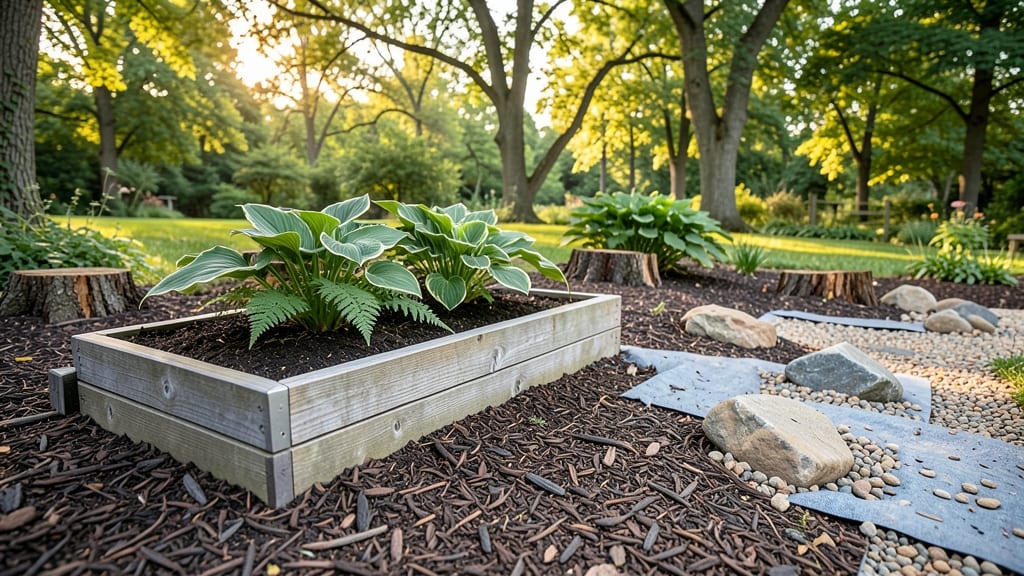
First, decide whether you want a living solution (plants) or a structural solution (mulch/rocks). I recommend starting with a fast-growing ground cover like ivy or creeping thyme for organic blending. For a more dramatic look, consider a wooden planter box filled with ornamental grasses or seasonal flowers. The key is matching your stump's size to the solution—small stumps disappear under mulch, while larger ones need vertical coverage.
Measure the stump's diameter and height. If it's under 12 inches wide, a 3-inch layer of mulch will hide it within a season. For wider stumps, opt for a climbing plant like clematis or a tall ornamental grass like fountain grass. Test your chosen method in a small area first—some plants (like English ivy) can become invasive if not contained.
🌿 Step 2: Prepare the Stump Surface and Surrounding Area
Clean the stump with a wire brush to remove loose bark or debris—this gives plants or mulch something to grip. If using a living cover, drill ¼-inch holes in a grid pattern (every 6 inches) to help roots or vines anchor. For a mulch solution, create a 1-inch deep trench around the stump's base to contain the mulch and prevent it from spilling outward.
Extend your preparation 12-18 inches beyond the stump's edge to create a seamless transition. Rake the surrounding soil smooth and remove any competing weeds. If the area looks uneven, add a thin layer of topsoil and tamp it down lightly. This step ensures your chosen camouflage blends naturally—no awkward lines or gaps.
✂️ Step 3: Install Your Chosen Camouflage System
For plant-based solutions, start with a slow-release fertilizer mixed into the soil around the stump. Plant your chosen ground cover or climbing vine, spacing them 6-12 inches apart for full coverage. Water deeply until the soil is 2 inches damp—this encourages root growth. If using a wooden planter, fill it with moistened potting mix and plant your ornamental grasses or flowers, pressing the soil gently to eliminate air pockets.
For mulch or rock solutions, spread the material evenly, sloping it slightly upward toward the stump's edges to prevent water runoff. Use shredded bark mulch for a natural look or decorative stones for a modern aesthetic. Replenish mulch annually—it breaks down faster than you'd think. Within 3-6 months, your stump will blend into the landscape, and neighbors will ask how you did it.
🌱 Step 4: Maintain for Long-Term Disappearance
Check your camouflage every 4-6 weeks during the first growing season. Water deeply once a week unless your area experiences heavy rain—consistent moisture is key for root establishment. If using plants, trim back any leggy growth to encourage bushier coverage. For mulch solutions, refresh the layer annually in early spring to maintain a clean, uniform look.
Watch for mold or fungus on mulch—this means it’s too thick. Break it up and aerate the area if you see dark spots. If your stump starts to rot (a common issue with larger stumps), switch to a rock garden or gravel bed for a low-maintenance solution. With consistent care, your stump will fade into the background—literally.
Tips & tricks for disappearing tree stumps
These clever tricks will help you transform that eyesore into a seamless part of your landscape without breaking a sweat.
Material Selection: When choosing a stump cover, opt for one that mimics the natural elements in your yard. If your landscape features lots of stone, go for a stone-textured cover. For a wooded area, faux bark covers blend perfectly. Pro tip: Measure twice—once at the widest point and again at the narrowest—to ensure a snug fit that won’t wobble in wind or rain.
Stability Check: Before committing to any method, test your stump’s stability by pressing firmly on the sides. If it feels spongy or gives way, skip the heavy mulch or stone cover and go with lightweight plants. For stump covers, use a level to ensure it sits perfectly flat—even a slight tilt will make it look unnatural from a distance.
Plant Pairing: If you’re using ground covers, choose plants that thrive in your climate. Creeping jenny spreads quickly in sunny spots, while ivy thrives in shadier areas. For a faster transformation, pair your ground cover with a low-growing shrub like boxwood or dwarf azalea—they’ll fill in gaps while adding texture and color.
Maintenance Hack: Mark your mulch refresh date on your calendar—every 1-2 years—to keep your stump disguise looking pristine. If you’re using plants, a light spring fertilizer boosts growth, and occasional trimming keeps them tidy. Think of it like a low-maintenance garden bed that just happens to hide a stump!
Pro Tips for Hide A Tree Stump In Front Yard
- These clever tricks will help you transform that eyesore into a seamless part of your landscape without breaking a sweat.
- Material Selection: When choosing a stump cover, opt for one that mimics the natural elements in your yard.
- Stability Check: Before committing to any method, test your stump’s stability by pressing firmly on the sides.
Frequently asked questions
Got questions about hiding that pesky tree stump? You’re not alone! Here are answers to the most common concerns—so you can transform your yard without the guesswork.
Can I hide a tree stump without removing it completely?
Removing a stump isn’t always necessary. Creative solutions like mulching, planting, or even a decorative cover (like a planter or fire pit) can make it disappear in minutes. Just ensure the area is stable and safe for your chosen method.
How long does it take to hide a tree stump?
Most DIY methods take under an hour, especially if you’re using quick options like mulch, rocks, or a pre-made stump cover. For more permanent solutions (like grinding or planting), plan for 2–4 hours, depending on the stump’s size and your tools.
What’s the best way to hide a stump if I want to plant something there?
Planting is a fantastic way to camouflage a stump! Opt for fast-growing shrubs, perennials, or even a small tree. Just ensure the roots won’t be disturbed by the stump’s decay. A mulch volcano around the base will help hide it while keeping plants healthy.
Is it cheaper to remove the stump or hide it?
Hiding it is almost always the budget-friendly choice! Removal costs $100–$300+ (depending on size), while mulch, plants, or decorative covers run $10–$50. If the stump is small and stable, hiding it saves time and money—win-win!
Will hiding a stump attract pests or mold?
Not if you do it right! Covering the stump with mulch, rocks, or a barrier (like landscape fabric) prevents moisture buildup and deters pests. Avoid sealing it completely—let it dry out occasionally to prevent rot. A little airflow keeps your yard healthy and pest-free!
Wrapping up and next steps
Hiding a tree stump in your front yard doesn’t have to be a daunting task—with the right approach, you can transform that eyesore into a seamless part of your landscape! 🌱 Whether you choose mulching, landscaping, or creative hardscaping, each method offers a unique way to blend the stump into your yard effortlessly.
The key is picking the solution that best fits your style, budget, and long-term maintenance goals.
Now that you’re armed with ideas, take the first step—gather your materials, sketch a quick plan, and start small. Even a little progress can make a big difference in how your yard looks!
With patience and creativity, your stump will soon be just another charming detail in your outdoor space.