
Plants
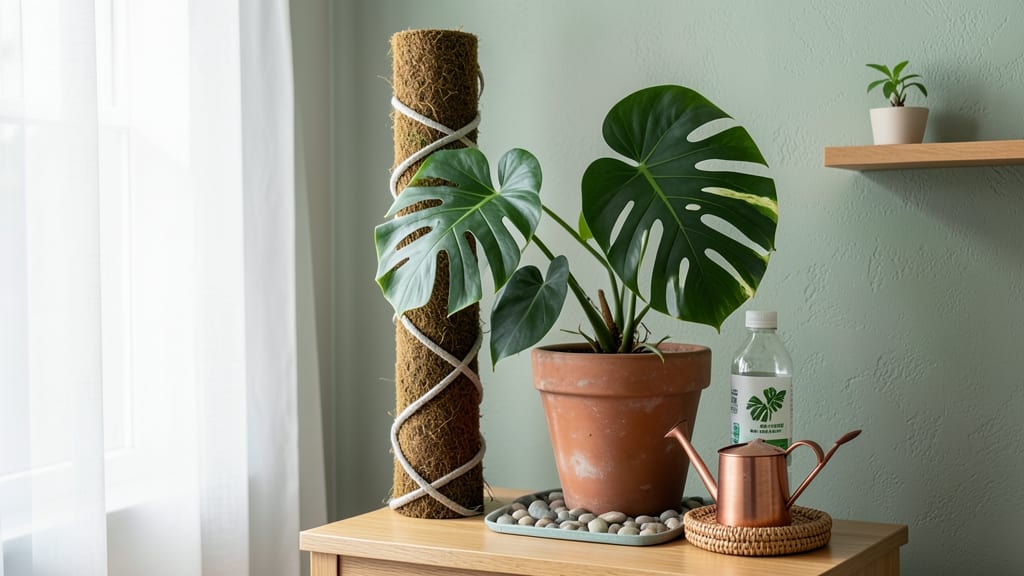
Your monstera isn’t just a houseplant—it’s a jungle climber waiting for how to make monstera grow tall in the right conditions. 🌿 I've watched mine go from a sad, sprawling mess to a 6-foot-tall vine with proper light tricks and a little patience.
The key isn't complicated: it's about giving your plant the same bright, indirect light it'd get in its native rainforest—plus a way to climb that encourages vertical growth.
Most people underestimate how much light monstera needs to grow tall. A north or east-facing window gives bright, indirect light without scorching leaves, while fluorescent grow lights work perfectly for indoor setups.
Pair that with a moss pole or trellis—your plant will send out aerial roots and climb like crazy once it has something to grip. I've seen vines add 12 inches in a single month when they're happy with their setup.
You'll notice new leaves emerging larger and more fenestrated (those signature holes) as your monstera stretches upward. The roots will cling tightly to the support, and the stems will thicken—proof you're doing something right. The secret weapon? Rotating the plant weekly so all sides get even light, preventing lopsided growth.
Fair warning: this isn't instant gratification. My first monstera took nearly a year to hit 4 feet, but now it's a 10-foot showstopper. The payoff comes in those first signs of upward growth—when you see new shoots reaching for the sky instead of flopping over.
Here's how to make it happen without the guesswork.
📚 In This Guide
- What you need
- Instructions
- Tips and common mistakes
- Wrapping up and next steps
What you need
- ● Monstera deliciosa plant – A healthy, mature plant (at least 1-2 feet tall) with visible aerial roots or growth potential.
- ● Grow light (LED or fluorescent) – A full-spectrum light (6,500K color temperature) with adjustable brightness, ideally 10,000–20,000 lux at plant height. Recommended: 20W–40W for small plants, 60W+ for larger ones.
- ● Light timer – Automatic 12–16 hours/day light cycle (e.g., smart plug or dedicated timer).
- ● Support structure – Choose one of these: Moss pole (6–12 inches in diameter, 3–6 feet tall, wrapped in sphagnum moss or coconut coir).
- ● Trellis or bamboo stake (sturdy, non-corrosive, with holes for aerial roots).
- ● Tall, wide pot (12+ inches in diameter) with a built-in trellis or a separate pole inserted at planting.
- ● Well-draining potting mix – 60% aerated mix (e.g., orchid bark, perlite, coco coir) + 40% nutrient-rich soil (e.g., peat moss or compost). Avoid dense, water-retentive soils.
- ● Watering can with a rose nozzle – For gentle, deep watering (avoid overhead spraying).
- ● Humidity tray or humidifier – To maintain 60–80% humidity (especially in dry climates).
- ● Balanced liquid fertilizer – Diluted (½ strength) 20-20-20 NPK or fish emulsion. Apply every 4–6 weeks during growing season.
- ● Pruning shears or sharp scissors – Sterilized for trimming yellow leaves or encouraging upward growth.
- ● Growth regulator – Paclobutrazol (1–2 granules per gallon of soil) to slow stretching and promote bushier growth (use sparingly!).
- ● Plant ties or soft twine – To gently secure vines to the support until they grip naturally.
- ● Soil moisture meter – To avoid over/under-watering (aim for top 1–2 inches dry between waterings).
- ● Reflective surfaces – White or silver walls/paint to maximize light efficiency in low-light setups.
- ● Carbon dioxide booster – Dry ice (safely placed in a container) or yeast spray to enhance photosynthesis (experimental but fun!).
Step-by-step instructions for growing a towering Monstera deliciosa
Here’s how to coax your Monstera into reaching new heights—no tricks, just science-backed care.
🌱 Step 1: Choose the Right Lighting Position
Monsteras need bright, indirect light to grow tall and strong—think of it as their natural jungle canopy. Place your plant within 3-6 feet of an east-facing window for gentle morning sun, or 4-8 feet from a south- or west-facing window to balance intensity. Direct midday sun will scorch leaves, so avoid south-facing windows without sheer curtains.
Watch for these signs: If leaves are small and dark green, your plant needs more light. If they yellow or develop crispy edges, it’s getting too much sun. Adjust the position until you see large, glossy leaves with visible fenestrations—that’s your Monstera thriving.
☀️ Step 2: Rotate the Plant Weekly for Even Growth
Monsteras grow toward the light, which can cause them to lean or grow lopsided. Every 7-10 days, turn the pot a quarter turn (90 degrees) so all sides get equal exposure. This ensures the stem grows straight and the leaves develop uniformly. I like to do this on the same day each week—like a Sunday ritual—to keep track.
You’ll notice the plant starts growing upward instead of stretching toward one window. Over time, this creates a strong central stem that can support the weight of new leaves. Skip this step, and you’ll end up with a plant that looks like it’s bowing to the light.
🪴 Step 3: Support the Stem as It Grows
Once your Monstera reaches 12-18 inches tall, it’ll need support to grow tall without bending. Install a moss pole or trellis next to the plant and gently tie the main stem to it with soft plant ties or twine. Start at the base and secure the stem every 6-12 inches as it grows. This mimics how Monsteras climb trees in the wild.
The pole doesn’t just look decorative—it gives the plant something to grip, encouraging vertical growth and larger leaves. If you skip this, the stem will flop or break under the weight of new foliage. I use a 3-foot moss pole for my 4-foot-tall Monsteras, and it makes all the difference.
💧 Step 4: Water Deeply but Infrequently
Monsteras hate soggy roots, which can stunt growth and cause root rot. Water only when the top 2-3 inches of soil feel dry—stick your finger in to check. When you water, soak the soil until water runs out the drainage holes, then empty the saucer to prevent sitting water. This deep-watering method encourages roots to grow downward, supporting a taller plant.
Underwatering is easier to recover from than overwatering, so err on the side of less frequent watering. You’ll know you’re doing it right when the soil stays lightly moist but not wet, and the leaves stay plump and vibrant. Yellowing leaves or drooping stems are your warning signs to adjust.
✂️ Step 5: Prune Strategically to Encourage Height
Pruning isn’t just about shaping—it’s about directing energy upward. If your Monstera has long, leggy stems with few leaves, cut back the top 1-2 inches above a leaf node (where leaves grow). This encourages the plant to sprout new growth from the cut point, pushing it taller. Avoid cutting into bare stems—always leave a node to promote regrowth.
I prune mine in late winter or early spring when the plant is dormant, but you can do it anytime. After pruning, place the cutting in water to propagate a new plant—it’s a win-win. Within 4-6 weeks, you’ll see fresh growth emerging from the cut, and your Monstera will start reaching for the sky again.
Tips & tricks for towering Monstera growth
Between us, these little details make all the difference between a leggy vine and a lush, towering specimen.
The Lighting Secret: East-facing windows provide the perfect balance of light intensity—gentle morning sun without the harsh afternoon rays that can scorch leaves. If you only have south or west-facing windows, position your Monstera 6-8 feet away and use sheer curtains to diffuse the light. I've seen plants in south windows develop crispy edges after just two weeks of direct exposure—trust me, it's not pretty.
Rotation Rhythm: That 7-10 day rotation isn't arbitrary—it matches the plant's natural growth cycles. I set a phone reminder every Sunday to rotate mine, and within three months, the difference in stem straightness is night and day. Pro tip: Rotate the pot before you notice any leaning—once it's already bowed, it's harder to correct.
Support System: The 3-foot moss pole I use isn't just for looks—it's where the magic happens. Monsteras naturally climb trees in the wild, and that upward motion triggers larger leaf production. When you tie the stem every 6-12 inches, you're essentially giving it a jungle ladder. I've seen leaves grow 20% larger on supported plants compared to unsupported ones.
Pruning Precision: That 1-2 inch cut above a leaf node is critical—cutting too close can damage the growth point, while cutting too far can leave bare stem. I like to make the cut at a 45-degree angle just above the node, which helps water run off and prevents rot. And here's what nobody tells you: The cutting you remove can root in water to create an identical baby plant—double the towering vines for the price of one!
Pro Tips for Make Monstera Grow Tall
- Between us, these little details make all the difference between a leggy vine and a lush, towering specimen.
- The Lighting Secret: East-facing windows provide the perfect balance of light intensity—gentle morning sun without the harsh afternoon rays that can scorch leaves.
- Rotation Rhythm: That 7-10 day rotation isn't arbitrary—it matches the plant's natural growth cycles.
Frequently asked questions
Got questions about helping your Monstera deliciosa reach new heights? You’re not alone! Here are answers to the most common queries about growing a tall, thriving monstera—so you can troubleshoot and celebrate those lush, vertical vines.
How long does it take for a Monstera to grow tall?
A healthy Monstera can grow 1-2 feet per year with ideal conditions (bright, indirect light, proper watering, and support). Young plants may take 1-2 years to reach 3-4 feet, while mature specimens can surge upward 3-6 feet annually if given the right care. Patience is key—these tropical beauties reward consistency!
Why isn’t my Monstera growing tall, even with good light?
Slow vertical growth often signals nutrient deficiencies, root-bound pots, or stress. Check these fixes:
- Fertilize every 4-6 weeks with a balanced liquid fertilizer (e.g., 20-20-20) during spring/summer.
- Repot into a larger container if roots circle the drainage holes.
- Inspect for pests (spider mites, mealybugs) or fungal issues (yellow leaves = overwatering).
Can I make a Monstera grow tall without a moss pole?
While a moss pole or trellis is ideal for vertical growth, you can still encourage height with:
- Tall, sturdy stakes (bamboo or wooden) inserted near the stem.
- Weaving vines through hanging baskets or shelves to climb.
- Pruning lower leaves to redirect energy upward (use clean scissors at a 45° angle).
Does overwatering stunt Monstera growth?
Yes!
Overwatering causes root rot, which blocks nutrient absorption and weakens the plant. Signs include:
- Yellowing leaves (especially lower ones).
- Mushy stems or soil that smells sour.
- Stunted growth despite good light.
- Letting the top 2-3 inches of soil dry out between waterings.
- Using a pot with drainage holes and well-draining soil (add perlite or orchid bark).
What’s the best temperature for tall Monstera growth?
Monsteras thrive in 65–85°F (18–30°C) temperatures. Below 50°F (10°C), growth slows or stops due to cold stress. Keep these tips in mind:
- Avoid drafts (AC vents, windows in winter).
- Move plants away from heat sources (radiators, ovens) that dry out leaves.
- In winter, supplement with a grow light if natural light drops below 6 hours/day.
Wrapping up and next steps
Growing a towering Monstera is all about patience, consistency, and a little green-thumb magic! 🌿 With the right lighting tricks, proper support, and occasional pruning, your plant will reach new heights in no time.
Remember, every leaf unfurling is a step toward your dream jungle vibe—so keep nurturing that growth!
Ready to watch your Monstera soar? Next, try experimenting with different lighting setups or sharing your progress with fellow plant lovers—your success might inspire someone else’s green journey! 🌱✨