
How To
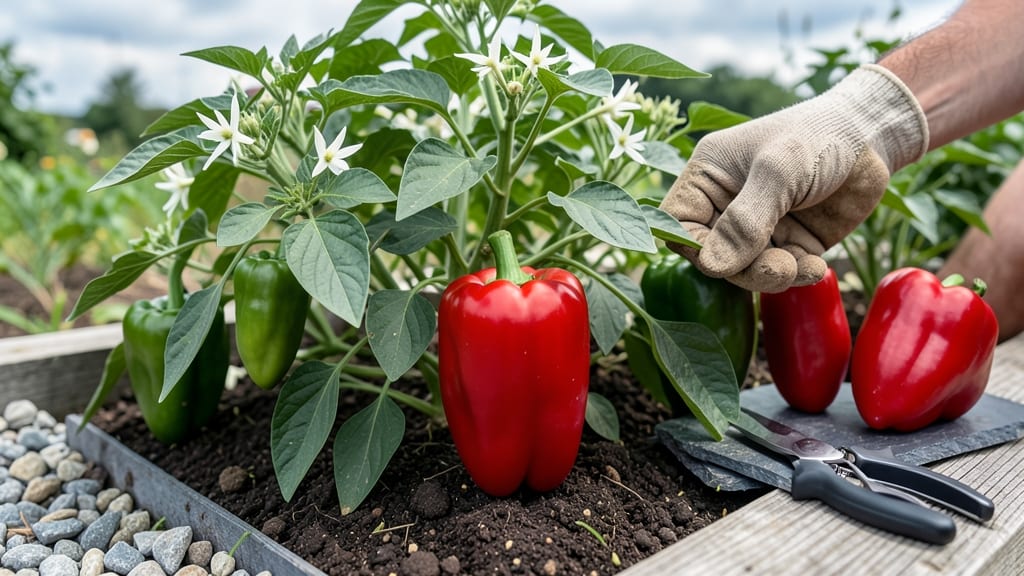
How to know when a bell pepper is ready to pick makes all the difference between a sweet, crisp harvest and a mealy, bitter disappointment. The right timing isn't just about color—it's about size, firmness, and even the subtle way the pepper feels when you touch it.
If you've ever pulled a pepper off the vine only to find it underripe or overripe, you're not alone. The good news? There are 5 clear color-stage clues that take the guesswork out of harvesting.
Whether you're growing red, yellow, or purple varieties, these visual cues will help you pick at peak perfection.
But here's the catch: environmental factors like sunlight and temperature can throw off your timing. I'll show you how to adjust for your Zone 6a climate and avoid common mistakes that lead to wasted peppers.
Ready to master the art of pepper picking? Let's dive into the exact signs to watch for—so you can enjoy the sweetest, most flavorful harvests from July through October.


5 Color-stage clues to identify perfectly ripe bell peppers
Bell peppers don’t all ripen the same way—some stay green forever, while others blush yellow, turn red, or deepen to purple. The key is understanding the color-stage cues that signal peak ripeness for your specific variety.
Even heirloom types follow predictable patterns once you know what to look for.
For most gardeners, the biggest mistake is assuming all peppers ripen to red. In reality, green peppers (like Sweet Banana) are perfectly edible at maturity, while orange or purple varieties (like Black Beauty) reach their sweetest point at their deepest hue.
Let’s break down each stage so you can harvest at the perfect moment.
| Stage | Size | Texture | Flavor | Varieties |
|---|---|---|---|---|
| 🟢 Green | 3-4" long | Firm, glossy | Crisp, mild | Sweet Banana, California Wonder |
| 🟡 Yellow | 3-5" long | Slightly softer | Sweet, fruity | Lemon Drop, Golden California Wonder |
| 🟠 Orange | 4-5" long | Firm, smooth | Balanced sweetness | Sunny, Orange Crush |
| 🔴 Red | 4-6" long | Firm, slightly waxy | Sweetest, richest | Jalapeño (red), Red Knight |
| 🟣 Purple | 3-4" long | Firm, velvety | Earthy, slightly sweet | Black Beauty, Purple Beauty |
Heirloom varieties often have more vibrant colors than hybrids, so don’t assume a pale red or yellow means it’s not ripe—some heirlooms like Golden California Wonder stay lighter even when fully mature. Always check size and firmness alongside color for the most accurate cue.
Pro tip: If you’re growing multiple varieties, label your plants with ripening stages written on stakes. I use colored tape (green for early, red for late) to quickly scan my garden and spot ready peppers without touching them.
One common misconception is that green peppers are less ripe than colored ones. In reality, green bell peppers are simply harvested before they change color. Varieties like Sweet Banana are bred to stay green and are perfectly ripe when glossy and firm.
For red-ripening varieties, wait until the color is deep and uniform. A pepper that’s half-red and half-green isn’t ready yet—it needs 2-4 more weeks of sunlight to fully mature. This is especially true in cooler climates, where ripening slows down.
Texture is your best friend when colors are tricky. A ripe bell pepper should feel firm but not rock-hard. Gently press your thumbnail into the skin—if it springs back, it’s ready. If it leaves a dent, it’s overripe. This test works for all varieties, regardless of color.
Don’t forget to check the stem! A ripe pepper’s stem should twist off easily with a slight crack. If it resists or pulls out with the pepper, it’s not ready. This is a foolproof way to test ripeness, especially on cloudy days when colors are harder to judge.
5 Color-stage clues to identify perfectly ripe bell peppers
Bell peppers don’t ripen like tomatoes—they mature through distinct color stages that signal sweetness and texture. Each variety (green, red, yellow, orange, or purple) follows its own timeline, but these 5 visual cues apply universally.
Pay attention to skin firmness, size consistency, and color depth—these are your harvest guides.
Green bell peppers are the most common and often harvested before full ripening. However, if left on the vine, they’ll transition through vibrant colors. Heirloom varieties like 'Purple Beauty' or 'Golden California Wonder' show dramatic color shifts, while hybrids like 'Jupiter' stay green unless bred to change.
Always check your plant’s variety label for expected ripening patterns.
| Stage | Color | Size | Texture | Flavor |
|---|---|---|---|---|
| Early Green | Pale green | 2-3 inches | Soft, glossy | Mild, slightly bitter |
| Mature Green | Deep green | 3-4 inches | Firm, slightly waxy | Sweet, crisp |
| Color Change | Yellow/Orange/Red/Purple | 3-5 inches | Thick, leathery | Rich, complex |
| Overripe | Dull, faded | Shriveled | Soft, wrinkled | Mealy, bitter |
For green bell peppers, aim for a deep, matte green hue with no glossiness—this means full maturity. If the pepper still has a shiny surface, it’s not ready. Colored varieties (red, yellow, orange) should have a uniform, vibrant color with no green patches.
A purple bell pepper, like 'Black Beauty,' will deepen to a rich plum color when ripe.
Size matters too. A ripe bell pepper should match its variety’s expected dimensions. For example, 'Jupiter' stays small (2-3 inches), while 'Banana Pepper' grows long and slender. Use your plant’s tag as a reference—if your pepper is half the expected size, it’s premature.
Pro tip: Weigh it—ripe peppers feel heavy for their size due to water content.
Never harvest based on color alone. A pepper might look ripe but feel spongy inside—this happens when it’s overripe. Instead, combine color, firmness, and stem snap for accuracy.
Twist the stem gently: if it snaps cleanly, the pepper’s ready. If it resists, wait a few days.
Environment plays a role. Cool temperatures slow ripening, so peppers might stay green longer in Zone 5 or below. In hot climates (Zones 8-10), peppers ripen faster—check them every 2-3 days to avoid overripeness.
If your peppers aren’t changing color by late summer, they may need more sunlight or balanced fertilizer.