
Propagation
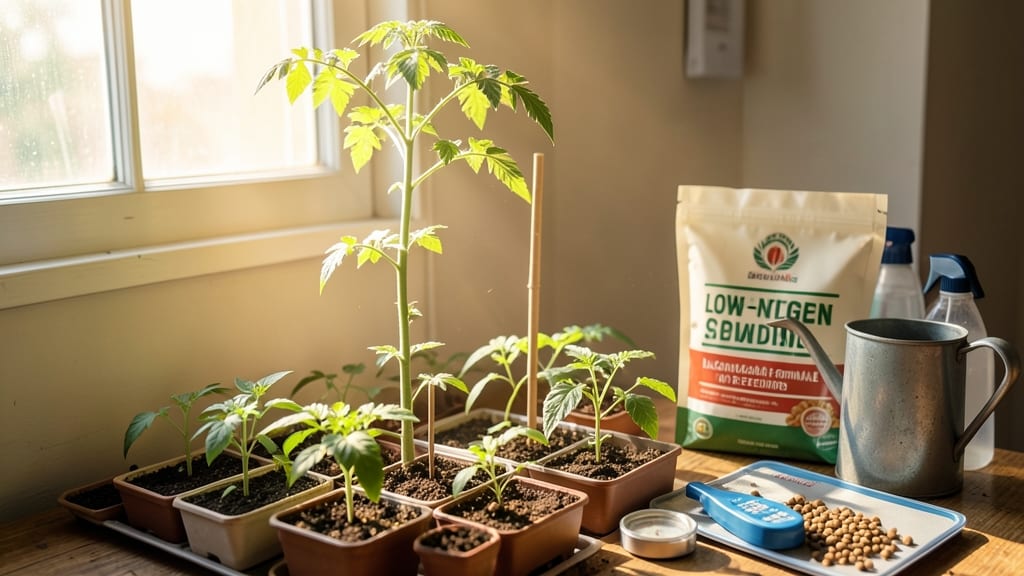
How to keep tomato seedlings from getting leggy—those stretched-out stems are a clear SOS for more light! 🌱 I’ve lost count of how many times I’ve watched them reach toward the window like starving puppies—only to flop over when transplanted. The good news? This problem is 100% preventable with a few simple light tricks that keep stems sturdy and roots strong.
Most seedlings turn leggy because they’re reaching for light they can’t find—whether from weak windowsill sun or being buried too deep in soil. Overcrowding makes it worse by blocking what little light there is.
The fix starts with proper spacing (2–3 inches apart) and bright, direct light for 12–16 hours daily. Grow lights solve this instantly, but even a south-facing window with a reflective surface works in a pinch.
Once you’ve got the light right, transplant early when seedlings have 2–3 true leaves—before they get desperate. Bury stems deeper than you think (up to the first leaves) to encourage root growth, and use a small container (like egg cartons) to prevent overcrowding.
Within days, you’ll see compact, stocky plants ready for the garden.
Pro tip: Rotate seedlings daily so they don’t lean toward one light source. And if you’ve already got stretchy stems? No panic—just bury them deeper and give them more light. They’ll bounce back faster than you’d expect. Let’s get those seedlings standing tall!
The Hidden Causes of Stretching Seedlings
If your tomato seedlings are reaching skyward like overgrown weeds instead of standing tall and sturdy, the culprits are likely lurking in their environment—or your care routine.
Leggy seedlings aren’t just a cosmetic issue; they’re a sign of stress that weakens the plant’s structure, making it prone to flopping, disease, and poor fruit production. Understanding the why behind this stretching is the first step to fixing it.
Let’s break down the science behind leggy seedlings and what’s really making them stretch out of control.
🌱 Light is the #1 factor in preventing leggy seedlings. When seedlings don’t get enough light, they stretch (a process called etiolation) to reach toward any available light source—even a dim window or a neighbor’s plant. This happens because:
- Chlorophyll production drops: Without adequate light, seedlings can’t photosynthesize efficiently, so they prioritize growing taller to access more light.
- Weak stems develop: Stretching requires the plant to allocate energy to elongated cells, resulting in thin, brittle stems that can’t support the plant’s weight.
- Red and far-red light imbalance: Seedlings naturally respond to red light (which promotes healthy growth) and far-red light (which triggers stretching). Artificial or weak natural light skews this balance, encouraging vertical growth.
💡 Pro Tip: If your seedlings are leaning or have pale, elongated stems, they’re begging for more light. A simple fix? Move them to a south-facing window or under a grow light (12–16 hours/day).
🌿 When seedlings are too close together, they compete for light, nutrients, and space. This competition triggers a survival response:
- Shade avoidance syndrome: Seedlings detect nearby plants blocking light and stretch upward to escape the "shadow."
- Nutrient depletion: Overcrowded roots can’t absorb enough nutrients, weakening the plant and forcing it to grow taller for support.
- Airflow restrictions: Poor circulation increases humidity around the seedlings, creating conditions ripe for damping-off disease, which further stresses the plant.
📊 Science Check: A study in HortScience found that seedlings spaced 2–3 inches apart grew 30% shorter than those packed tightly together. Thin them out early to avoid this issue!
🌡️ Temperature plays a sneaky role in seedling growth. While warm soil (70–85°F) is ideal for germination, cool temperatures after sprouting can trigger legginess:
- Slow metabolism: Cooler temps (below 60°F) reduce photosynthesis, so seedlings stretch to absorb more light.
- Ethylene gas buildup: In poorly ventilated spaces, ethylene (a plant hormone) accumulates, promoting vertical growth and weakening stems.
- Nighttime chills: If seedlings experience temperature drops at night, they may stretch the next day to compensate for lost energy.
✨ Fix It: Keep seedlings in a consistent 65–75°F environment and avoid placing them near drafty windows or air vents. A heat mat (for cool climates) can help maintain ideal soil temps.
💧 While water is essential, overwatering or inconsistent moisture can backfire and cause legginess:
- Top-heavy growth: Overwatering dilutes nutrients in the soil, leading to weak stems that can’t support the plant’s weight.
- Root stress: If seedlings sit in soggy soil, their roots can’t absorb oxygen properly, forcing the plant to grow taller to escape the waterlogged conditions.
- Uneven moisture: Drying out and then overwatering creates stress cycles, triggering erratic growth patterns, including stretching.
🔥 Golden Rule: Water seedlings from below (using a tray) to encourage deep root growth. Let the top inch of soil dry out between waterings to prevent soggy stems.
🥗 Seedlings need a balanced diet, but too much or too little of certain nutrients can lead to legginess:
- Excess nitrogen: While nitrogen fuels leafy growth, too much (especially early on) can cause rapid, weak stem elongation at the expense of sturdy structure.
- Phosphorus deficiency: This nutrient helps roots and stems strengthen. Without enough phosphorus, seedlings stretch to prioritize survival over structural support.
- Micronutrient gaps: Lack of magnesium, calcium, or boron can weaken cell walls, making stems more prone to stretching.
💪 Action Step: Use a balanced seedling fertilizer (like 5-5-5 or 3-4-6) at half-strength to avoid overfeeding. Avoid high-nitrogen formulas until seedlings have 2–3 true leaves.
Fixing stretched seedlings fast
Now that you know the why behind leggy seedlings, let’s tackle the how—with practical, actionable fixes tailored to the root causes. Whether your seedlings are reaching for the sky or flopping like overcooked noodles, these solutions will help you reset their growth and prevent future stretching.
Think of it as a quick intervention for your tiny tomato plants!
If your seedlings are leaning or stretching toward a light source (or away from it!), they’re desperate for more photons. Here’s how to correct it:
🔥 Step 1: Move Them Closer to Light
- Indoors? Place seedlings 2–3 inches from a grow light (LED or fluorescent) or within 12–18 inches of a sunny south-facing window.
If they’re still stretching, they need more light, not just better placement. - Outdoors? If transplanting early, use a seedling heating mat or mini greenhouse to extend the growing window. Avoid direct sun until they’re sturdy—too much heat can scorch them.
🍳 Step 2: Upgrade Your Lighting Game Not all lights are equal.
If you’re using a basic bulb, swap it for: - LED grow lights (full-spectrum, 12–16 hours/day). - T5 fluorescent lights (cheaper but effective for short-term use). - Reflective surfaces (aluminum foil or Mylar behind seedlings) to bounce light upward.
Pro Tip: 💡 Rotate seedlings daily (even 90 degrees) so they don’t lean toward one side. Use a small notepad to mark their position!
⏰ Step 3: Adjust Light Schedule
Seedlings need 12–16 hours of light daily. If your natural daylight is shorter (common in early spring), supplement with a timer-controlled grow light. Avoid 24/7 light—seedlings need 8–10 hours of darkness to rest and strengthen.
If your seedlings are stretching upward but also look wilted or have purple stems, heat might be the culprit. Here’s how to cool things down:
👨🍳 Step 1: Lower the Thermostat
- Ideal seedling temps: 65–75°F (18–24°C) during the day, 55–60°F (13–15°C) at night.
- If your home or greenhouse gets hotter, ventilate immediately—open windows, use fans, or move seedlings to a cooler spot.
- Avoid heat mats if your space is already warm; they can overcook seedlings.
🥘 Step 2: Shield from Direct Heat
- Keep seedlings away from radiators, ovens, or sunny windows (especially in greenhouses).
- Use shade cloth (30–50% block) if outdoor temps exceed 85°F (29°C).
🌡️ Step 3: Monitor Humidity
- Too dry? Stems stretch to escape humidity stress. Use a humidifier or place a tray of water near seedlings.
- Too damp? Fungal issues (like damping-off) can weaken stems. Ensure pots have drainage holes and space between plants for airflow.
If seedlings are leggy and have yellow leaves or stunted growth, they might be starving—or suffocating.
💪 Step 1: Thin Out Seedlings
- Overcrowding forces seedlings to compete for light and nutrients, leading to weak stems.
- Snip or transplant seedlings so they’re 2–3 inches apart (or follow seed packet spacing).
- Pro Tip: ✨ Use scissors for a clean cut—avoid pulling, which can damage roots.
🥗 Step 2: Fertilize Lightly (But Right)
Leggy seedlings often lack nitrogen, but too much fertilizer burns them.
Use a balanced, water-soluble fertilizer (like 5-5-5) at half strength. - Alternative: Mix 1 tbsp compost or worm castings into the soil for a gentle nutrient boost. - Avoid fertilizing if seedlings look stressed—wait until they’ve adjusted to their new light/temp conditions.
🍎 Step 3: Repot If Needed
- If roots are circling the bottom of the pot (check by gently tugging), transplant into a slightly larger container (2–3 inches deeper).
- Use well-draining soil (50% potting mix + 50% perlite or vermiculite) to prevent compaction.
Once you’ve rescued your current batch, set yourself up for success next time:
- Start with the right light: Use a grow light from day one—no waiting for “natural” light.
- Use the right containers: Black plastic flats absorb heat; opt for white or reflective trays to keep roots cooler.
- Pre-germinate in warmth: Place seeds on a moist paper towel in a warm spot (70°F/21°C) for 3–5 days before transplanting to soil. This speeds up growth and reduces legginess.
- Hardening off properly: Before transplanting outdoors, acclimate seedlings to outdoor conditions over 7–10 days (start with 1 hour/day, gradually increasing time).
- Choose the right varieties: Some tomatoes (like cherry varieties) are more forgiving for beginners. Avoid indeterminate types if you’re new to seed starting—they’re prone to stretching.
Final Thought: Leggy seedlings are a sign your little plants are trying too hard—like a toddler reaching for a cookie. With the right light, temperature, and a little TLC, they’ll soon be stocky, green, and ready to thrive. Now go give those seedlings the support they need! 🌿💪
Frequently asked questions
Why do tomato seedlings get leggy in the first place?
Leggy seedlings stretch because they're desperate for light! When they don't get enough bright, direct light (12-16 hours daily), they grow tall and weak to reach upward—a process called etiolation. Other culprits include overcrowding, cool temperatures, or inconsistent watering that stresses the plants. Think of it like a plant reaching for a cookie—it's trying too hard to survive!
Can I fix leggy seedlings, or should I just start over?
You can absolutely fix them! Bury the stems deeper in soil (up to the first leaves) to encourage new root growth, then give them more light immediately. Use a grow light if needed, and thin crowded seedlings to 2-3 inches apart. With proper care, they'll recover within a week. Starting over only makes sense if they're already flopping badly or diseased.
What's the best light source for preventing leggy seedlings?
For best results, use LED grow lights (full-spectrum) placed just 2-3 inches above seedlings, running for 12-16 hours daily. If using natural light, a south-facing window with reflective surfaces (like aluminum foil) works too. Avoid weak indoor lighting—seedlings need bright, consistent light to stay compact. Rotate them daily to prevent leaning.
How often should I water leggy tomato seedlings?
Water from below using a tray to keep moisture consistent—let the top inch of soil dry out between waterings. Overwatering causes weak stems, while underwatering stresses plants. Aim for even moisture, avoiding soggy soil that can lead to damping-off disease. A spray bottle works well for gentle hydration without disturbing delicate seedlings.
When is the right time to transplant leggy seedlings?
Transplant as soon as they have 2-3 true leaves—don't wait until they're leggy! Bury stems deeper than usual (up to the first leaves) to encourage root growth. Use small containers (like egg cartons) for early transplanting to prevent overcrowding. Harden them off for 7-10 days before moving outdoors to avoid shock.