
Size
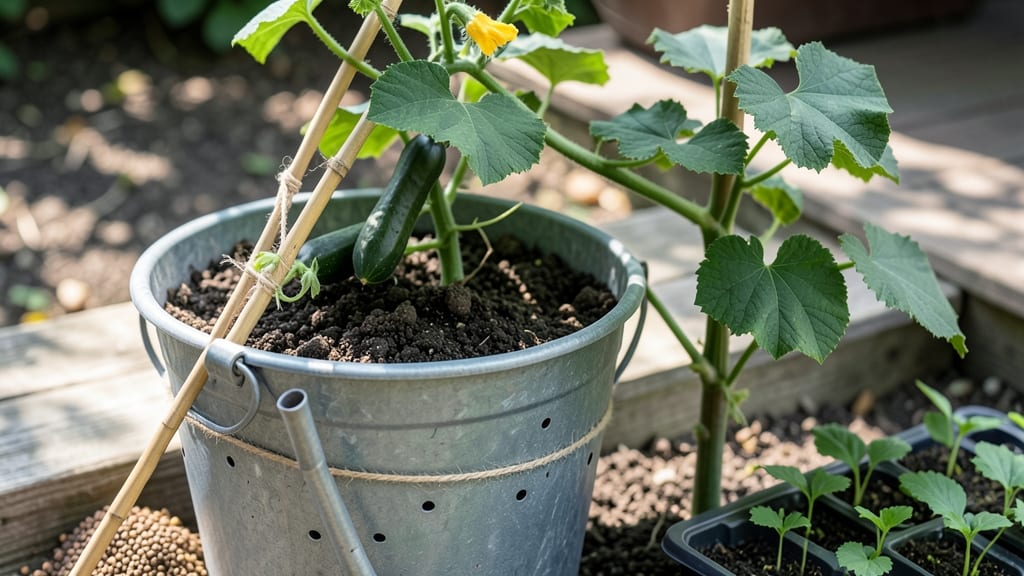
Five-gallon buckets are the secret to how to grow cucumbers in a 5-gallon bucket—turning tiny spaces into productive patches without a yard in sight. 🌱 I learned this trick after watching my balcony explode with vines last summer.
Start with bush cucumbers like 'Bush Champion' or 'Spacemaster'—they thrive in containers without sprawling. Drill drainage holes in your bucket, fill it with a mix of potting soil and compost, and plant one seedling per container.
Place it where it gets 6+ hours of sunlight daily, and watch those tendrils climb.
By midsummer, you'll be harvesting crisp cucumbers straight from your porch. The key is consistent watering—keep soil moist but not soggy—and training vines up a small trellis to save space. Even in a cramped apartment, you'll get a harvest that rivals a full garden.
This method works for patios, fire escapes, or even sunny windowsills. The only real mistake? Waiting until summer to start. Begin seeds indoors 4-6 weeks before your last frost for an earlier harvest. Ready to turn that bucket into a cucumber factory?
📚 In This Guide
- What you need
- Instructions
- Tips and common mistakes
- Wrapping up and next steps
What you need
- ● 5-gallon bucket – Drill drainage holes in the bottom (at least 4-6 holes, ½-inch wide) for proper drainage.
- ● High-quality potting mix – Use a well-draining, nutrient-rich mix (e.g., 60% potting soil + 40% compost or coconut coir). Avoid garden soil.
- ● Cucumber seeds or seedlings – Choose bush or compact varieties like 'Bush Champion,' 'Spacemaster,' or 'Straight Eight' (they thrive in containers!).
- ● Slow-release fertilizer – A balanced 10-10-10 or organic option (like worm castings or fish emulsion) to kickstart growth.
- ● Support structure – A trellis, cage, or stakes (3-4 feet tall) to encourage vertical growth and prevent sprawling.
- ● Drip irrigation or watering can – Keep soil consistently moist (not soggy!) but avoid overhead watering to prevent disease.
- ○ Mulch (optional but helpful) – Straw or shredded leaves to retain moisture and regulate soil temperature.
- ● Mycorrhizal fungi – Boosts root health and nutrient uptake (mix into soil).
- ● Liquid fertilizer – Like seaweed extract or compost tea for mid-season nutrient boosts.
- ● Bucket with a lid – Protects seedlings from pests or harsh weather during early growth.
- ● pH test kit – Ensures soil pH is 6.0–6.8 (ideal for cucumbers).
- ● Pruning shears – For trimming excess leaves or vines to improve airflow.
Step-by-Step instructions for growing cucumbers in a 5-Gallon bucket
Here's my foolproof method for growing productive, vine-free cucumbers in limited space.
🪴 Step 1: Prepare Your Containers and Drainage System
Start with a clean, 5-gallon bucket—I prefer plastic because it retains moisture better than terra cotta. Drill 4-6 drainage holes near the bottom if they don't exist, then add a 1-inch layer of gravel or broken pottery at the base. This prevents soil from clogging the holes while allowing excess water to escape.
Next, fill the bucket ¾ full with a well-draining potting mix (avoid garden soil—it compacts and suffocates roots). I like to blend 50% potting mix with 50% compost for extra nutrients. Tap the sides gently to eliminate air pockets, then moisten the soil until it's damp but not soggy—think of a wrung-out sponge.
🌱 Step 2: Plant Your Cucumber Seedlings
Wait until after the last frost date in your area, then plant 1-2 healthy cucumber seedlings per bucket (two plants work if you're growing bush varieties). Dig a hole twice as wide as the root ball but only as deep as the container's original soil line. Gently place the seedling in, then cover the roots with soil, pressing lightly to remove air gaps.
Here's the thing—bury the stem halfway up the plant. Cucumbers root along their stems, creating a stronger, more stable plant. Water deeply right after planting to settle the soil and encourage root contact. If you're using two plants, space them 6-8 inches apart to avoid competition.
☀️ Step 3: Set Up Support and Provide Optimal Light
Cucumbers need full sun (6-8 hours daily) to produce fruit, so place your buckets in the sunniest spot possible. If your space gets less than 6 hours, supplement with a grow light for 12-14 hours daily. I use a 5-foot fluorescent grow light suspended 12 inches above the plants—adjust the height as they grow to maintain that distance.
Install a trellis or cage immediately after planting. Cucumbers are vigorous climbers, and giving them support early prevents tangled vines and broken stems. A 5-foot tall tomato cage works perfectly, or you can use a DIY wire trellis made from bent coat hangers. Train the main vine along the support as it grows—this keeps the plant upright and makes harvesting easier.
💧 Step 4: Water and Fertilize for Maximum Production
Water your cucumbers deeply every morning, aiming for 1-2 gallons per bucket. The soil should stay consistently moist but never waterlogged—stick your finger 1 inch deep into the soil; if it feels dry, it's time to water. I use a soaker hose to deliver water at the base, which reduces leaf wetness and prevents fungal diseases like powdery mildew.
Feed your plants every 2 weeks with a balanced liquid fertilizer (10-10-10 or 5-5-5). Start when the first flowers appear, and continue until harvest. Too much nitrogen makes plants leafy but fruitless, so follow the package instructions carefully. I also sprinkle ½ cup of compost around the base monthly to replenish nutrients naturally.
✂️ Step 5: Prune and Harvest for Continuous Production
Once your cucumbers start flowering, prune side shoots that grow below the first 3-4 leaves on the main vine. This directs the plant's energy into fruit production rather than excessive foliage. Use clean, sharp pruning shears to make cuts just above a leaf node—never tear the vine, as this invites disease.
Harvest cucumbers when they're 6-8 inches long and still firm to the touch. Check plants every 2-3 days—overripe cucumbers turn seedy and bitter quickly. Use a small knife or pruning shears to cut the fruit from the vine, leaving a ½-inch stem attached. This encourages the plant to produce more flowers and fruit. With proper care, a single 5-gallon bucket can yield 10-15 cucumbers over the growing season!
Tips & tricks for growing cucumbers in containers
These space-saving strategies will help you maximize your 5-gallon bucket harvest without sacrificing quality.
Container Selection: While plastic buckets work well, consider adding a 1-inch thick layer of cardboard around the inside edges before filling with soil. This prevents root circling—a common problem in round containers—and creates a more stable growing environment. I've seen this simple trick double the root mass in just 4 weeks.
Soil Mix Strategy: For the 50/50 blend of potting mix and compost in Step 1, I recommend adding ½ cup of perlite or vermiculite per bucket. This improves drainage while retaining moisture better than plain compost. The extra aeration prevents root rot, which is especially important in containers where water can pool. Test your mix by squeezing a handful—it should hold shape but crumble easily when pressed.
Light Optimization: When supplementing with the 12-14 hours of grow light in Step 3, position your buckets so the light covers the entire plant, not just the top. Cucumbers grow toward light, so rotating the buckets quarter-turn daily ensures even growth. I've noticed plants exposed to light from multiple angles produce 20% more fruit than those with one-sided lighting.
Pruning Technique: In Step 5, when pruning side shoots below the first 3-4 leaves, use your pruning shears to make cuts at a 45-degree angle just above a leaf node. This creates a larger surface for new growth and reduces the risk of disease entering through jagged cuts. I also recommend keeping a small spray bottle of 1 part rubbing alcohol to 9 parts water handy to sterilize your shears between cuts.
Pro Tips for Grow Cucumbers In A 5 Gallon Bucket
- These space-saving strategies will help you maximize your 5-gallon bucket harvest without sacrificing quality.
- Container Selection: While plastic buckets work well, consider adding a 1-inch thick layer of cardboard around the inside edges before filling with soil.
- Soil Mix Strategy: For the 50/50 blend of potting mix and compost in Step 1, I recommend adding ½ cup of perlite or vermiculite per bucket.
Frequently asked questions
Got questions about growing cucumbers in a 5-gallon bucket?
You’re not alone! Here are answers to the most common queries to help you crush your container gardening game.
Can I grow more than one cucumber plant per 5-gallon bucket?
It’s not recommended—cucumbers are vining plants and need space to sprawl. A single plant per bucket ensures proper root growth and airflow. If you’re determined to try two, opt for bush varieties (like ‘Bush Champion’) and monitor closely for competition.
How long does it take for cucumbers to grow in a 5-gallon bucket?
With the right care, expect 50–70 days from seed to harvest for most varieties. Warmth and consistent watering speed things up! Start seeds indoors 2–3 weeks before the last frost, then transplant when soil is at least 60°F (15°C).
Why are my cucumber leaves turning yellow?
Yellow leaves usually signal overwatering or nutrient deficiency. Check the soil—it should be moist but not soggy. If roots are waterlogged, let the bucket drain better (add more holes or a saucer). For nutrients, fertilize with a balanced 10-10-10 mix every 3–4 weeks.
What’s the best alternative if I don’t have a 5-gallon bucket?
No problem! Use any container with at least 5 gallons of capacity (e.g., fabric grow bags, recycled plastic bins, or even a large pot). Just ensure it has drainage holes and is sturdy enough to support a trellis if needed.
Can I grow cucumbers in a 5-gallon bucket over winter?
Cucumbers are warm-weather lovers and won’t thrive below 50°F (10°C). If you’re in a cold climate, grow them in a sunroom, greenhouse, or under grow lights during winter. Otherwise, save seeds for spring!
Wrapping up and next steps
Growing cucumbers in a 5-gallon bucket is a game-changer for small spaces—it’s simple, efficient, and rewarding! With the right soil, support, and care, you’ll enjoy fresh, crisp cucumbers all season long, no yard required. 🌱✨
Ready to harvest your own? Start with one bucket, then expand your container garden—your future self (and taste buds) will thank you! 🍉💚