
Pruning
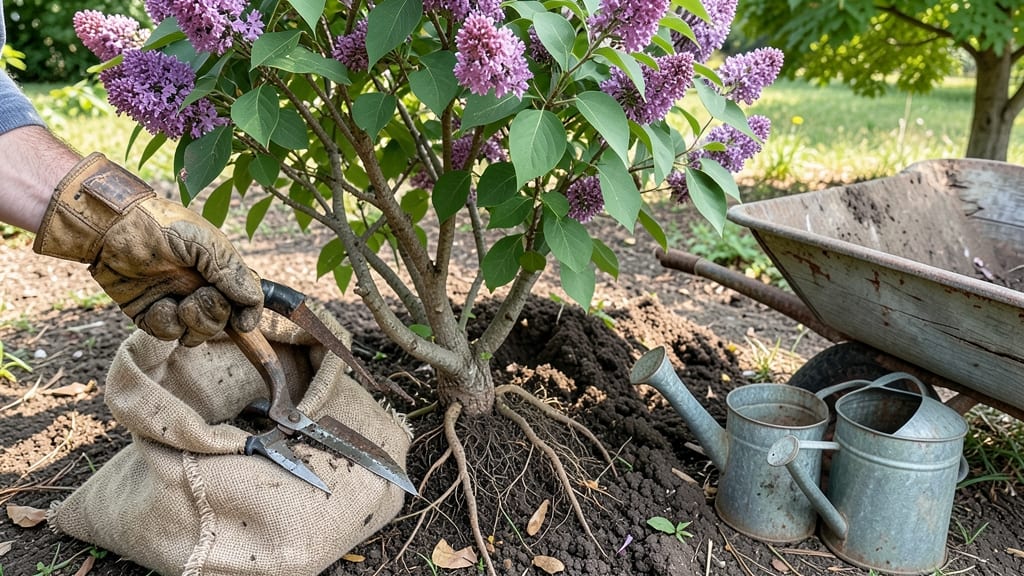
Digging up a lilac bush feels like moving a stubborn friend—gentle pressure works best. 🌿 The secret to transplant success lies in timing (late fall or early spring) and protecting those delicate roots.
I’ve moved three lilacs in my yard, and the ones I handled carefully now bloom twice as hard as their neglected neighbors.
You’ll need a sharp spade, burlap, a wheelbarrow, and a hose for dusting off roots. The key is working in the plant’s dormant season when it’s not stressed by heat or blooming. Start by marking the bush’s outline with stakes—this keeps you from cutting too close to the trunk.
Lilacs have deep roots, so dig wide, not deep, to avoid damaging the main root system.
Once lifted, wrap the root ball in burlap and keep it moist—root shock is the biggest enemy here. Plant it in the same depth as before, firming soil gently around the roots.
Water deeply right after transplanting, then mulch to retain moisture. Within a year, your lilac will look like it never moved, with stronger growth and even more fragrant blooms.
Fair warning: lilacs hate being root-bound. If you see circling roots, gently tease them apart before planting. And don’t rush—let it settle in for a season before pruning. Patience here pays off with decades of purple perfection. Ready to give it a try?
📚 In This Guide
- What you need
- Instructions
- Tips and common mistakes
- Wrapping up and next steps
What you need
- ● Shovel or spade: A flat-edged digging spade (16–18 inches wide) for clean cuts and minimal root damage.
- ● Pruning shears or loppers: Sharp, bypass-style shears (for trimming roots or stems if needed).
- ● Garden hose or bucket: To keep roots moist during digging (aim for 1–2 gallons of water per bush).
- ● Burlap or landscape fabric: A 4x6 ft piece (or larger) to wrap roots for transport.
- ● Wheelbarrow or cart: For hauling the bush to its new home—lightweight but sturdy!
- ○ Garden fork (optional but helpful): A heavy-duty fork to loosen compacted soil around roots.
- ● Gloves: Garden or work gloves to protect hands from thorns and rough roots.
- ● Root stimulator or mycorrhizal fungi: A powder or liquid to encourage root growth post-transplant.
- ● Mulch (pine bark or straw): To cover roots temporarily if transplanting on a hot day.
- ● Stakes or twine: For securing the burlap-wrapped bush if moving long distances.
- ● Knee pads or a small stool: For comfort during digging (trust us, your back will thank you!).
Step-by-Step instructions for digging up a lilac bush
Lilacs are tough but need careful handling when moving. Here's how to lift them without damaging roots or stressing the plant.
🪴 Step 1: Choose the Right Time and Prepare Tools
Dig up your lilac in early spring before new growth starts or in fall after flowering—these are the safest times. You'll need a sharp shovel, pruning shears, burlap or landscape fabric, rope or twine, and a wheelbarrow or dolly. I always work on a dry, cool day to reduce stress on the plant.
Water the lilac deeply 2-3 days before digging so the soil is moist but not soggy. This helps roots slide out of the ground more easily. Avoid digging when soil is frozen or waterlogged—you'll fight the shovel instead of the roots.
✂️ Step 2: Prune and Clear the Area
Start by pruning back one-third of the oldest stems to reduce the plant's size and make lifting easier. Cut just above a bud or lateral branch. This also encourages fresh growth after transplanting. Clear away any debris or weeds within 2 feet of the bush—you want a clean workspace.
Use your shovel to score the soil in a 12-inch-wide circle around the bush, about 6 inches deep. This loosens the roots without severing them. Tap the shovel gently but firmly to avoid damaging the root ball. Real talk: If you see roots breaking, you're digging too close—back up a few inches.
💧 Step 3: Lift the Root Ball Carefully
Stand on the opposite side of the bush from where you scored the soil and wedge the shovel under the root ball. Rock the shovel gently side to side while lifting upward. Aim to keep the root ball intact—lilacs have deep, fibrous roots, so you want as much of the soil attached as possible. If the root ball breaks, don’t panic—just work with what you’ve got.
Once the root ball is loose, wrap the base in burlap or landscape fabric, securing it with rope or twine. This protects the roots from drying out and makes transport easier. Lift the bush straight up—never drag it. If the root ball is too heavy, slide a dolly or wheelbarrow underneath and roll it out instead of pulling.
🪴 Step 4: Transport and Prepare for Replanting
Keep the root ball moist during transport by covering it with a damp towel or burlap if you’re moving it a distance. Lilac roots dry out fast, and even a slightly dry root ball reduces transplant success. If you can’t replant immediately, store the bush in a shaded, sheltered spot until you’re ready.
Before replanting, inspect the roots for damage. Trim any broken roots with pruning shears, but avoid cutting healthy roots. Dig the new hole twice as wide as the root ball and the same depth as the old planting site. Lilacs hate being buried too deep—this ensures the base of the trunk stays above ground level.
⏰ Step 5: Replant and Water Thoroughly
Lower the lilac into the hole, ensuring the root ball sits level with the surrounding soil. Fill in around the edges with native soil, pressing gently to eliminate air pockets. Water deeply to settle the soil and encourage roots to expand into the new space. You’ll know you’ve done it right when water drains evenly without pooling.
Mulch around the base with 2-3 inches of organic mulch, keeping it 6 inches away from the trunk to prevent rot. Water once a week for the first month, then taper off as the plant establishes. Here’s the thing—lilacs are tough, but they’ll thank you for the gentle treatment during transplant. You’ll see fresh growth in 4-6 weeks, signaling success.
Tips & tricks for perfect lilac transplanting
Moving a lilac bush successfully isn't just about brute strength—it's about smart technique. Here's what I've learned from years of transplanting these tough but delicate plants.
Timing is Everything: The 2-3 days of deep watering before digging (Step 1) is non-negotiable. I've seen root balls shatter when the soil is dry—moist soil acts like lubricant, letting roots slide free instead of tearing. Watering also helps you spot the root zone more easily. After watering, press your finger into the soil about 2 inches deep—it should feel damp but not soggy. This is the perfect consistency for digging.
Pruning Strategy: When pruning back one-third of the oldest stems (Step 2), focus on the thickest, most woody branches first. These are the ones that'll make lifting the bush harder. Cut just above a bud or lateral branch—this ensures new growth will sprout from the right place. I always make these cuts on a dry day; wet wood can tear instead of cleanly separating, which stresses the plant.
Root Ball Protection: The burlap wrapping in Step 3 isn't just for transport—it's a lifeline for your lilac. I've seen root balls dry out completely within hours when left uncovered, even on cool days. If you're transporting more than 50 feet, double-wrap the root ball and dampen the burlap before tying. For longer storage (more than a day), place the wrapped root ball in a black plastic bag with small holes punched in it—this creates a humid microclimate that keeps roots happy.
Replanting Depth Check: That "same depth" rule in Step 5 is critical—lilacs planted too deep suffocate, while those planted too shallow dry out. Here's my trick: After placing the root ball in the hole, use a level tool to ensure it sits perfectly horizontal. Then, fill with soil until you reach the original soil line you marked on the root ball before lifting. Press gently but firmly—you want firm contact with the soil, not compaction that prevents root expansion.
Pro Tips for Dig Up A Lilac Bush
- Moving a lilac bush successfully isn't just about brute strength—it's about smart technique.
- Timing is Everything: The 2-3 days of deep watering before digging (Step 1) is non-negotiable.
- Pruning Strategy: When pruning back one-third of the oldest stems (Step 2), focus on the thickest, most woody branches first.
Frequently asked questions
Got questions about digging up and relocating your lilac bush? You’re not alone! Here are some of the most common concerns—and their practical solutions—to ensure a smooth transplant process.
When is the best time to dig up a lilac bush?
The ideal window is early spring (before buds swell) or late fall (after blooming but before hard frost). Lilacs are dormant during these times, so they’ll handle the stress better. Avoid transplanting during summer heat or winter freezes—roots need time to recover!
What if my lilac bush is huge? How do I handle big roots?
For mature lilacs, dig deeper and wider—aim for a root ball at least 2 feet in diameter. If roots are tangled, gently tease them apart with your hands or a fork. Pro tip: Rent a root saw for thick roots or hire help for heavy lifting!
How do I keep my lilac alive after digging it up?
Water the root ball thoroughly the day before transplanting to reduce shock. After moving, water deeply every 2–3 days for the first 2 weeks, then taper off. Mulch the base (but not the trunk!) to retain moisture and protect roots.
Can I divide a lilac bush instead of digging it up?
Lilacs hate being divided—they’re sensitive to root damage and often decline. If you must split one, only do it for young, small bushes (under 3 years old). Use a clean saw to separate a section with roots and stems, then treat as a new transplant.
My lilac leaves are wilting after transplanting—what’s wrong?
Wilting is normal for 1–2 weeks post-transplant, but don’t panic! If leaves stay crispy or yellow after 3 weeks, check for root rot (overwatering) or drought stress (underwatering). Trim wilted leaves to redirect energy to root growth.
Wrapping up and next steps
Digging up a lilac bush doesn’t have to be stressful—with the right tools, patience, and a gentle touch, you can relocate it successfully!
Now that you’re ready, mark your calendar for late fall or early spring—the ideal seasons for transplanting. Grab your shovel, roll up your sleeves, and give your lilac a fresh start in its new home! 🌱