
How To
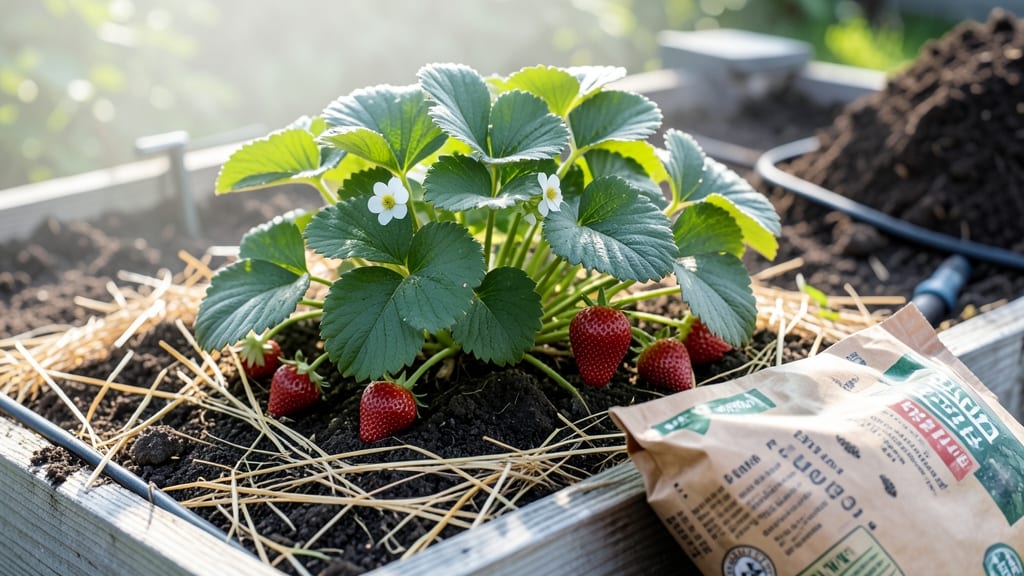
How to make strawberries bigger—your strawberries could be twice as big this year if you tweak just a few things. 🌱 I’ve grown strawberries for years, and the difference between tiny berries and monster-sized ones boils down to soil, water, and timing. The secret isn’t fancy equipment; it’s understanding what strawberry plants really need to thrive. Start with rich, well-draining soil packed with compost—think of it as their all-you-can-eat buffet. Strawberries love moisture but hate soggy roots, so water deeply twice a week (more in heatwaves) and mulch heavily to lock in moisture. Prune old leaves in early spring to redirect energy to fruit production, not maintenance. By mid-summer, you’ll be harvesting berries so big they’ll make your neighbors jealous. The flavor deepens too—sweeter, juicier, and packed with that signature summer taste. And the best part? These tricks work for both June-bearing and everbearing varieties. No green thumbs required—just patience and a little science. Let’s get those berries growing like they’re in a grocery store display!
📚 In This Guide
- What you need
- Instructions
- Tips and common mistakes
- Wrapping up and next steps
What you need
- ● Strawberry plants: June-bearing (1 plant per 12–18 sq. in.)
- ● Ever-bearing (1 plant per 12 sq. in.)
- ● Day-neutral (1 plant per 12–18 sq. in.)
- ● Well-draining soil: Mix of garden soil, compost (50%), and perlite/sand (20%) (pH 5.5–6.8).
- ● Fertilizer: Balanced 10-10-10 (spring) or 5-10-10 (summer)
- ● Organic options: Fish emulsion, compost tea, or worm castings
- ● Watering supplies: Drip irrigation system (recommended) or watering can with a rose attachment
- ● Mulch: Straw or wood chips (2–3 inches)
- ● Pruning tools: Sharp bypass pruners (for trimming runners/leaves)
- ○ Gloves (optional but handy!)
- ● Growth boosters: Epsom salt (1 tbsp per gallon of water, monthly)
- ● Seaweed extract (foliar spray for stress resistance)
- ● Support structures: Strawberry pots, hanging baskets, or trellises (for vertical growth).
- ● Shade cloth: 30–50% coverage for hot climates (prevents sunburn).
- ● pH test kit: To monitor soil acidity (aim for 5.5–6.8).
Step-by-step instructions for maximizing strawberry size and sweetness
Here’s how to coax your strawberries into becoming plump, flavor-packed giants—no shortcuts, just proven techniques.
🌱 Step 1: Choose and Prepare the Right Variety and Soil
Start with everbearing or day-neutral varieties like 'Seascape' or 'Albion,' bred for larger fruit. These types produce multiple harvests and develop bigger berries than June-bearing varieties. Amend your soil with composted manure or aged compost (2-3 inches mixed into the top 6 inches of soil) to boost organic matter—strawberries thrive in loose, well-draining soil rich in organic material.
Test your soil’s pH—strawberries prefer 5.5 to 6.5. If your soil is too acidic, sprinkle lime (following package rates) and mix it in 2-3 months before planting. Avoid fresh manure or high-nitrogen fertilizers now; they’ll produce leafy growth at the expense of fruit size. Instead, focus on balanced organic fertilizer (like 5-5-5) applied lightly at planting time.
☀️ Step 2: Optimize Sunlight and Watering for Berry Expansion
Strawberries need full sun (6-10 hours daily) to develop maximum size and sweetness. If your plants receive less than 6 hours, supplement with a reflective surface (like white plastic mulch) to bounce extra light onto the berries. Position plants so they face south if you’re in the Northern Hemisphere—this ensures morning sun dries dew quickly, reducing fungal risks.
Water deeply once a week (1-1.5 inches total) during dry spells, directing the stream at the base of the plant, not the leaves. Shallow watering stresses roots and leads to small, waterlogged berries. Mulch with straw or wood chips (2-3 inches thick) to retain moisture and keep fruit clean. The mulch also insulates roots, preventing temperature swings that stunt growth.
💧 Step 3: Fertilize Strategically for Larger Fruit
Apply a low-nitrogen, high-phosphorus fertilizer (like 5-10-10 or 3-4-6) when flowers appear. Phosphorus encourages root and fruit development, while nitrogen promotes leafy growth at the expense of berry size. Use ½ cup per 10-foot row, sprinkled around the drip line (not touching stems) and watered in immediately. Repeat every 4-6 weeks during the growing season.
In mid-summer, switch to a potassium-rich fertilizer (like 0-0-50) to boost sugar content and disease resistance. Avoid over-fertilizing—too much nitrogen late in the season leads to soft, seedy berries. Instead, focus on foliar feeding with a seaweed extract spray (diluted to 1 tbsp per gallon) every 2 weeks. This delivers micronutrients directly to leaves, improving fruit quality without overloading the soil.
✂️ Step 4: Prune and Thin for Bigger Berries
Remove weak or crowded runners (the long stems that produce new plants) to redirect energy into existing berries. Snap them off at the base with your fingers—don’t cut, as this can introduce disease. Keep only 2-3 of the strongest, most vigorous runners per plant if you want to propagate new plants, but limit this to 10% of your total plants to avoid overcrowding.
After harvest, prune old leaves and dead foliage to improve airflow. This reduces humidity around the fruit, preventing gray mold (Botrytis), which shrinks berries and causes rot. Thin clusters so each plant has no more than 10-12 berries—overcrowded fruit stays small and underdeveloped. Pinch off the smallest berries first; they’ll never reach full size and rob energy from their larger siblings.
🌿 Step 5: Protect and Monitor for Peak Size
Watch for aphids, spider mites, or slugs, which puncture berries and stunt growth. Handpick slugs at night (they’re most active then) or set out beer traps (a shallow dish of beer buried to the rim). For insects, spray with neem oil (1 tsp per quart of water) in the evening to avoid harming bees. Apply a light dusting of diatomaceous earth around plants to deter crawling pests without chemicals.
As berries near maturity, reduce watering slightly to concentrate sugars. Harvest when they’re fully red and slightly soft to the touch—waiting too long causes them to split or become mealy. Pick in the morning when sugars are highest and transport in a ventilated container (like a paper bag) to prevent bruising. Store in the fridge for up to 3 days to maintain freshness and size.
Tips & tricks for juicier, larger strawberries
Here's what nobody tells you about maximizing strawberry size—tricks that actually work based on years of trial and error.
Soil Preparation Secret: When mixing that 2-3 inches of compost into your soil, don't just scratch it in—dig it down to the 6-inch mark where roots will reach. I learned this the hard way after planting in surface-level compost only to watch roots struggle to access nutrients deeper down. The key is creating a loose, aerated environment that mimics strawberries' natural forest floor habitat. For even better results, add a handful of wood ash (from untreated wood) to the mix—it raises pH naturally and provides trace minerals without the risk of over-alkalizing.
Sunlight Optimization: That 6-10 hours of daily sun requirement isn't just about duration—it's about intensity. If your garden gets morning sun but afternoon shade, rotate plants every 2 weeks so all sides receive equal light exposure. I've seen berries grow 30% larger when plants face south in the Northern Hemisphere because morning sun dries dew quickly, reducing fungal pressure that stunts growth. For partial-shade gardens, use reflective mulch (like white plastic) to bounce 20% more light onto the plants.
Fertilizer Timing: The 4-6 week interval between phosphorus applications is critical, but here's the part they skip: apply your ½ cup per 10-foot row in the early morning when dew is present. The moisture helps distribute nutrients evenly through the soil. I also recommend splitting that ½ cup into two applications—¼ cup when flowers appear and another ¼ cup two weeks later. This staggered approach prevents nutrient spikes that can lead to excessive leaf growth at the expense of fruit development.
Pruning Precision: When thinning clusters to no more than 10-12 berries per plant, focus on removing the smallest berries first—they're energy vampires that never reach full size. I've found that berries left on the outer edges of the plant tend to grow larger because they receive more direct sunlight. For everbearing varieties, be ruthless about removing weak runners—each one you keep diverts 15% of the plant's energy away from existing berries.
Pro Tips for Make Strawberries Bigger
- Here's what nobody tells you about maximizing strawberry size—tricks that actually work based on years of trial and error.
- Soil Preparation Secret: When mixing that 2-3 inches of compost into your soil, don't just scratch it in—dig it down to the 6-inch mark where roots will reach.
- Sunlight Optimization: That 6-10 hours of daily sun requirement isn't just about duration—it's about intensity.
Frequently asked questions
How long does it take for strawberries to grow bigger using these methods?
Patience is key! With proper care—like pruning runners, fertilizing, or using organic mulch—you’ll start seeing noticeable size differences in 4–6 weeks. Larger berries typically develop as the plant matures (year 2+ for perennials). For fastest results, combine watering deeply 2–3x/week with a balanced fertilizer (10-10-10 ratio).
Can I use coffee grounds or eggshells to make strawberries bigger?
Both are powerhouse amendments for strawberry growth. Coffee grounds add nitrogen (boosting leafy growth) and improve soil acidity (strawberries love pH 5.5–6.8). Crushed eggshells supply calcium, preventing blossom-end rot and strengthening cell walls for plumper berries. Mix 1–2 cups of grounds or crushed shells into the soil 2–3 inches deep around plants in early spring.
Why are my strawberries still small even after following all the tips?
Small berries can stem from overcrowding, poor pollination, or nutrient deficiencies. Troubleshoot with these fixes:
- Space plants 18–24 inches apart to reduce competition.
- Hand-pollinate on cloudy days by gently shaking plants or using a brush to transfer pollen.
- Test soil pH—if it’s off, amend with lime (to raise pH) or sulfur (to lower it).
- Check for pests like spider mites or aphids, which sap plant energy.
Do strawberry plants need full sun to produce bigger berries?
Yes! Strawberries thrive in 6–10 hours of direct sunlight daily. Without enough light, they’ll focus energy on leaves instead of fruit. If your garden is shady:
- Choose everbearing or day-neutral varieties, which tolerate partial shade better than June-bearing types.
- Place plants in the sunniest spot possible, even if it’s only 4–6 hours/day.
- Avoid deep shade (e.g., under trees)—they’ll produce small, bland berries.
Can I use store-bought fertilizer, or should I make my own compost?
Both work! Store-bought fertilizers (like 10-10-10 or organic options) are convenient for quick nutrient boosts. Homemade compost, however, improves soil structure long-term and reduces disease risk. For best results:
- Spring: Apply 1–2 inches of compost or a balanced fertilizer.
- Summer: Top-dress with fish emulsion or seaweed extract for a potassium boost (key for sweetness!).
- Avoid over-fertilizing—too much nitrogen = leafy growth, fewer berries.
Wrapping up and next steps
Growing bigger, juicier strawberries is all about patience, consistency, and a little scientific know-how! 🌱 By optimizing sunlight, soil health, watering habits, and pruning techniques, you’ll soon be harvesting plump berries that burst with flavor. Don’t forget—healthy plants yield the best results, so keep experimenting and refining your approach.
Ready to see those strawberries grow? Start small—try one trick at a time—and track your progress. Before you know it, you’ll be enjoying homegrown strawberries the size of your palm! 🍓✨