
Tools
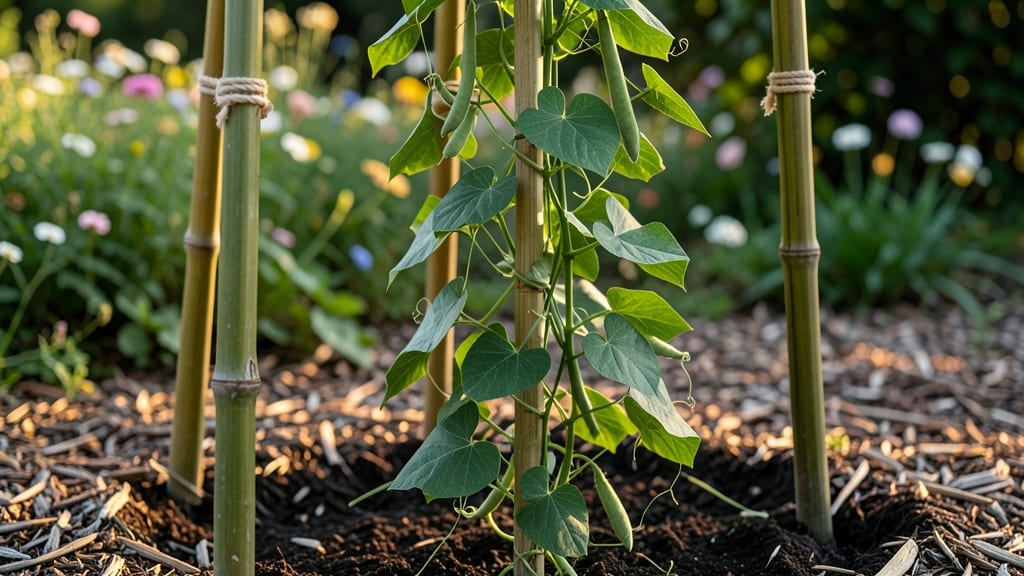
This teepee trellis transforms bare corners into vertical gardens that climb toward the sky. 🌱 I built my first one after watching my pole beans sprawl uselessly across the ground—now they grow 10 feet tall, producing more pods than ever before. The best part?
It takes less than an hour and costs next to nothing. You’ll need just five bamboo stakes (or sturdy branches), some garden twine, and a pair of scissors. No power tools, no complicated math—just basic materials that most gardeners already have lying around.
The structure stays upright for years if you reinforce the ties properly, and it looks like something straight out of a cottage garden magazine.
By the end of this, you’ll have a trellis that supports beans, peas, morning glories, or even small cucumbers—all while saving space and adding drama to your garden. The plants will grow faster, produce more, and your neighbors will ask how you made it look so effortless.
Works for small balconies or sprawling backyards—just adjust the height and stake thickness. Let’s get those vines climbing!
📚 In This Guide
- What you need
- Instructions
- Tips and common mistakes
- Wrapping up and next steps
What you need
- ● Bamboo poles or wooden stakes: 6–10 poles (4–6 feet tall, 1–2 inches in diameter). Bamboo is lightweight and flexible, but cedar or untreated pine work too!
- ● Trellis netting or twine: 100–200 feet of plastic-coated wire (12–14 gauge) or jute twine (for a rustic look).
- ● Staple gun or zip ties: To secure the netting to the poles.
- ● Measuring tape and pencil: For precise pole spacing (aim for 12–18 inches apart at the base).
- ○ Garden stakes or mallet: To anchor the base of your trellis (optional but helpful for stability).
- ● Scissors or wire cutters: For trimming netting/twine.
- ○ Gloves (optional): To protect hands from splinters or rough edges.
- ○ Decorative elements (optional): Paint, twine wraps, or solar lights for a customized touch!
Step-by-Step instructions for building a teepee trellis
Here's my foolproof method for creating a sturdy, long-lasting teepee trellis that supports vines beautifully.
🪴 Step 1: Gather and Prepare Your Materials
For a 4-foot tall teepee (perfect for climbing beans or morning glories), you'll need 4 bamboo stakes (each 8 feet long), 100 feet of twine or jute twine, and 2 garden staples. I prefer bamboo because it's lightweight yet strong enough to support heavy vines like pole beans or cucumbers.
Check each stake for straightness—any with bends or cracks will weaken your structure. Cut them to 6 feet if needed (you'll use the top 4 feet for the trellis). Bundle the stakes together at the top and tie them loosely with twine to form your basic teepee shape before securing permanently.
✂️ Step 2: Assemble the Basic Teepee Frame
Drive one stake into the ground at a slight angle (about 15 degrees from vertical) so the top leans outward. This creates a wider opening at the base for easier planting access. Repeat with the other three stakes, spacing them evenly around your planting area—about 2 feet apart at the base.
At the top, cross the stakes and tie them tightly with twine, securing them with garden staples for extra hold. The crossing point should be 4 feet above ground level—this height works perfectly for most climbing plants while keeping maintenance manageable. Test the structure by gently pushing each stake to ensure it's stable.
💧 Step 3: Create Vertical Support Rungs
Starting about 6 inches above ground level, wrap twine horizontally around the stakes every 12 inches up the structure. Use three strands of twine for each rung—this creates a sturdy ladder for vines to climb. I like to leave a slight gap between the twine and the stake (about ¼ inch) so vines can weave through naturally.
Continue this pattern all the way to the top, creating a series of horizontal rungs that look like ladder rungs. For extra strength, tie each rung with a double knot and reinforce with additional twine if needed. This design prevents vines from slipping through and ensures even support as they grow.
☀️ Step 4: Secure and Plant Around the Trellis
Once your teepee is complete, plant your climbing plants 6-12 inches away from the base of each stake. For beans or peas, I like to plant them in a circle around the trellis—this creates a natural windbreak while encouraging vines to climb upward. Water the soil deeply before planting to help roots establish quickly.
As the plants grow, gently weave the vines through the twine rungs. I avoid tying vines directly to the trellis—this can damage stems as they thicken. Instead, let them curl naturally around the twine. Within 2-3 weeks, you'll see vines reaching the top of the trellis, creating a lush vertical garden that maximizes space.
Tips & tricks for perfect teepee trellis construction
A few strategic adjustments will turn your teepee trellis from functional to exceptional. These are the details that separate a sturdy structure from one that truly thrives with your plants.
Stake Selection Matters: While bamboo works beautifully, you can also use sturdy wooden dowels or even metal rebar if you're supporting particularly heavy vines like cucumbers. The key is ensuring your stakes are straight and free of defects—any bend or crack will create weak points in your structure. Pro tip: If using bamboo, soak the bases in water for 10 minutes before planting to help them set more firmly in the ground.
The Angle Game: That 15-degree outward lean in Step 2 isn't just decorative—it creates crucial space at the base. This prevents your trellis from becoming a tangled mess when you're trying to plant around it. For extra stability, especially in windy areas, consider driving the stakes slightly deeper (about 6 inches below ground) to create a wider base of support.
Twine Technique: When creating those 12-inch rungs in Step 3, don't be afraid to get creative with your twine patterns. I've found that alternating between single and double twine strands every few rungs creates an interesting visual texture while maintaining strength. For particularly vigorous climbers like pole beans, add an extra strand of twine vertically between rungs to create a "ladder" effect that gives vines more purchase points.
Plant Placement Strategy: The 6-12 inch planting distance from the stakes isn't arbitrary—it creates the perfect balance between vine support and root development. For compact varieties like bush beans, plant closer to the 6-inch mark. For sprawling plants like cucumbers, give them the full 12 inches so their roots have room to establish before they need to climb. This small adjustment makes all the difference in plant health and yield.
Pro Tips for Make A Teepee Trellis
- A few strategic adjustments will turn your teepee trellis from functional to exceptional.
- Stake Selection Matters: While bamboo works beautifully, you can also use sturdy wooden dowels or even metal rebar if you're supporting particularly heavy vines like cucumbers.
- The Angle Game: That 15-degree outward lean in Step 2 isn't just decorative—it creates crucial space at the base.
Frequently asked questions
Got questions? Here are some common ones about building a teepee trellis—plus quick answers to keep your project smooth!
What’s the best time of year to build a teepee trellis?
A teepee trellis can be built year-round, but spring or early summer is ideal. This gives plants (like pole beans, cucumbers, or morning glories) plenty of time to climb before hot weather arrives. If building in winter, store materials indoors to prevent warping or rot.
How tall should my teepee trellis be?
Standard height is 5–7 feet for most vining plants, but adjust based on your space and plant type. Tall varieties (like pole beans or sweet peas) thrive with 6–8 feet, while shorter climbers (e.g., nasturtiums) may only need 3–4 feet. Measure your garden bed first!
Can I use bamboo instead of wooden stakes?
Bamboo is a great alternative—it’s lightweight, affordable, and naturally resistant to rot. Just ensure the diameter is at least 1–2 inches for stability. For extra durability, soak bamboo stakes in water for 24 hours before assembly to prevent splitting.
How do I keep pests away from my teepee trellis?
Prevent pests by:
- Choosing healthy plants (start with disease-resistant varieties).
- Pruning regularly to improve airflow and reduce hiding spots.
- Using neem oil or insecticidal soap if needed.
- Placing copper tape around the base to deter slugs/snails.
Will a teepee trellis survive heavy rain or wind?
With proper setup, yes! Secure the base with stakes or sandbags to anchor it. For windy areas, use thicker stakes (2+ inches) or tie them together at the top with twine. If your trellis sways, add a central support pole for extra stability.
Wrapping up and next steps
Building a teepee trellis is a rewarding way to maximize your garden space while adding a charming, functional touch to your outdoor area.
With just a few basic materials and some hands-on effort, you’ve got a sturdy framework ready to support climbing plants, vines, or even flowers. Now that you’re equipped with the know-how, it’s time to get creative!
🌱 Next steps?
- Start small—try a mini teepee for herbs or flowers in a pot!
- Experiment with different plants (like pole beans or morning glories) for stunning vertical gardens.
- Share your progress with fellow gardeners for inspiration!