
How To
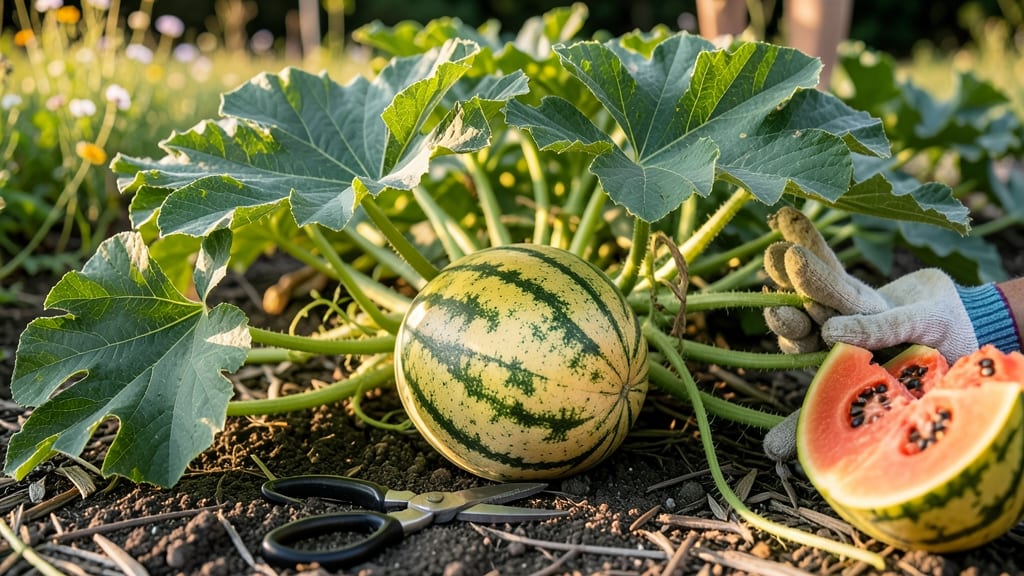
5 Visual and physical signs your watermelon is ready to pick
Harvesting a watermelon at the perfect moment transforms your garden into a sweet, juicy treasure. The key lies in observing five foolproof ripeness cues that reveal when your melon is ready. Start by checking these visual and physical indicators—each one tells a story about your watermelon’s maturity.
First, examine the rind color. A ripe watermelon’s skin shifts from dull to a deep, glossy hue—whether it’s the classic dark green of Sugar Baby or the striped yellow/green of Crimson Sweet. This change signals the fruit’s sugars have fully developed under the late-summer sun ☀️.
Next, focus on the blossom end (the spot where the stem attaches). When ripe, this area turns from white or cream to a creamy yellow or brown. This color shift indicates the internal sugars have peaked—don’t ignore it! A dull white blossom end means your melon needs more time.
Deep, glossy hue (varies by variety)
Yellow/brown instead of white/cream
Dull, hollow sound when tapped
Small tendrils near stem turn brown and crisp
Stem pulls away easily (or is already detached)
The thump test is a classic trick for a reason. Give your watermelon a firm tap with your knuckles—if it sounds dull and hollow, it’s ripe.
A high-pitched "ping" means it’s underripe and needs more time on the vine. Pro tip: Test near the blossom end for the most accurate reading.
Pay attention to the small tendrils near the stem. When ripe, these tiny vines turn brown and crispy—almost like dried straw. This signals the plant is redirecting nutrients to the fruit. Meanwhile, the main vine may start yellowing or dying back, another clue your melon is ready.
Finally, check for stem separation. Gently wiggle the stem—if it pulls away easily (or is already detached), your watermelon is at peak ripeness. Resist the urge to harvest if the stem resists; this often means the fruit isn’t fully mature yet.
Patience here pays off with maximum sweetness ✂️.
Combine these five signs for the most reliable results. For example, a melon with a deep rind color and yellow blossom end but still attached tendrils might need a few more days. Mastering these cues ensures you’ll never waste a hard, flavorless melon again.
Remember, late-summer heat accelerates ripening, so check your melons every 2-3 days once they’re near maturity. The sooner you spot these signs, the sooner you’ll be slicing into a juicy, seedless masterpiece—straight from your garden to your plate!
5 Visual and physical signs your watermelon is ready to pick
Harvesting watermelons at the perfect moment means the difference between a bursting, sweet fruit and one that’s seedy, watery, or even overripe. I’ve learned the hard way—no one wants to bite into a melon that’s still hard as a rock or fermented like a science experiment.
Luckily, nature gives us clear clues if we know what to look for.
Start by checking the blossom end (the spot where the melon connected to the vine). When it turns from white/cream to a creamy yellow or tan, that’s your first green light. This change happens because the vine stops supplying nutrients, signaling the melon is maturing.
Pair this with a deep color—whether it’s dark green (for most varieties) or striped (like heirlooms)—and you’re on the right track.
-
1. Field Spot Fades
The cream-colored patch at the blossom end (called the "field spot") turns yellowish-brown. This happens as the melon matures and stops receiving nutrients. -
2. Tendrils Dry Up
The small tendrils near the stem shrivel and turn brown. Healthy tendrils are a sign the melon still needs time. -
3. Thump Test Sounds Dull
Tap the melon with your knuckles—it should sound deep and hollow, not high-pitched. A dull thud means it’s ripe; a sharp ping means it’s still firm. -
4. Rind Resists Pressure
Press your thumbnail into the rind. If it doesn’t dent easily, the melon is ready. A soft spot means it’s overripe. -
5. Vine Yellows Near Fruit
The vine closest to the melon starts to yellow and wilt. This indicates the plant is redirecting energy to ripen the fruit.
Don’t overlook the thump test, which is one of my go-to tricks. Hold the melon with one hand and tap it firmly with the other. A ripe watermelon produces a dull, thudding sound, almost like knocking on a wooden door.
If it sounds hollow and high-pitched, it’s not ready yet—think of it like testing a drum. This method works best when combined with the other signs, especially on large varieties like Sugar Baby or Crimson Sweet.
For seedless watermelons, pay extra attention to the rind texture and field spot, as they often ripen slightly faster than seeded types.
Seedless varieties also tend to have a shinier rind when fully ripe, so if you’re growing something like Black Diamond, look for that glossy finish alongside the other cues. Pro tip: If you’re unsure, wait a day or two—watermelons won’t ripen further once picked, but they won’t spoil overnight either.
Finally, avoid the temptation to harvest based on size alone. A watermelon can be big but bland if picked too early, or soft and seedy if left too long.
Instead, combine all five signs: field spot, tendril dryness, thump test, rind firmness, and vine yellowing. When three or four of these align, it’s time to grab your pruning shears and bring that melon home for a refreshing slice.
Once you master these signs, you’ll never second-guess your harvest again. And trust me, there’s nothing better than biting into a perfectly ripe watermelon straight from your garden—sweet, juicy, and bursting with flavor. 🍉