
Succulent
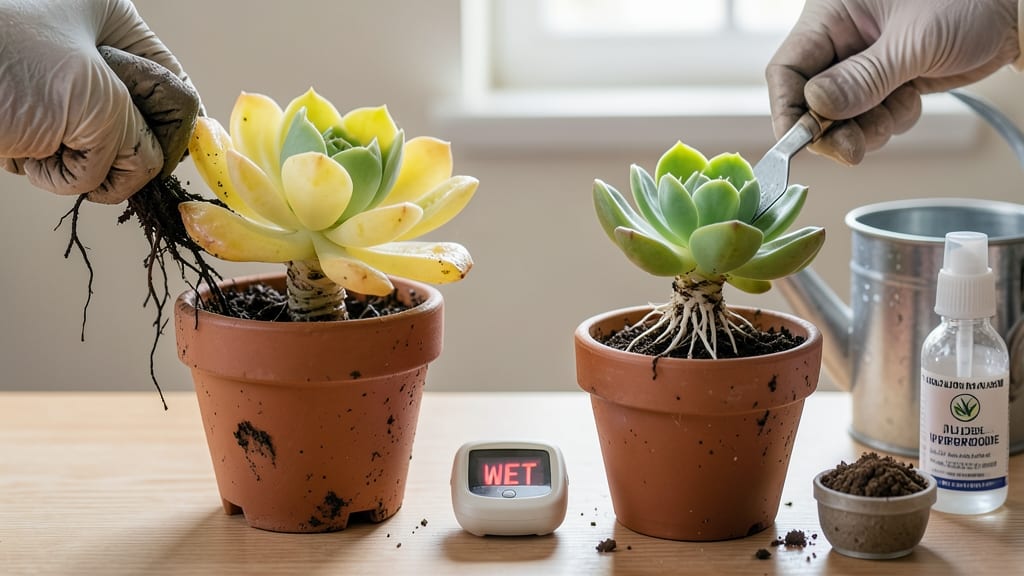
Your succulent’s sad, wrinkled leaves scream "help!"—but most gardeners miss the early signs of how to know if a succulent is overwatered. I’ve drowned more succulents than I’ll admit, and these three visual cues saved my plants from becoming a mushy mess.
The key? Spotting the warning signals before the roots rot.
Start with the leaves: wrinkled, translucent, or squishy textures mean excess water. Then check the stems—mushy or blackened at the base? That’s root rot in action. And don’t ignore the soil: soggy, foul-smelling dirt is a red flag. These signs appear fast, so act before the whole plant collapses.
Recovery starts with stopping water immediately and repotting in fresh, gritty soil. Trim mushy stems with clean scissors, let wounds dry, and place the plant in bright, indirect light.
Within weeks, healthy growth returns—if you catch it early. Prevention? Water only when the soil is bone-dry, and use pots with drainage holes.
Here’s the thing—succulents bounce back better than you’d think. I’ve nursed back plants with 90% rot using this method. The trick is acting fast and giving them space to recover. Now, let’s turn that sad plant into a thriving one—step by step.
Why Overwatering Crashes Succulents
Succulents thrive on neglect, not nurture—but even these drought-loving plants can’t escape the damage of too much water. Overwatering isn’t just a gardening mistake; it’s a scientific breakdown of their survival mechanisms. Let’s dive into the root causes—literally—and why your well-meaning watering habits might be silently killing your plants.
Succulents evolved in arid environments where water drains quickly through sandy, porous soil. When planted in clay pots, heavy garden soil, or containers without drainage holes, excess water pools at the roots instead of evaporating. This creates anaerobic conditions—a suffocating environment where roots can’t breathe.
- Science behind it: Roots need oxygen to respire (yes, they "breathe"!). Water displaces oxygen in soil pores, forcing roots to switch to fermentation—a survival mode that produces ethanol and lactic acid, toxic to plant cells.
Over time, this leads to root rot, where fungal pathogens like Phytophthora or Pythium feast on weakened tissue. - Actionable fix: Use cactus/succulent mix (50% mineral grit, 50% organic matter) and terracotta pots (porous clay wicks away moisture).
Elevate pots on pebbles or a cache pot to prevent waterlogging.
Most gardeners water succulents on a fixed schedule (e.g., every Tuesday), but these plants don’t follow calendars—they follow weather, humidity, and season. Overwatering often stems from: - Seasonal shifts: Winter dormancy means 90% less water is needed.
Yet, many keep summer watering habits year-round. - Humidity traps: High humidity (like in bathrooms or kitchens) slows evaporation, keeping soil damp longer than expected. - Pot size deception: A small 4-inch pot dries out faster than a 10-inch one, but gardeners often water both the same way.
- Science behind it: Succulents store water in thick, fleshy leaves/stems via crassulacean acid metabolism (CAM), a water-conserving photosynthesis process.
When overwatered, this system fails, leading to cell swelling, burst roots, and nutrient dilution (too much water washes away minerals). - Actionable fix: Check soil moisture with your finger—water only when the top 2 inches are bone-dry.
Use a moisture meter for precision, or weigh your pot (a lighter pot = needs water).
Succulents are sun-worshippers, but their water needs plummet in shade or skyrocket in direct heat. Here’s how mismatches cause overwatering damage: - Low-light environments: Without enough sunlight, photosynthesis slows, so the plant can’t process excess water efficiently.
This leads to transpiration imbalance, where water intake > output. - Cold stress: Below 50°F (10°C), succulents metabolize slower, but many gardeners don’t adjust watering.
Cold soil reduces microbial activity, making it harder to break down excess moisture. - Heatwaves: While succulents love heat, intense sun + overwatering = sunburn + rot. Water droplets on leaves act as lenses, magnifying UV rays and causing leaf scorch while roots drown.
- Science behind it: Overwatered succulents in low light accumulate ethylene gas (a stress hormone), which triggers premature aging and cell death.
In heat, excess water also dilutes soil salts, leading to fertilizer burn (even if you’re not fertilizing!). - Actionable fix: - Rotate pots seasonally (e.g., move indoors in winter, outdoors in spring). - Use shade cloth (30–50%) if growing in hot climates. - Avoid watering in peak sun (6 AM–10 AM or post-sunset is ideal).
Fertilizers contain nitrogen, phosphorus, and potassium (NPK), which stimulate growth—but only if the plant can use them. Overwatering washes away nutrients while diluting soil salts, creating a toxic brew that mimics fertilizer burn.
- Science behind it:
- Nitrogen toxicity: Too much nitrogen in saturated soil leads to soft, mushy growth (a red flag for overwatering).
- Salt buildup: Fertilizer salts attract water via osmosis, making roots drink more to dilute the concentration—creating a vicious cycle of thirst.
- Actionable fix:
- Flush soil every 3 months with water to leach excess salts.
- Use half-strength fertilizer (or none in winter).
- Opt for slow-release granules instead of liquid feeds.
Overwatered succulents become magnets for pests and fungi because:
- Soft, rotting tissue attracts mealybugs, scale, and fungus gnats.
- Stagnant water breeds root-eating nematodes and soil-borne pathogens like Fusarium.
- High humidity from overwatering creates the perfect conditions for powdery mildew.
- Science behind it: Healthy succulents have thick cuticles and waxy coatings that repel invaders.
Overwatering weakens these defenses, making plants vulnerable to secondary infections. - Actionable fix: - Isolate affected plants immediately. - Spray with neem oil (natural fungicide/pesticide). - Repot in fresh, sterile soil if roots show signs of rot.
Before blaming your "black thumb," test your soil:
- Stick your finger 2 inches deep—if it’s damp, wait.
- Gently squeeze the soil—if water drips out, you’ve overwatered.
- Lift the pot—if it’s heavy, let it dry out for a week.
Overwatering isn’t just about too much H₂O—it’s about breaking the rules of succulent biology. Once you understand the science behind the rot, you’ll spot the warning signs before it’s too late. 🚨
Revive Your Succulent Step By Step
If you’ve spotted the telltale signs of overwatering—soggy soil, wrinkled leaves, or a mushy stem—don’t panic! With the right care, most succulents can bounce back. The key is acting fast and adjusting your watering habits to prevent future mishaps.
Below, we’ve mapped out practical fixes for each cause, plus pro tips to keep your plants thriving.
When leaves feel squishy or stems collapse like overcooked pasta, your succulent is drowning. Here’s how to save it:
🔥 Step 1: Remove the Plant from the Pot
- Gently lift the succulent out of its container (if it’s too heavy, slide a small knife around the edges first).
- Shake off excess soil to inspect the roots.
🍳 Step 2: Trim the Damage
- Use sterilized scissors or pruning shears to snip off:
- Any black, mushy, or rotten leaves/stems.
- Soft, translucent roots (healthy roots are firm and white).
- Pro tip: If the stem is still mostly firm, you can propagate the healthy cuttings to grow new plants! 🌱
👨🍳 Step 3: Let It Dry Out
- Place the trimmed succulent in a shady spot (no direct sun yet!) for 3–5 days to let the cuts heal.
- Avoid watering during this time—let the plant focus on recovery.
🥘 Step 4: Repot in Fresh Soil
- Choose a terracotta or well-draining pot (plastic traps moisture).
- Use a cactus/succulent mix (or amend regular potting soil with perlite/pumice for better drainage).
- Bury the plant at the same depth it was in before—don’t over-deepen it.
⏰ Step 5: Adjust Watering
- Wait 7–10 days before watering again.
- When you do water, soak thoroughly but only when the top 2 inches of soil are bone-dry.
- Prevention tip: Use the finger test—stick your finger into the soil. If it’s damp past the first knuckle, wait longer. 🌡️
Yellowing or see-through leaves signal root rot or edema (water blisters). Fix it with better airflow and light management:
🔥 Step 1: Check the Roots
- If roots smell foul or look slimy, your succulent needs a root refresh (follow the steps above for trimming).
- If roots are mostly healthy but leaves are still yellow, the issue is likely overwatering + poor airflow.
🍳 Step 2: Repot with Better Drainage
- Move to a pot with drainage holes (if it doesn’t have them, drill some!).
- Use a chunky soil mix (e.g., 60% mineral soil + 40% perlite/pumice).
- Pro tip: Add a layer of gravel or charcoal at the bottom of the pot to boost drainage. ✨
👨🍳 Step 3: Increase Air Circulation
- Place the pot in a spot with gentle airflow (e.g., near a fan on low or an open window).
- Avoid crowded arrangements—succulents need space to breathe.
🥘 Step 4: Gradually Reintroduce Light
- If your succulent was in low light, move it to bright, indirect light first.
- After a week, slowly introduce morning sun (avoid harsh afternoon rays).
- Prevention tip: Rotate the pot weekly so all sides get equal light—this prevents lopsided growth. 🎯
⏰ Step 5: Water Less Frequently
- Switch to a watering schedule based on soil dryness, not time.
- In winter, water every 3–4 weeks; in summer, every 1–2 weeks (but always check the soil first!).
Wrinkled leaves can mean underwatering… but they can also be a sign of recovery from overwatering. Here’s how to tell—and how to help:
🔥 Step 1: Assess the Soil
- Stick your finger in the soil:
- If it’s completely dry, your succulent is thirsty.
- If it’s damp but leaves are still wrinkled, it’s still recovering from past overwatering.
🍳 Step 2: Water Deeply (But Not Too Much)
- If the soil is dry, water until it runs out the drainage holes.
- Let excess water drain completely—never let succulents sit in saucers of water.
- Pro tip: For severely shriveled plants, try a bottom-watering method: Place the pot in a tray of water for 10–15 minutes, then drain. This prevents over-soaking. 💡
👨🍳 Step 3: Monitor for Improvement
- After watering, place the succulent in bright, indirect light.
- Check for plumpness in 3–5 days. If it doesn’t perk up, it may be beyond saving (but use healthy cuttings for propagation!).
🥘 Step 4: Prevent Future Stress
- Group succulents together to create a microclimate (they naturally regulate humidity).
- Avoid misting leaves—water only at the soil level.
- Prevention tip: Use a moisture meter or color-changing soil sensors** to track hydration levels accurately. 📊
Once your succulent is back on track, keep it happy with these watering hacks:
| Do This | Avoid This |
|---|---|
| ✅ Water deeply but infrequently (soak until water drains out). | ❌ Water lightly at the top—this keeps soil damp too long. |
| ✅ Use terracotta pots or fabric pots (they dry out faster). | ❌ Stick to plastic pots unless they have drainage holes. |
| ✅ Adjust seasonally: less water in winter, more in summer (but still check soil!). | ❌ Water on a strict schedule—succulents need flexibility! |
| ✅ Let soil dry completely between waterings (stick your finger in!). | ❌ Water when the soil feels "a little dry"—this leads to overwatering. |
Bonus tip: If you’re really unsure, try the "lift test"—pick up the pot. If it feels heavy, it’s still too wet. If it’s light, it’s time to water! 💪
Frequently asked questions
Why do my succulent leaves turn yellow and mushy when overwatered?
Yellow, mushy leaves are classic signs of root rot from overwatering. The excess moisture suffocates roots, preventing oxygen flow and creating a breeding ground for fungal infections. The plant can't absorb nutrients properly, causing leaves to soften and yellow as cells break down.
Can an overwatered succulent recover if the leaves are already wrinkled?
Yes, but it depends on how severe the damage is. Wrinkled leaves often mean the plant has lost water storage, but the roots may still be salvageable. Trim any rotten parts, repot in fresh, gritty soil, and let it dry out completely for 7-10 days before watering again. With proper care, many succulents bounce back within weeks!
How often should I water succulents to avoid overwatering?
There's no fixed schedule—always check the soil first! Water only when the top 2 inches are completely dry. In summer, this might be every 1-2 weeks, while winter watering can stretch to 3-4 weeks. Use the "lift test": if your pot feels light, it's time to water.
What's the best soil mix to prevent overwatering?
A proper succulent mix should be 60% mineral grit (like perlite or pumice) and 40% organic matter. This creates air pockets that prevent waterlogging. Avoid regular potting soil—it holds too much moisture and suffocates roots. For DIY mixes, combine cactus soil with coarse sand or small gravel.
My succulent's stem is collapsing—is it too late to save it?
Not necessarily! If the stem is still firm at the base, you can often save it. Cut off any blackened sections, let the cuts dry for 3-5 days, then repot in fresh soil. Place it in bright, indirect light and avoid watering for 10 days. Many "dead" looking succulents surprise gardeners by regrowing!