
Size
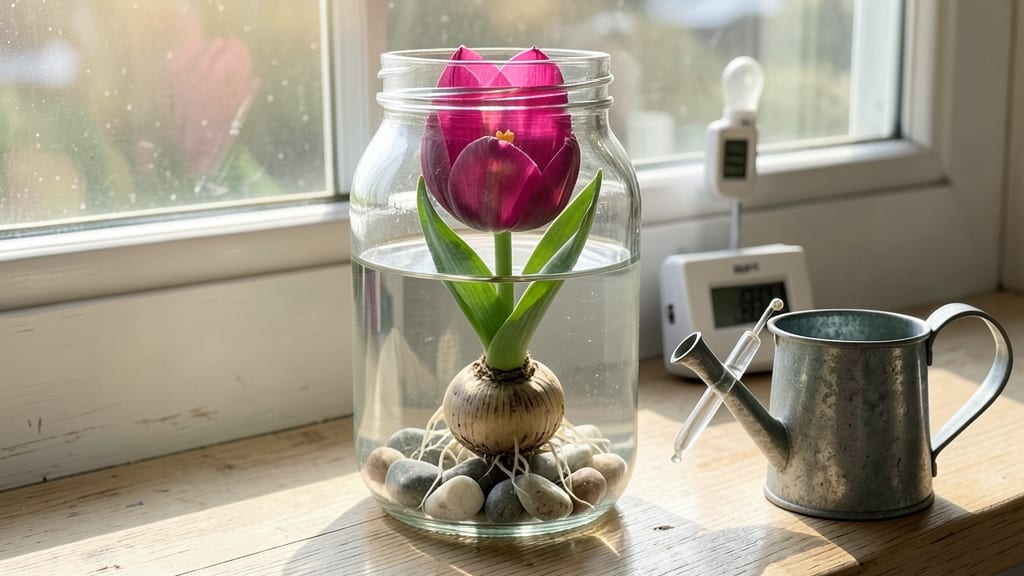
How to grow tulips indoors in water feels like magic—no dirt, no mess, just vibrant blooms on your windowsill. 🌸 I’ve watched paperwhite bulbs sprout roots in plain water, then burst into flowers weeks later, and it’s the easiest way to bring spring indoors any time of year. The secret is simple: good bulbs, clean water, and patience. You’ll see those first roots within 2 weeks, and with the right care, you could have blooms by Valentine’s Day.
Start with healthy bulbs—look for firm, dry ones with no soft spots or mold. A clear vase lets you watch the roots grow, but any container with a narrow neck works.
Fill it with enough water to cover half the bulb, then place it where it gets bright, indirect light (no harsh sun). Change the water every 3-5 days to keep it fresh—stagnant water speeds up rot.
Most bulbs send up shoots within 10-14 days, and some even rebloom the next year if you replant them.
What you end up with is a showstopping centerpiece that lasts 2-3 weeks—longer than store-bought cut flowers. The fragrance alone makes it worth it, plus you skip the upkeep of a full garden.
Just don’t expect giant blooms; these are delicate, indoor-sized tulips, perfect for adding color to dark winter months. The best part? You can reuse the vase for years, turning it into a seasonal tradition.
Fair warning: not all tulips work for this. Paperwhites and some hybrid tulips thrive in water, but dinner-plate varieties often flop. If you want to try replanting, wait until the blooms fade completely before transferring to soil—roots will be delicate at first.
For now, just enjoy watching them grow, one sip of water at a time.
📚 In This Guide
- What you need
- Instructions
- Tips and common mistakes
- Wrapping up and next steps
What you need
- ● Tulip bulbs: Choose fresh, firm bulbs (preferably from a florist or garden center). You’ll need 1–3 bulbs per container, depending on size.
- ● Clear glass container: A wide-mouth jar, vase, or bowl (8–12 inches wide) works best. Ensure it’s at least 6 inches deep to accommodate bulb growth.
- ● Room-temperature water: Use filtered or tap water (let it sit out for 24 hours if chlorinated to remove chemicals).
- ● Pebbles or small stones: A handful (½–1 cup) to weigh down bulbs and keep them submerged at the base.
- ● Decorative pebbles or moss: For a pretty, natural look around the bulbs.
- ● Water conditioner: Like hydrogen peroxide (3%) or aquarium dechlorinator to keep water fresh longer.
- ● Bright, indirect light source: A grow light or sunny windowsill (6+ hours of light daily).
- ● Small spoon or tongs: For gently adjusting bulbs or pebbles.
Step-by-Step instructions for growing tulips indoors in water
Here's how to coax vibrant tulips from bulbs without soil—no green thumb required.
🌱 Step 1: Select and Prepare the Tulip Bulbs
Pick firm, plump tulip bulbs with no soft spots or sprouts—these are your keys to blooms. I like to choose early-spring varieties like 'Darwin Hybrid' or 'Parrot' for their bold colors and reliability. Place the bulbs in a cool, dark spot (like a pantry) for 2-3 weeks before starting; this mimics winter dormancy and ensures stronger stems.
When ready, trim the bulb's base to remove any dried roots or papery skins. This prevents rot and lets the bulb focus energy on growing roots. Don't cut too deep—just enough to expose fresh, firm tissue. Here's the thing: bulbs need to drink water through their base, so keep the trimmed side facing down in your vase.
💧 Step 2: Choose the Right Container and Water
Any clear glass container with a narrow neck works—think mason jars, bud vases, or even a single-stem vase. The narrower the opening, the better it traps humidity around the bulb. Fill the container with room-temperature water until the bulb's base is submerged in 1 inch of water. Too much water drowns the bulb; too little starves it.
Change the water every 3-4 days to prevent bacterial growth, which turns water cloudy and foul-smelling. I like to use filtered or distilled water—tap water's chlorine can stress the bulb. Watch for roots emerging from the base within 7-10 days; this is your signal everything's working. If roots don't appear after 2 weeks, check the bulb for softness—it may be rotting.
☀️ Step 3: Position for Light and Heat
Place your tulip display in bright, indirect light—a north or east-facing window is ideal. Direct sun scorches leaves, while dim light stretches stems into leggy, weak growth. You'll see strong stems when leaves stay deep green and compact. If your space is dark, supplement with a grow light kept 6-12 inches away for 12-14 hours daily.
Keep the room at 65-70°F—warmer temps speed growth but may shorten bloom time. A cool spot like a basement window works well for slowing development if you're forcing bulbs early. Rotate the container a quarter turn weekly so stems grow straight toward the light, not leaning awkwardly.
⏰ Step 4: Monitor Growth and Encourage Blooms
After 4-6 weeks, you'll see the first true leaves (the second set after the initial sprout) emerge. This is when the bulb shifts focus from roots to foliage and eventually blooms. Keep water levels consistent—never let the bulb dry out, but don't submerge it deeper than 1 inch. Overwatering in this stage causes rot.
When the stem reaches 4-6 inches tall, it's time to move the bulb to a cooler spot (50-60°F) to trigger blooming. I place mine on a windowsill with afternoon sun—this mimics spring's gradual warming. You'll notice buds form within 2-3 weeks. Here's the trick: once buds appear, stop rotating the vase so stems don't snap under the weight of flowers.
🌿 Step 5: Enjoy and Extend the Display
Tulips in water typically bloom for 7-10 days—longer than soil-grown ones! To prolong the show, keep the container in bright, indirect light and change water every 2-3 days. Remove any wilted petals promptly; they drain energy from the bulb. Once blooms fade, the foliage stays green for 4-6 weeks—this is critical for the bulb to store energy for next year.
After leaves yellow naturally, you can compost the bulb or replant it in soil for next spring. I've had bulbs rebloom for 2-3 years this way, though their size (and thus flower count) diminishes over time. For a fresh start, repeat the process with new bulbs—it's that easy!
Tips & tricks for growing vibrant indoor tulips in water
These simple secrets will help you coax stunning tulips from bulbs without soil—no gardening experience needed.
The Pre-Chill Secret: That 2-3 week pre-chill in Step 1 is non-negotiable for strong stems. I keep my bulbs in a paper bag in the fridge (not the crisper drawer) for exactly 21 days. This mimics winter dormancy and prevents leggy growth. If you're in a hurry, you can use a freezer for 6-8 weeks—just wrap bulbs in a damp paper towel first to prevent freezing damage.
Container Science: Narrow-necked containers like bud vases create a microclimate that traps humidity—critical for root development. I've had great success with vintage apothecary bottles too. Whatever you choose, make sure the opening is just wide enough for the stem but narrow enough to maintain moisture around the bulb. This simple detail prevents the water from evaporating too quickly between changes.
Lighting Hacks: For Step 3's bright, indirect light requirement, I use a simple LED grow light on a timer for 12-14 hours daily when natural light is insufficient. Position it 8-10 inches away—closer than 6 inches can scorch delicate leaves. Watch for stems growing toward the light; if they lean, rotate the container a quarter turn every other day instead of weekly to avoid shocking the bulb.
Water Chemistry: The water quality in Step 2 makes all the difference. While filtered or distilled works best, I've found that even tap water performs well if you let it sit out uncovered for 24 hours before using—this allows chlorine to dissipate. Never use water that's been sitting for more than 5 days though, as bacterial growth becomes problematic. I also add 1-2 ice cubes to maintain that 1 inch water level without overfilling.
Pro Tips for Grow Tulips Indoors In Water
- These simple secrets will help you coax stunning tulips from bulbs without soil—no gardening experience needed.
- The Pre-Chill Secret: That 2-3 week pre-chill in Step 1 is non-negotiable for strong stems.
- Container Science: Narrow-necked containers like bud vases create a microclimate that traps humidity—critical for root development.
Frequently asked questions
Got questions about growing tulips in water? You’re not alone! Here are answers to the most common queries to help you bloom like a pro—no soil required.
Can I reuse the same water for multiple tulips?
It’s best to change the water every 2–3 days to prevent bacterial growth and keep your tulips fresh. If you’re using a single vase with multiple stems, trim the ends and refresh the water frequently. Over time, the water can become cloudy or develop a foul smell—this is a sign it’s time for a swap!
How long does it take for tulips to bloom indoors in water?
Most tulip bulbs (especially pre-soaked or forced ones) will sprout within 2–4 weeks and bloom in 4–8 weeks, depending on the variety. Forcing bulbs (like paperwhites) speeds this up, while fresh bulbs may take longer. Patience is key—don’t rush the process!
What if my tulips wilt or droop after blooming?
Wilting is normal! Once tulips bloom, their energy is spent. To revive them slightly, trim the stems above the top leaf and place them in fresh water. However, they won’t rebloom indoors. For next year, plant the bulbs in soil after they’ve finished flowering outside.
Can I use any type of tulip bulb for this method?
Not all tulips work equally well. Dutch or hybrid tulips (like ‘Parrot’ or ‘Darwin Hybrid’) thrive in water, while some species (like wild or botanical tulips) may not force as reliably. Check the bulb packaging for “forcing-friendly” labels, or opt for pre-soaked bulbs for guaranteed results.
What’s the deal with the roots growing in the water?
Those roots are a good sign! They help anchor the bulb and absorb nutrients. If roots get too long (3–4 inches), you can trim them slightly to keep them manageable. Just avoid over-trimming—they’re essential for stability and hydration. Think of them as tiny lifelines for your tulip!
Wrapping up and next steps
Growing tulips indoors in water is a rewarding way to enjoy vibrant blooms year-round with minimal effort! 🌸 With just a few simple steps—like selecting healthy bulbs, using clean water, and providing bright light—you can transform your space into a cheerful garden oasis.
Whether you're a beginner or a seasoned plant lover, this method makes it easy to keep your tulips thriving.
Now that you’re ready to start, pick your favorite tulip bulbs and give this method a try! Share your progress or creative setups with fellow plant enthusiasts—your indoor garden might just inspire others. Happy growing! 🌱