
Propagation
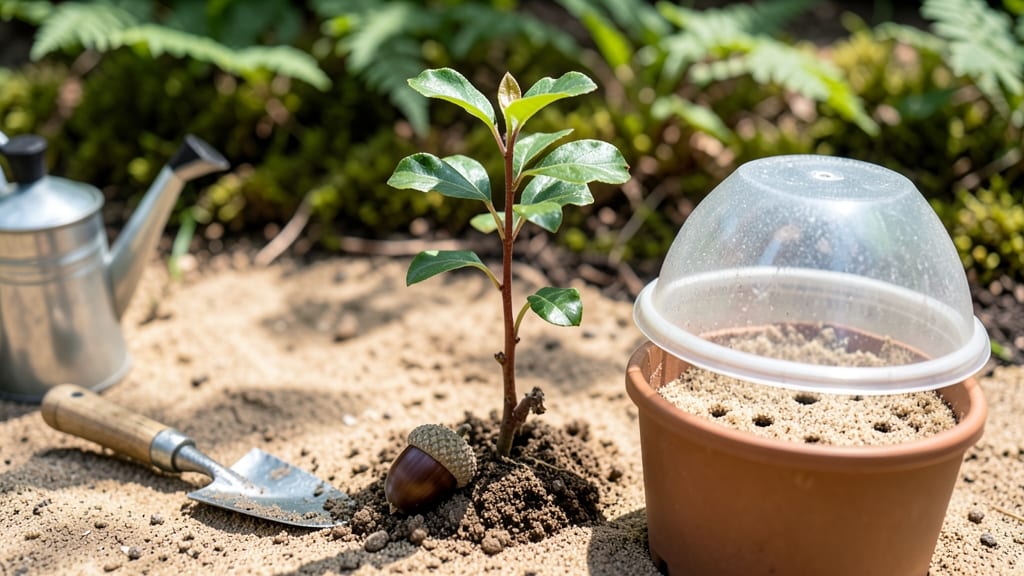
How to grow live oak trees from acorns means planting future giants in your backyard. 🌳 I’ve watched acorns sprout into towering trees—it’s a slow process, but the payoff is worth every year of waiting. These majestic oaks start as tiny seeds but grow into the stately shade trees that define Southern landscapes.
The key is patience and preparation. You’ll need fresh acorns, a cold stratification period to mimic winter, and well-draining soil. Most acorns won’t sprout for months, but when they do, they grow strong roots that anchor them for decades.
This method works best in zones 7-10, where live oaks thrive naturally.
By the time your sapling reaches 5 feet, it’ll be ready for permanent planting. The first few years are critical—keep the soil moist but never soggy, and protect young trees from deer or rabbits. With proper care, you could be shading your grandchildren’s backyard in 30-50 years.
Fair warning: This isn’t a quick project. But if you’re willing to invest time, you’ll grow a tree that outlives generations. Let’s get those acorns sprouting!
📚 In This Guide
- What you need
- Instructions
- Tips and common mistakes
- Wrapping up and next steps
What you need
- ● Fresh live oak acorns – At least 10–20 acorns (more increases success rates). Harvest them in fall (October–November) when they’re fully mature but still moist.
- ● Potting mix – Well-draining, sterile mix (e.g., 50% peat moss or coconut coir + 50% perlite or coarse sand). Avoid garden soil—it can compact and rot acorns.
- ● Small pots or seed trays – 3–4 inch diameter (one per acorn) with drainage holes. Biodegradable pots (like peat or coconut fiber) are ideal for transplanting later.
- ● Plastic wrap or humidity dome – To create a mini greenhouse and retain moisture during germination.
- ● Spray bottle – For gentle watering (avoid soaking).
- ● Scissors or pruning shears – To trim acorn caps (if needed) and later prune seedlings.
- ○ Fertilizer (optional but helpful) – Balanced, water-soluble fertilizer (e.g., 10-10-10) diluted to half-strength. Use only after sprouts emerge (4–6 weeks post-planting).
- ● Warm, indirect light – A south-facing window or grow light (12–14 hours/day). Live oaks need light to germinate but avoid direct sun until seedlings are sturdy.
- ○ Consistent warmth – Ideal germination temp: 70–80°F (21–27°C). Use a seedling heat mat (optional) if your space is cooler.
- ● Patience (and space!) – Live oaks grow slowly. Plan for 3–5 years before transplanting outdoors. Choose a permanent spot with full sun and well-draining soil.
- ● Safety gear (for outdoor acorn collection) – Gloves (some acorns have mild irritants) and a bucket to collect them.
- ● Stratification setup – If acorns aren’t fresh, cold-stratify them for 60–90 days in a damp paper towel in the fridge to mimic winter.
- ● pH test kit – Ensure your potting mix is slightly acidic (pH 5.5–6.5)—live oaks prefer it.
- ● Mulch (for later stages) – Wood chips or pine straw to retain moisture and protect young trees.
- ● Tree tags or labels – To track planting dates and care notes.
Step-by-Step instructions for growing live oak trees from acorns
Here's how to transform acorns into sturdy young oaks—it's slower than seed packets, but the payoff is worth it.
🌱 Step 1: Collect and Prepare Fresh Acorns
Gather acorns from mature live oaks in late fall, when they've fallen naturally. Look for plump, round acorns with smooth, intact caps—these are your best bets for strong seedlings. Avoid any that feel hollow when tapped or show signs of insect damage. I always collect from multiple trees to ensure genetic diversity in my future forest.
Soak the acorns in lukewarm water for 24-48 hours to soften the hard outer shell. This mimics natural winter stratification and helps break dormancy. After soaking, place them between damp paper towels in a sealed container. Store them in the refrigerator for 6-8 weeks—this cold treatment mimics winter conditions and boosts germination rates significantly.
🌱 Step 2: Plant Acorns for Germination
Fill small pots (about 3-4 inches deep) with a mix of 50% potting soil and 50% perlite to ensure good drainage. Plant each acorn 1 inch deep in its own pot—crowding them leads to weak, competing seedlings. I like to use biodegradable pots so I can transplant without disturbing delicate roots later.
Keep the soil consistently moist but never soggy. You'll know it's right when the top inch feels damp to the touch. Place the pots in a warm, shaded location (around 70-75°F) until germination occurs, which typically takes 3-6 weeks. Don't be tempted to move them to bright light yet—young seedlings need protection from intense sun.
☀️ Step 3: Provide Gradual Sunlight and Protection
Once the first true leaves appear (not the initial seed leaves), gradually introduce the seedlings to morning sun for 1-2 hours daily. Over 2-3 weeks, increase their sun exposure until they can handle 4-6 hours of direct sunlight by late afternoon. Live oak seedlings are sensitive to sudden sun exposure, so this slow transition prevents leaf scorch.
Watch for leggy growth—a sign they're stretching toward light. If this happens, move them closer to the light source or add a grow light for 12-14 hours daily. Strong seedlings will have thick stems and dark green leaves. At this stage, I fertilize lightly with a balanced 10-10-10 solution every 4-6 weeks to encourage steady growth without burning tender roots.
🪴 Step 4: Transplant to Larger Containers
When seedlings reach 6-8 inches tall (usually after 6-12 months), move them to 5-gallon containers filled with a mix of 60% potting soil and 40% compost. This larger root space gives them room to grow before outdoor planting. Handle the seedlings carefully—grip the soil ball, not the stem, to avoid damaging the root system.
After transplanting, water deeply to settle the soil around the roots. Place the containers in a location with partial shade for the first 2 weeks, then gradually increase sun exposure. Live oaks are drought-tolerant once established, but young trees need consistent moisture. Water when the top 2 inches of soil feel dry, and avoid wetting the leaves to prevent fungal diseases.
⏰ Step 5: Prepare for Outdoor Planting
After 2-3 years in containers, your live oak seedlings should be 3-5 feet tall with a sturdy root system. Choose a permanent outdoor location with full sun and well-draining soil. Live oaks thrive in USDA zones 7-10, so check your local climate before planting.
Dig a hole twice as wide as the root ball but no deeper. Gently remove the seedling from its container, loosen any circling roots, and place it in the hole so the top of the root ball sits 1 inch above ground level. Backfill with native soil, water deeply, and add a 2-3 inch layer of mulch around the base, keeping it 6 inches away from the trunk to prevent rot. Water regularly for the first 3 months to help roots establish in their new home.
Tips & tricks for growing live oak trees from acorns
Common pitfalls—and how to sidestep every one when nurturing these majestic seedlings.
Acorn Selection Matters: In Step 1, don't overlook the importance of acorn quality. I've learned the hard way that even small imperfections can derail germination. Tap each acorn firmly—if it sounds hollow, toss it. The best acorns should feel heavy for their size and have caps that stay firmly attached. For extra assurance, soak a few test acorns in warm water for 24 hours before committing to the full 6-8 week cold treatment. This quick check reveals which ones will likely sprout.
Cold Treatment Consistency: The 6-8 weeks in the refrigerator during Step 1 is non-negotiable for breaking dormancy, but consistency is key. I place my sealed containers on a middle shelf where the temperature stays steady around 35-40°F. Check them weekly—if condensation forms inside, wipe it away to prevent mold. Pro tip: Use a small thermometer inside one container to verify the cold treatment stays within this range. Too warm and you'll waste time; too cold and you risk freezing the acorns.
Germination Environment: When planting acorns in Step 2, the warm shaded location (70-75°F) can be tricky to maintain. I've had success using a seedling heat mat set to 75°F under the pots during cooler months. The key is keeping that top inch of soil consistently moist—never soggy. I use a spray bottle to mist the soil daily rather than watering from above, which prevents disturbing the acorns. Place a humidity dome over the pots for the first 2 weeks to recreate the moist forest floor conditions acorns need to sprout.
Sunlight Transition Strategy: The gradual sunlight increase in Step 3 is where most beginners go wrong. Start with just 1-2 hours of morning sun and increase by 30 minutes every 3-4 days. I've seen seedlings develop sunburn when moved too quickly to full sun. For indoor growers, position pots near an east-facing window first, then rotate to south-facing as they acclimate. If you notice yellowing leaves, you've moved them too fast—return them to their previous light conditions for a few days before trying again.
Pro Tips for Grow Live Oak Trees From Acorns
- Common pitfalls—and how to sidestep every one when nurturing these majestic seedlings.
- Acorn Selection Matters: In Step 1, don't overlook the importance of acorn quality.
- Cold Treatment Consistency: The 6-8 weeks in the refrigerator during Step 1 is non-negotiable for breaking dormancy, but consistency is key.
Frequently asked questions
Got questions about growing live oak trees from acorns?
You’re not alone—this process takes time and care! Here are answers to the most common queries to help you succeed.
How long does it take for an acorn to sprout?
With the right conditions (warmth, moisture, and patience), acorns typically sprout within 4–8 weeks. Some may take longer, especially if stored improperly. Keep them in a damp paper towel or seed-starting mix in a warm spot (around 70°F) to speed things up.
Can I plant acorns directly in the ground, or do I need to start them indoors?
You can plant acorns directly in the ground, but starting them indoors (or in a controlled nursery pot) gives them a head start—especially in colder climates. If planting outdoors, do it in fall or early winter so nature’s freeze-thaw cycles help break dormancy. For indoor starts, use a seed tray with well-draining soil.
Why aren’t my acorns germinating? Troubleshooting tips.
If your acorns refuse to sprout, check these common issues:
- Dormancy: Live oak acorns need stratification (cold treatment). Try refrigerating them for 6–8 weeks in a damp paper towel before planting.
- Old or damaged acorns: Use only plump, fresh acorns (from the current year) with no cracks or mold.
- Poor moisture: Keep the soil or growing medium consistently moist (not soggy) during germination.
- Temperature: Acorns need warmth (60–75°F) to sprout. A heat mat can help if your home is chilly.
How do I tell if an acorn is from a live oak vs. another type of oak?
Live oak acorns are smaller and rounder (about ½–¾ inch long) with a smooth, light brown cap that doesn’t cover the nut completely. Compare them to other oaks:
Oak Type
Acorn Shape
Cap Coverage
Live Oak
Round, plump
Cap covers <1/3 of nut
White Oak
Oval, flatter
Cap covers ~1/2 of nut
Red Oak
Longer, pointed
Cap covers <1/4 of nut
When in doubt, research the tree source or plant a few—live oaks are worth the wait!
What’s the best way to transplant a young live oak seedling?
Transplant seedlings when they’re 1–2 feet tall with a well-developed root system (spring or early fall is ideal). Dig a hole twice as wide as the root ball, loosen the roots gently, and place the seedling at the same depth it was in the pot. Water thoroughly and mulch to retain moisture. Avoid transplanting during extreme heat or cold.
Wrapping up and next steps
Growing a live oak from an acorn is a rewarding journey that combines patience, care, and a touch of nature’s magic. 🌱 From selecting the right acorn to nurturing your sapling through its early years, each step builds toward a future giant that will shade your landscape for generations. Your next step? Grab those acorns, prepare your growing space, and watch as your tiny starter transforms into a majestic live oak—one of the most resilient and beautiful trees in North America!