
Propagation
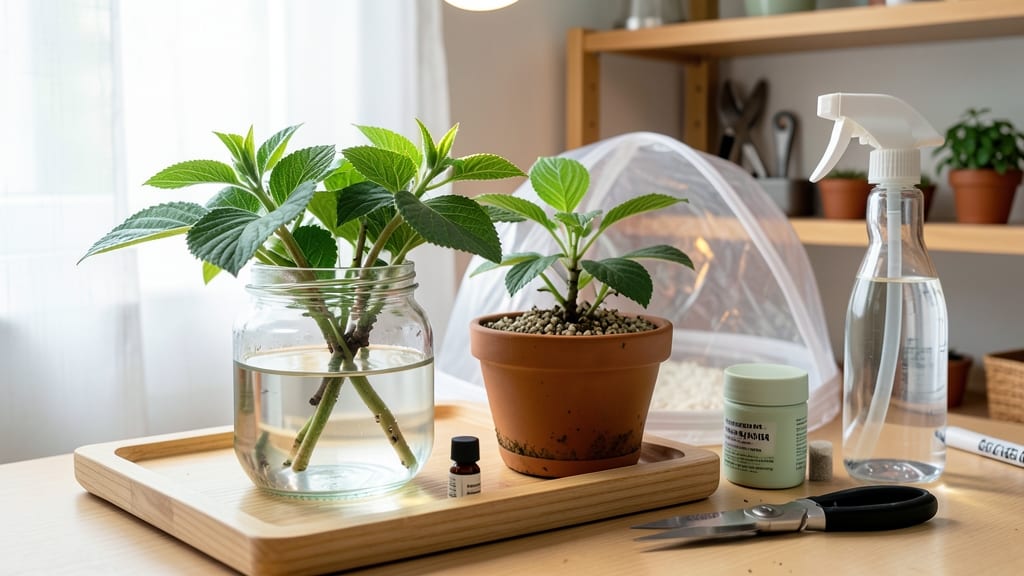
Here’s how to grow fuchsias from cuttings in just three weeks—from a single cutting to a thriving plant. 🌱 I've propagated dozens of fuchsias this way, and the secret isn't complicated—it's about selecting the right stems, using the perfect water setup, and giving them the right conditions to root confidently.
The best time to start is late spring when new growth is vigorous but not yet hardened off. You'll need sharp scissors (clean is critical), a clean glass or jar, and some rooting hormone to speed things along.
Semi-ripe stems—those with a mix of mature and new growth—root the fastest, and cutting just below a leaf node gives you the best chance at success.
Within 3 weeks, you'll see tiny roots forming at the base of your cuttings, ready to transplant into soil. The key is keeping the water fresh, providing bright indirect light, and maintaining humidity with a plastic bag or humidity dome.
No more wilting, no more guesswork—just reliable, lush new plants.
Works for both trailing and upright varieties, and you can even overwinter your cuttings indoors for next season's garden. Here's how to do it without the usual propagation headaches.
📚 In This Guide
- What you need
- Instructions
- Tips and common mistakes
- Wrapping up and next steps
What you need
- ● Fuchsia cuttings: 4–6 healthy, non-flowering stems (4–6 inches long), taken from the current season’s growth.
- ● Sharp pruning shears or scissors: Sterilized to prevent disease (1 pair).
- ● Clean glass or jar: Wide-mouthed (e.g., mason jar) to hold water and allow light access (1 per cutting).
- ● Room-temperature water: Filtered or distilled (enough to submerge 1–2 inches of the stem).
- ○ Rooting hormone (optional but helpful): Powder or gel (1 small bottle).
- ● Small pots or trays: 4–6-inch diameter (for transplanting later).
- ● Well-draining potting mix: Peat-based or cactus/succulent mix (1 bag).
- ● Plastic wrap or humidity dome: To retain moisture (1 sheet or dome).
- ● Hydrogen peroxide (3%): To sterilize water and cuttings (small bottle).
- ● Grow lights or sunny windowsill: For consistent light (1–2 bulbs or natural light source).
- ● Labeling tags: To track varieties (small pack).
- ● Fertilizer (low-dose): Balanced liquid fertilizer (e.g., 10-10-10) for post-rooting care.
Step-by-Step instructions for growing fuchsias from cuttings
Here's how I turn softwood cuttings into thriving fuchsias—no fancy tools, just patience and a sunny windowsill.
🌱 Step 1: Take the Right Cuttings at the Right Time
Choose healthy, non-flowering stems from this year's growth—look for 4-6 inch sections with 3-4 leaf pairs and no buds. I always grab cuttings in late spring or early summer when new growth is plump and flexible. Use clean, sharp scissors or pruners to make a diagonal cut just below a leaf node (that little bump where leaves attach). This angled cut gives roots more surface area to grow.
Strip off all but the top 2-3 leaves—too many leaves mean the cutting will focus on feeding them instead of growing roots. If leaves are large, pinch them in half to reduce moisture loss. Here's the thing—if your cutting feels woody or dry, it's past its prime. Fuchsias root best from fresh, green growth.
💧 Step 2: Root in Water with Precision
Fill a clean glass or jar with room-temperature water—never cold, which shocks the cutting. Place your cutting in so only the bottom 2 inches are submerged. The leaves should stay dry; if they touch water, they'll rot. I use a pencil to prop up the stem if needed, keeping it stable but not submerged.
Change the water every 3-4 days to prevent bacterial growth (fuzzy black stuff means it's time to refresh). Place the jar in bright, indirect light—a south-facing window is perfect. You'll see tiny white bumps at the waterline in 10-14 days—those are roots! Don't rush this; patience here means stronger plants later. If the water gets cloudy before roots appear, the cutting might be stressed—try again with fresh cuttings.
☀️ Step 3: Transition to Soil When Roots Are Ready
Once roots reach 1-2 inches long (usually 3-4 weeks), it's time to pot up. I use 4-inch pots with well-draining potting mix—fuchsias hate soggy roots. Gently remove the cutting from water, rinse off any gunk, and plant it so the roots sit just below the soil surface. Press the soil lightly around the stem to remove air pockets.
Water lightly to settle the soil, then place the pot in bright, indirect light for a week. Avoid direct sun—newly transplanted cuttings can scorch. After a week, you can gradually introduce more light. This is where most people fail: rushing the transition causes shock. If leaves yellow, it's usually overwatering—let the top inch dry out between waterings.
🌿 Step 4: Encourage Bushy Growth and Flowering
Pinch back the tips of new growth when stems reach 4-5 inches to encourage bushiness. This might seem counterintuitive, but it forces the plant to grow wider instead of leggy. I also rotate the pot weekly so all sides get even light—this prevents lopsided growth. Fuchsias need moderate water—water when the top inch of soil feels dry, but don't let them dry out completely.
Flowering usually starts 8-10 weeks after transplanting, but only if you've given them bright light and balanced care. If buds form but drop, it's often due to temperature fluctuations—keep them in a 60-75°F range. Real talk: the first flowers might not be showstoppers, but each round gets better as the plant matures. Deadhead spent blooms to encourage more flowers and keep the plant tidy.
Tips & tricks for growing fuchsias from cuttings
These simple secrets will help you turn those cuttings into thriving fuchsias faster than you'd expect!
Timing is Everything: In Step 1, when you're taking cuttings, focus on the late spring or early summer window—this is when the growth is most vigorous. I've found that cuttings taken in late spring root in 10-14 days instead of the usual 3 weeks, giving you a head start. Look for stems that are flexible and green, not woody or dry—those are your winners!
Light Matters: For Step 2, that bright indirect light is crucial. A south-facing window is ideal, but if you don't have one, a grow light on a timer for 12-14 hours daily works wonders. I've seen cuttings in low light take twice as long to root—so keep them near a window where they can soak up that natural glow without getting scorched.
Rooting Hack: When you're checking for roots in Step 2, gently tug on the cutting after 2 weeks. If it resists slightly, roots are forming! If it slides right out, give it another week. I've also had success using a clear jar so I can see the root development without disturbing the cutting. This lets me monitor progress without stressing the plant.
Transition Wisdom: In Step 3, when you're moving to soil, don't rush the 1-week acclimation period in indirect light. I've seen many cuttings fail because they were moved to full sun too soon. Start with just a few hours of morning sun, then gradually increase. This slow transition helps prevent transplant shock and gives your new plant the best chance to thrive.
Pro Tips for Grow Fuchsias From Cuttings
- These simple secrets will help you turn those cuttings into thriving fuchsias faster than you'd expect!
- Timing is Everything: In Step 1, when you're taking cuttings, focus on the late spring or early summer window—this is when the growth is most vigorous.
- Light Matters: For Step 2, that bright indirect light is crucial.
Frequently asked questions
Got questions about growing fuchsias from cuttings?
Here are some of the most common ones—and their answers—to help you propagate like a pro!
When is the best time to take fuchsia cuttings?
The ideal time is during the spring (late April to June) or early summer when fuchsias are actively growing. Avoid taking cuttings in winter or late fall—they won’t root as easily. Look for healthy, non-flowering stems with at least 3-4 sets of leaves for best results!
How long does it take for fuchsia cuttings to root in water?
With the right conditions, most fuchsia cuttings will develop roots in 3-4 weeks. Keep them in indirect light (like a bright windowsill) and change the water every 3-5 days. Patience is key—some may take up to 6 weeks if they’re slower to root!
What should I do if my fuchsia cuttings rot in water?
Root rot is a common issue, but it’s easy to fix! If you notice mushy stems or bad smells, remove the cutting immediately. Trim off any mushy parts, then replant in fresh, sterile potting mix (like a 50/50 blend of perlite and peat). Avoid overwatering—let the top inch of soil dry out between waterings!
Can I grow fuchsias from cuttings without using water?
Many gardeners prefer soil propagation because it mimics natural conditions. Dip the cut end in rooting hormone, then plant in a moist, well-draining mix (like perlite and peat). Keep the soil consistently damp (not soggy) and cover with a plastic bag to retain humidity. Roots usually form in 4-6 weeks!
What’s the best temperature for rooting fuchsia cuttings?
Fuchsias thrive in warmth—aim for a consistent temperature of 65–75°F (18–24°C). Avoid cold drafts or sudden temperature drops, which can stunt root growth. A heat mat (set to 70°F/21°C) can speed up rooting if you’re in a cooler climate. Just keep humidity high to prevent stress!
Wrapping up and next steps
Growing fuchsias from cuttings is a rewarding way to expand your garden—all it takes is patience, the right tools, and a little green thumb love! 🌱 With just a few simple steps, you’ll have thriving plants ready to brighten up your space in no time.
Once your cuttings root successfully, transplant them carefully and watch your fuchsia family flourish.
Ready to dive deeper? Experiment with different varieties or try propagating other plants next! 🌸 Your gardening journey is just getting started—happy growing!