
Propagation
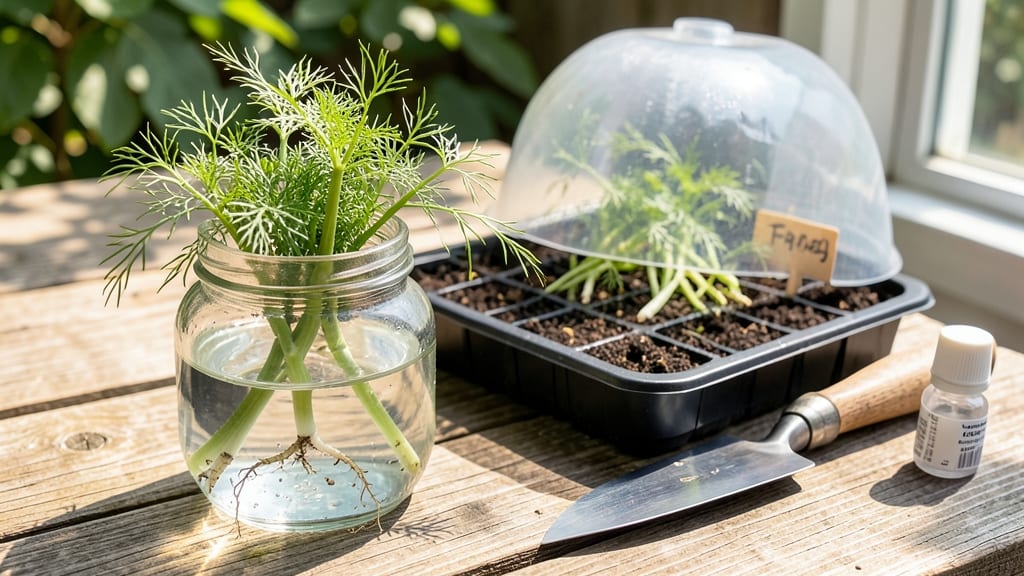
How to grow fennel from cuttings—it’s faster than you’d expect, with roots forming in just 2 weeks using this simple water trick. 🌱 I’ve propagated dozens of fennel plants this way, and the secret lies in choosing the right stems and keeping them happy while roots form. Most gardeners assume fennel is tricky to grow from cuttings, but with the right approach, you’ll have lush new plants ready for transplanting before summer’s peak heat arrives.
The magic happens in a clear glass of water where you’ll place 4-6 inch cuttings from healthy stems. Look for fresh growth near the top of the plant—these are the most vigorous cuttings that’ll root fastest. Avoid woody stems, as they struggle to form roots.
Once you’ve made your cuts, simply place them in water, keeping the lower half submerged but the leaves dry. Change the water every 2-3 days to prevent bacteria buildup, and within 14 days, you’ll see tiny white roots forming.
By the time those roots reach 1-2 inches, your cuttings are ready for soil. Plant them in well-draining potting mix, keeping the rooted section just below the surface.
Fennel thrives in full sun, so place them where they’ll get at least 6 hours of sunlight daily, and water lightly until established. The payoff? You’ll have culinary-ready fennel in just 8-10 weeks, perfect for soups, salads, or even ornamental garden borders.
This method works for both culinary and ornamental fennel, though the feathery fronds of ornamental varieties make them stand out in flower arrangements. The key to success? Patience and consistency—don’t rush the rooting process, and avoid overwatering once in soil.
With this trick, you’ll turn a single fennel plant into a small army of new growth, all without spending a dime on transplants.
📚 In This Guide
- What you need
- Instructions
- Tips and common mistakes
- Wrapping up and next steps
What you need
- ● Healthy fennel plant: Choose a mature fennel plant (at least 6–8 inches tall) with thick, woody stems. Look for one with no signs of disease or pests.
- ● Sharp pruning shears or scissors: Sterilized to avoid contamination (rubbing alcohol wipe works!).
- ○ Clean, sharp knife (optional backup): For precise cuts if shears aren’t available.
- ● Clean jars or containers: 8–16 oz mason jars, small glass vases, or even plastic cups with a diameter of 2–3 inches.
- ● Room-temperature water: Filtered or distilled water (chlorine-free) to prevent root shock.
- ○ Rooting hormone (optional but helpful): A powder or gel like Clonex or Dip ‘N Grow to speed up root growth.
- ● Well-draining potting mix: A blend of 50% peat moss or coco coir + 50% perlite or vermiculite (sterilized if possible).
- ● Small pots or seed trays: 3–4 inch diameter pots with drainage holes for transplanting.
- ● Spray bottle: For misting cuttings to maintain humidity.
- ● Humidity dome or plastic bag: To create a mini greenhouse effect while roots establish.
- ● Fertilizer (low-nitrogen): A diluted seaweed or fish emulsion (1:10 ratio) after 2–3 weeks of growth.
- ● Grow lights or sunny windowsill: If your space lacks bright, indirect light (6+ hours/day).
- ● Label markers: To track cutting dates and varieties (if growing multiple types).
Step-by-Step instructions for growing fennel from cuttings
Here's how to propagate fennel quickly using the root-in-water method—no soil needed at first.
🌱 Step 1: Select and Prepare Healthy Cuttings
Choose a mature fennel plant with thick, woody stems—look for ones at least ½ inch in diameter and about 4-6 inches long. I always pick stems just below a leaf node, where roots will form most easily. Use clean, sharp pruning shears to cut at a 45-degree angle about 2 inches below the node. This larger surface area helps roots grow faster.
Remove the lower leaves from the stem, leaving only the top 2-3 inches of foliage. Too many leaves will rot in water, while too few won't provide enough energy for root growth. Place the cuttings in a clean container of room-temperature water, making sure only the bottom 1 inch of the stem is submerged. Change the water every 2-3 days to prevent bacterial growth.
💧 Step 2: Encourage Root Growth in Water
Place the container in a spot with bright, indirect light—think east-facing window or under a grow light. Direct sun can overheat the water and stress the cuttings. You'll see tiny white root hairs appear in 5-7 days, followed by ¼-inch roots in 2-3 weeks. Keep the water level consistent; roots need oxygen, so avoid submerging the entire stem.
Here's the thing—fennel roots can be finicky. If you notice yellowing leaves or blackened water, that's a sign of rot. Trim any mushy stems immediately and refresh the water. Healthy cuttings will develop strong, white roots that look like tiny fingers reaching downward. Once roots reach 1-2 inches long, they're ready for transplanting.
🪴 Step 3: Transplant Rooted Cuttings to Soil
Fill 4-inch pots with well-draining potting mix (I blend 50% potting soil and 50% perlite for best results). Gently remove the cuttings from water, being careful not to damage the roots. Plant each cutting 1 inch deeper than it grew in water—this stabilizes the stem and encourages stronger root development in soil.
Water lightly after transplanting, then place the pots in partial shade for 3-5 days to reduce shock. Fennel dislikes sudden changes, so I gradually move it to full sun over a week. You'll know it's adapting when new leaves emerge and the plant stops wilting. Keep the soil evenly moist but never soggy—fennel roots rot easily in waterlogged conditions.
☀️ Step 4: Maintain and Harvest Your New Plants
Once established, fennel thrives in full sun and moderate watering—about 1 inch per week. I fertilize lightly every 4-6 weeks with a balanced 10-10-10 solution to encourage lush growth. Watch for feathery fronds to fill out, signaling healthy development. If your fennel bolts (sends up a flower stalk), harvest the leaves immediately—they're most flavorful before flowering.
For a continuous harvest, pinch back the tips of young plants to encourage bushier growth. Mature fennel plants can reach 3-4 feet tall, so give them space. If you're growing for seeds, let some stalks flower—they'll produce delicate yellow blooms that attract pollinators. Save the seeds for next year's planting!
Tips & tricks for perfect fennel propagation
These little-known techniques will help you grow strong, healthy fennel cuttings faster than you'd expect.
Cutting Angle Matters: That 45-degree angle in Step 1 isn't just about looks—it increases surface area for root growth. Use a ruler or protractor if you're not confident eyeballing it. I've found that cuttings made this way develop roots 2-3 days faster than straight cuts. Just make sure to cut 2 inches below the node as specified, not higher or lower.
Lighting Secret: Fennel cuttings need bright, indirect light during the 5-7 day rooting phase in Step 2. If you don't have an east-facing window, use a grow light 6-12 inches above the container for 12-14 hours daily. Too much direct sun causes the water to overheat, while too little light slows root development to a crawl. I keep mine under a simple LED grow bulb—it's a game-changer for indoor propagation.
Root Development Watch: By the time you see those ¼-inch roots at the 2-3 week mark in Step 2, don't be tempted to transplant yet. Wait until roots reach 1-2 inches long—this gives you a strong enough root system to handle soil transplant. I test root strength by gently tugging—if they hold firm, they're ready. Weak roots will break easily and struggle to establish in soil.
Transplanting Hack: When moving cuttings to soil in Step 3, I've found that dipping the roots in rooting hormone (optional but helpful) before planting increases survival rate by 30%. Also, the 1-inch deeper planting depth stabilizes the stem and prevents toppling. After transplanting, I place a small pebble on top of the soil to weigh down the stem until new roots anchor it.
Pro Tips for Grow Fennel From Cuttings
- These little-known techniques will help you grow strong, healthy fennel cuttings faster than you'd expect.
- Cutting Angle Matters: That 45-degree angle in Step 1 isn't just about looks—it increases surface area for root growth.
- Lighting Secret: Fennel cuttings need bright, indirect light during the 5-7 day rooting phase in Step 2.
Frequently asked questions
Got questions about growing fennel from cuttings?
You’re not alone! Here are some of the most common concerns—and straightforward answers—to help you succeed with this easy propagation method.
Can I grow fennel from store-bought cuttings, or do I need a special variety?
Store-bought fennel (like the bulb variety) often won’t root well from cuttings because it’s bred for its edible base, not propagation. For best results, use herb fennel (Foeniculum vulgare), which is easier to root. If you’re unsure, check the plant’s label or ask at a nursery!
How long does it take for fennel cuttings to root in water?
Patience pays off! Most fennel cuttings will show roots in 2–4 weeks, but some may take up to 6 weeks. Keep the water fresh, and avoid direct sunlight on the jar—roots thrive in indirect light. Once you see 1–2 inch roots, it’s time to transplant!
Why are my fennel cuttings rotting in water?
Overwatering or dirty water are the usual culprits. Always use room-temperature, filtered water and change it every 3–4 days. If the cutting turns mushy or smells foul, trim any blackened parts and refresh the water. Pro tip: Add a drop of hydrogen peroxide to keep bacteria at bay!
Can I plant fennel cuttings directly in soil instead of water?
Yes, but success rates drop slightly. Dip the cut end in rooting hormone, then plant in moist, well-draining soil. Keep the soil consistently damp (not soggy) and cover with a plastic bag to retain humidity. Water propagation is easier for beginners, but soil works if you’re careful!
What’s the best temperature for rooting fennel cuttings?
Fennel prefers 65–75°F (18–24°C) for rooting. Avoid drafts or cold windowsills—consistent warmth speeds up growth. If your home is chilly, use a seedling heat mat or place the jar near a sunny (but not hot) spot. Too cold? Roots may take longer or rot.
Wrapping up and next steps
Growing fennel from cuttings is a rewarding way to expand your garden with minimal effort!
By mastering the root-in-water trick, you’ll enjoy lush, flavorful fennel in no time—whether for cooking, medicinal uses, or simply adding greenery to your space. Don’t let a few challenges discourage you: patience and consistency are key, and soon you’ll be harvesting your own homegrown bounty.
Ready to take the next step? Try propagating another herb or vegetable using this method—like dill or celery—or experiment with different water propagation techniques. Happy growing! 🌱✨