
How To
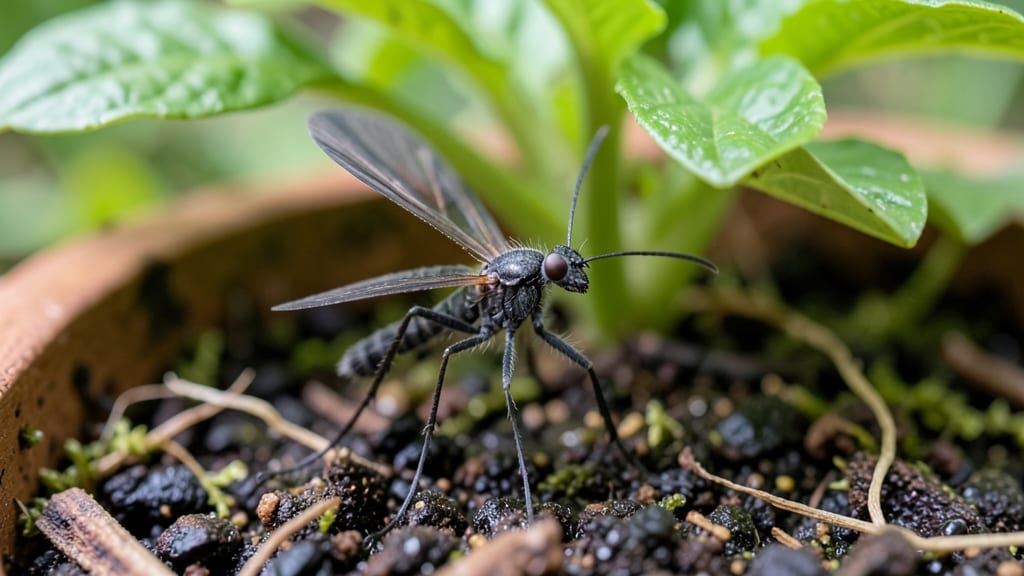
How to get rid of fungus gnats outside—those tiny black gnats hovering over your soil aren’t just annoying—they’re sucking the life from your plants. 🌱 I’ve battled fungus gnats in my outdoor containers for years, and this boiling water barrier method finally stopped them dead in their tracks. It’s not just about killing adults; it smothers their eggs before they even hatch, breaking the cycle for good.
The secret weapon is simple: a ring of boiling water poured around the base of infected pots. The heat kills larvae in the soil while creating a moisture barrier that gnats can’t cross.
You’ll need a kettle, some patience, and about 10 minutes—no harsh chemicals required. My basil and peppers haven’t had a gnat problem since I started this routine every two weeks.
What you’ll get is healthy roots, no more wilting seedlings, and plants that actually grow instead of getting stressed. The barrier works for both containers and in-ground beds, and it’s safe for beneficial insects once the water cools. No more frantic swatting or disappointed harvests—just strong, thriving plants.
Works best in warm, humid conditions where gnats thrive, but even dry climates see results. The key is consistency—once a week during outbreaks, then monthly for prevention. Your garden’s foundation is the soil, and this method keeps it fungus-gnat-free for the long haul.
Root Causes Of Outdoor Fungus Gnats
Fungus gnats thriving outside aren’t just a random nuisance—they’re drawn by specific conditions that create the perfect breeding ground. Understanding these triggers is the first step to eliminating them for good. Here’s why these tiny pests invade your outdoor spaces, broken down into clear, science-backed causes.
Fungus gnats (family Sciaridae) lay their eggs in damp, decaying organic material, where larvae can feast on fungi and decomposing plant matter. If your garden, potted plants, or mulch beds stay soggy for extended periods, you’re essentially rolling out a welcome mat for these pests.
- Why it happens: Eggs hatch within 24–48 hours in consistently moist conditions (above 60% moisture).
Adult gnats are attracted to the scent of decomposing leaves, grass clippings, and even wet cardboard or compost piles. - Actionable insight: Check for areas with poor drainage or where water pools after rain.
Mulch that’s too thick (over 2–3 inches) can trap moisture and encourage fungal growth—both a buffet for gnats.
Fungus gnats don’t just tolerate fungi—they thrive on it. Their larvae feed on microscopic fungi in the soil, and adult gnats often cluster near fungal hotspots like mushroom patches or rotting wood.
- Why it happens: Fungi release volatile organic compounds (VOCs) that attract adult gnats.
If your soil is rich in organic debris (e.g., fallen leaves, old roots, or unmulched grass clippings), fungal populations explode—bringing gnats with them. - Actionable insight: Inspect garden beds for white, thread-like fungal hyphae or mushroom growth. Remove infected plants or wood immediately and replace with well-draining soil.
Stagnant water isn’t just a problem for plants—it’s a fungus gnat magnet. These pests avoid dry conditions but flock to areas where water sits, creating anaerobic (low-oxygen) zones ideal for fungal proliferation.
- Why it happens: Waterlogged soil lacks oxygen, stressing plant roots and promoting fungal overgrowth. Gnats detect these conditions through humidity gradients and chemical cues from decaying roots. - Actionable insight: Test drainage by digging a small hole (6 inches deep) and filling it with water.
If it doesn’t drain within 30 minutes, amend the soil with perlite or sand. Avoid overwatering—stick to 1 inch per week (including rain).
A thick layer of thatch (dead grass, roots, and debris) on lawns or garden edges traps moisture and blocks airflow—two things fungus gnats love. This layer also hides fungal colonies and larval cocoons from view.
- Why it happens: Thatch acts as an insulator, keeping soil temperatures high and humidity elevated. Gnat larvae burrow into this layer to avoid predators and dry conditions. - Actionable insight: Dethatch lawns in spring or fall using a rake or dethatching tool.
For severe buildup, consider a vertical mower to slice through compacted layers.
Piles of leaves, grass clippings, or yard waste create microclimates where fungus gnats reproduce unchecked. These materials decompose slowly, maintaining high moisture and fungal activity for months.
- Why it happens: Decomposing plant matter releases sugars and organic acids that stimulate fungal growth.
Gnats use these same compounds as navigational cues to find breeding sites. - Actionable insight: Clear debris from garden edges, under shrubs, and along fences. Compost piles should be turned regularly and kept dry (aim for a 1:1 ratio of "browns" like leaves to "greens" like grass).
Fungus gnats are most active in warm (70–80°F), humid conditions—think late spring through early fall. While they can’t control the weather, they exploit it by targeting outdoor spaces that stay consistently damp.
- Why it happens: High humidity lowers the evaporation rate of soil moisture, extending the window for fungal growth.
Gnats also migrate toward light sources (like porch lights) at night, which is why they swarm in these conditions. - Actionable insight: Monitor afternoon humidity—if it’s above 70% for more than a few hours, take preventive steps like reducing overhead watering or applying a drying agent (e.g., diatomaceous earth) to soil surfaces.
Even after treating an infestation, fungus gnat larvae can pupate in the soil and emerge as adults weeks later. If outdoor conditions remain favorable, a single surviving larva can restart the cycle.
- Why it happens: Larvae enter a pupal stage (resistant to many treatments) that lasts 7–14 days. If soil stays moist, pupae hatch into adults, perpetuating the problem. - Actionable insight: After treatment, let soil dry completely for 2–3 days to break the larval life cycle.
Repeat applications may be needed if humidity persists.
Unintentional actions like over-fertilizing (especially with nitrogen-rich compost) or using peat moss (which holds moisture) can create gnat-friendly conditions.
- Why it happens: Excess nitrogen promotes soft, spongy soil that retains water and fungal food sources. Peat moss breaks down slowly, maintaining dampness for years. - Actionable insight: Switch to coarse bark mulch or pine straw for drainage.
If fertilizing, use slow-release, balanced formulas (e.g., 10-10-10) and water deeply but infrequently.
Practical Ways to Eliminate Outdoor Fungus Gnats
Fungus gnats thriving outside your home can be more than just a nuisance—they’re a sign of moisture, decay, or poor drainage lurking in your yard. The good news?
You can tackle them head-on with targeted fixes. Below, we’ve mapped out the most effective solutions based on the root causes, from quick fixes to long-term prevention.
If your garden beds, mulch piles, or potted plants are soggy, fungus gnats will feast on the decaying organic matter. Drainage is key—these pests can’t survive in dry, well-aerated soil.
🔥 Step 1: Improve Soil Drainage
- Amend heavy clay soil with compost, sand, or perlite to loosen it up.
Aim for a mix that drains within 15–30 minutes after watering. - Raise garden beds slightly (even by a few inches) to prevent water pooling. - Install French drains in problem areas if water consistently pools after rain.
🍳 Step 2: Adjust Your Watering Habits
- Water deeply but less frequently—fungus gnats thrive in constantly damp soil.
Aim for 1–2 inches of water per week (including rain) and let the top 2–3 inches of soil dry out between waterings. - Water in the morning so excess moisture evaporates quickly. - Avoid overhead sprinklers—they keep foliage wet, creating a gnat paradise.
Use drip irrigation or soaker hoses instead.
👨🍳 Step 3: Remove Organic Debris
Fungus gnats love rotting leaves, mulch, and plant waste. Clear out:
- Old mulch (replace with cedar or pine bark, which repels gnats).
- Decaying plant matter (compost it properly or remove it).
- Weeds and grass clippings near garden beds.
While mulch protects plant roots, thick layers (over 2–3 inches) trap moisture, inviting fungus gnats. If your mulch pile is a hotspot, it’s time to thin it out and aerate.
⏰ Step 1: Reduce Mulch Depth
- Spread mulch in a 2–3 inch layer—any thicker, and it becomes a gnat breeding ground.
- Fluff existing mulch with a rake to improve airflow.
🔪 Step 2: Mix in Sand or Grit
- Add coarse sand or perlite to mulch to create air pockets and reduce moisture retention.
- For compost piles, turn them weekly to speed up decomposition and dry them out.
💡 Pro Tip:
If you must keep thick mulch (like for winter protection), sprinkle dry diatomaceous earth (DE) on top—it’s a natural, non-toxic way to smother eggs and larvae without harming plants.
Fungus gnats love moist, shaded spots—think birdbaths, clogged gutters, or low-lying areas where water collects. Eliminate standing water to cut off their watering hole.
🌡️ Step 1: Drain Problem Zones
- Fix gutters and downspouts—ensure water flows away from your home, not pools near foundations.
- Grade your yard so water runs away from structures (a slight slope of 1–2% is ideal).
- Add a French drain or swale (a shallow trench) to redirect water in problem areas.
🎯 Step 2: Remove Water Sources
- Empty and clean birdbaths, saucers under pots, and pet bowls weekly.
- Cover rain barrels with fine mesh to prevent gnats from laying eggs.
- Check for buried leaks (like broken irrigation lines) that keep soil perpetually damp.
If you’re composting too close to your garden, fungus gnats will migrate from the pile to your plants. Move your compost bin or adjust its management.
✨ Step 1: Relocate the Compost Pile
- Place compost bins at least 10–15 feet away from garden beds.
- Aerate the pile by turning it every 1–2 weeks to speed up decomposition and dry it out.
📊 Step 2: Use the "Hot Composting" Method
- Balance greens (nitrogen-rich, like grass clippings) with browns (carbon-rich, like leaves or straw) in a 3:1 ratio.
- Keep the pile moist like a wrung-out sponge—not soggy, not dry.
- Insulate the pile with straw or cardboard in cold weather to maintain high temps (140°F+ kills gnat eggs).
Once you’ve fixed the root causes, maintain a gnat-free zone with these habits:
- Mulch with cedar or pine bark—these naturally repel fungus gnats.
- Use drip irrigation instead of sprinklers to keep foliage dry.
- Rotate crops annually to disrupt gnat life cycles.
- Plant gnat-repelling herbs like basil, mint, or thyme near problem areas.
- Apply beneficial nematodes (Steinernema feltiae) to outdoor soil—they hunt gnat larvae naturally.
- Don’t overuse chemical pesticides—they kill beneficial insects and can harm pets/kids.
- Avoid flooding soil with water as a "fix"—it makes the problem worse.
- Skip the thick mulch if you’re prone to gnat outbreaks—opt for thinner layers with sand.
By tackling moisture, organic debris, and standing water, you’ll starve out fungus gnats before they even start. Start with one fix today—drainage, mulch adjustment, or compost relocation—and watch those gnats disappear for good! 🚀
Frequently asked questions
Why do fungus gnats keep coming back after I treat them?
Fungus gnats return because their life cycle includes a pupal stage that can survive for 7–14 days in moist soil. If conditions stay damp (above 60% moisture), new adults emerge. To break the cycle, let soil dry completely for 2–3 days after treatment and fix drainage issues. Repeat applications may be needed during humid seasons.
Is boiling water safe for outdoor plants and soil?
Yes, but use it carefully! Pour boiling water around the base of pots or garden edges (not directly on plants) to create a heat barrier that smothers eggs and larvae. The water cools quickly and won’t harm roots or beneficial microbes. For in-ground beds, focus on 1–2 inches deep—this kills larvae without scorching deeper soil layers.
Can I use diatomaceous earth (DE) outside to prevent fungus gnats?
Sprinkle food-grade DE around plant bases, mulch edges, or compost piles—it’s a natural insecticide that dehydrates gnat eggs and larvae. Reapply after rain (it loses effectiveness when wet). For best results, mix it with coarse sand to help it stick and improve airflow in soil.
What’s the best time of day to apply outdoor fungus gnat treatments?
Apply treatments in the early morning (before 9 AM) when humidity is high but temperatures are cooler. This helps the solution penetrate soil better and reduces evaporation. Avoid late afternoon—heat can make boiling water treatments less effective, and DE loses potency in direct sunlight.
Will beneficial nematodes work for outdoor fungus gnat control?
Yes! Steinernema feltiae nematodes are microscopic predators that hunt gnat larvae in soil. Apply them to moist (not soggy) soil in the evening for best results. They thrive in outdoor conditions and won’t harm plants, pets, or beneficial insects. Reapply every 4–6 weeks during active gnat seasons for long-term prevention.