
How To
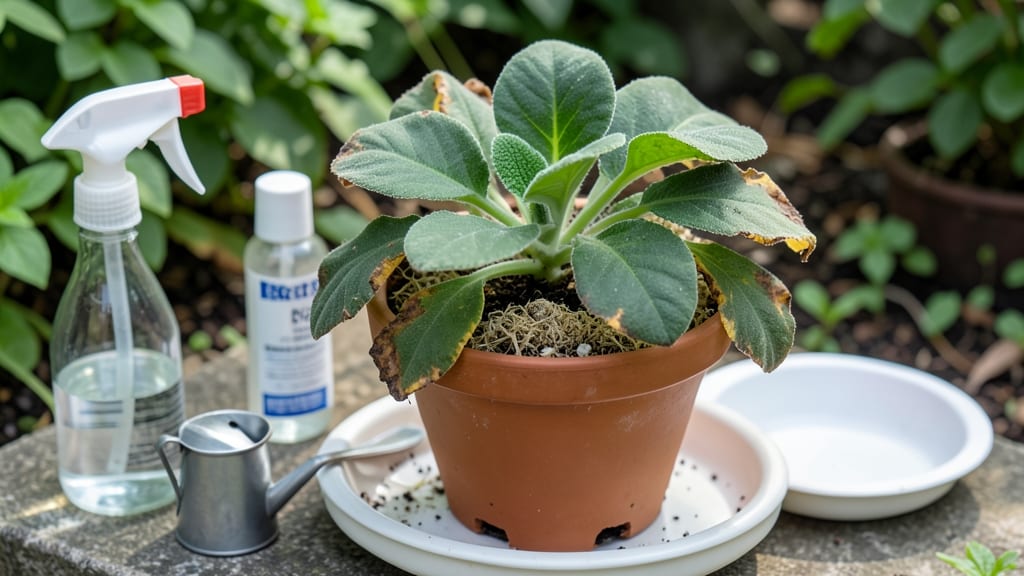
Your African violet’s drooping leaves aren’t a death sentence—just a cry for help. 💚 Here’s how to fix an overwatered African violet before the roots rot completely. I’ve nursed back more than my share of soggy violets, and the secret to revival starts with what you do right now.
The key is acting fast: stop watering immediately, then gently remove the plant to assess the damage.
Yellow leaves and mushy stems mean root rot has set in, but don’t toss the plant yet. Trim away any blackened or squishy roots with clean scissors, then repot in fresh, well-draining soil mixed with perlite or sand.
African violets hate soggy feet—place the pot in a saucer with pebbles (not water) to catch drainage, and keep it in bright, indirect light.
Within 7-10 days, you’ll see new growth if the roots were salvageable. The plant will slowly perk up as it dries out, but here’s the game-changer: water only when the top inch of soil feels bone-dry. Use room-temperature water and bottom-water to avoid drowning those delicate roots again.
Long-term, adjust your routine: water once a week in winter, twice in summer, and always check soil moisture before adding more. African violets thrive on neglect—better to underwater slightly than risk another soggy disaster. Trust the process, and your violet will bounce back stronger than ever.
Root Causes of Overwatered African Violets
African violets (Saintpaulia) are delicate beauties that thrive on consistency—but when their water needs go awry, their roots suffer. Understanding why overwatering happens is the first step to preventing it. Here’s a breakdown of the most common culprits, explained in clear, actionable terms.
African violets hate soggy feet, yet many growers unknowingly create the perfect swamp conditions. The issue often stems from: - Improper pots: Terra cotta is breathable, but glazed ceramic or plastic pots trap moisture against the roots, slowing evaporation.
Even "drainage holes" can clog with compacted soil or root debris over time. - Heavy, clay-based soils: While African violets prefer well-draining mixes, garden soil or potting blends with high clay content repel water after the first soak, leaving roots saturated.
This creates an anaerobic (oxygen-deprived) zone where roots suffocate. - No mulch or grit: Without perlite, sand, or orchid bark mixed into the soil (20–30% by volume), water pools at the bottom instead of draining freely.
🔍 Pro Tip: Tap your pot before watering—if it feels heavy, it’s likely waterlogged. A quick press should reveal excess moisture.
African violets need moisture, but their roots are shallow and sensitive. Common watering mistakes include: - Ignoring the "soak-and-dry" cycle: These plants prefer the top inch of soil to dry out completely between waterings.
Finger-testing (insert your finger 1–2 inches deep) is foolproof—if it’s damp, wait. - Watering from above: Pouring water over the leaves or crown (the stem base) mimics a tropical downpour, which African violets do not experience in their native East African highlands.
This leads to fungal rot and waterlogged soil. - Inconsistent schedules: Watering every day or only when you remember creates extremes—either chronic sogginess or drought stress. Stick to a routine (e.g., every 5–7 days in winter, every 3–4 days in summer) and adjust for humidity.
⚠️ Warning Sign: Yellowing leaves with mushy stems? That’s a classic sign of crown rot from overwatering.
African violets are finicky about their surroundings, and environmental stress often amplifies overwatering damage: - Low light + high humidity: In dim conditions, plants grow slowly and retain moisture longer. Pair that with a humid bathroom or kitchen, and you’ve got a recipe for root rot.
Aim for bright, indirect light (east or north-facing windows) and keep humidity below 50%. - Cold drafts or temperature swings: Roots slow down in temperatures below 65°F (18°C), making them more susceptible to rot.
Avoid placing pots near AC vents, drafty windows, or heaters. - Tray watering without escape: If your pot sits in a saucer or cache pot, ensure excess water drains away within 30 minutes. Stagnant water in the tray acts like a wick, pulling moisture back into the soil.
💡 Quick Fix: Move your violets to a warmer spot (70–75°F / 21–24°C is ideal) and increase airflow with a small fan on low.
Not all potting mixes are created equal. African violets demand a specific balance: - Too much peat moss: While peat holds moisture, it also compacts over time, reducing aeration.
Over time, it can create a waterlogged core even if the surface seems dry. - Lack of organic matter: Soil with no compost or worm castings breaks down too quickly, losing structure and drainage.
Replace old soil every 6–12 months. - Salinity buildup: Tap water with high mineral content (especially in hard water areas) leaves behind salts that crust the soil surface. This prevents water from penetrating evenly, leading to uneven moisture and root suffocation.
📊 Soil Test: Mix equal parts African violet mix, perlite, and peat moss for the perfect recipe. Add a handful of orchid bark for extra aeration.
Sometimes, unseen invaders worsen waterlogging: - **Fungal infections (e.g., Phytophthora, Pythium): Thriving in wet conditions, these pathogens clog root cells and block water uptake.
Look for black, mushy roots or white mold on soil. - Root-knot nematodes: Microscopic worms that burrow into roots, creating gall-like lumps that disrupt water flow.
They thrive in waterlogged soil. - Scale or mealybugs: These pests excrete honeydew, which attracts sooty mold—a fungal growth that smothers leaves and traps moisture against the plant.
🛡️ Prevention**: Sterilize tools with rubbing alcohol, repot in fresh mix annually, and inspect roots during repotting for signs of pests.
Quick Fixes for Soggy Soil
Now that you know the signs and causes of overwatering, let’s tackle the problem head-on with actionable steps. African violets are resilient, but they need the right care to bounce back.
Below are targeted solutions based on the most common causes of overwatering—so you can diagnose and fix the issue fast.
If your African violet is sitting in waterlogged soil, the first step is to stop the damage in its tracks.
- Remove the plant from its pot gently, shaking off excess soil to expose the roots.
- Check for rot: Healthy roots are firm and white or light tan. If they’re mushy, dark, or smell foul, they’re rotting and need trimming.
- Pat the roots dry with a clean paper towel—this helps prevent further fungal growth.
- Repot in fresh, dry soil: Use a well-draining African violet mix (or cactus/succulent soil with perlite added). Avoid compacted or peat-heavy soils that trap moisture.
💡 Pro Tip: If the roots are severely damaged, consider propagating a healthy leaf cutting while you nurse the plant back to health.
Poor drainage is often the root (pun intended) of overwatering. Fix it with these adjustments:
- Upgrade your pot:
- Use terracotta or ceramic pots with drainage holes (plastic traps moisture).
- If repotting isn’t an option, drill holes in the bottom of the pot if it’s plastic.
- Add a drainage layer:
- Place pebbles, perlite, or broken pottery shards at the bottom of the pot before adding soil. This creates air pockets and prevents water from pooling.
- Choose the right soil mix:
- African violets thrive in light, airy soil. Mix equal parts:
- African violet potting mix
- Perlite or coarse sand
- Orchid bark (optional, for extra aeration)
- African violets thrive in light, airy soil. Mix equal parts:
🌡️ Prevention Tip: Always water until the soil is moist but not soggy, then wait until the top inch is dry before watering again. Stick your finger in the soil—if it’s damp past the first knuckle, wait longer.
Overwatering often stems from routine, not intention. Break the cycle with these watering rules:
- Water from the bottom:
- Place the pot in a shallow tray of water for 10–15 minutes, then remove it. This encourages roots to grow downward and prevents topsoil from staying wet.
- Avoid wetting the leaves:
- Water only the soil to prevent fungal diseases like leaf spot. Use a watering can with a narrow spout or a spray bottle for precision.
- Check humidity levels:
- African violets prefer 40–50% humidity. If your home is dry (common in winter), use a pebble tray or humidifier near the plant.
⏰ Watering Schedule Cheat Sheet:
| Season | Frequency | Method |
|---|---|---|
| Spring/Fall | Every 5–7 days | Bottom-watering |
| Summer | Every 7–10 days | Less often due to higher humidity |
| Winter | Every 10–14 days | Reduce watering; soil stays drier |
If your African violet is already showing signs of stress, pruning can help it recover faster.
- Trim rotted roots:
- Use sterilized scissors to cut away black, mushy roots. Focus on saving healthy tissue.
- Dust the cuts with cinnamon powder (natural antifungal) or hydrogen peroxide (3%) to prevent infection.
- Remove yellow/brown leaves:
- Snip off any leaves that are wilting, yellowing, or mushy. This redirects energy to new growth.
- Give it space to breathe:
- After repotting, place the plant in bright, indirect light (no direct sun) for a week to recover.
🎯 Recovery Timeline:
- 1–2 weeks: Focus on drying out the roots and avoiding water stress.
- 3–4 weeks: New growth should appear if the roots are healthy.
- 6+ weeks: If no improvement, consider propagating from a healthy leaf.
If your African violet is completely wilted, blackened, or smells bad, it may need a last-resort rescue:
- Leaf propagation:
- Cut a healthy leaf at a 45-degree angle and place it in sphagnum moss or water (change water every 3–4 days).
- Roots should appear in 2–4 weeks. Once rooted, transplant to fresh soil.
- Root hormone treatment (optional):
- Dip cuttings in rooting hormone gel to encourage faster regrowth.
- Isolate the plant:
- Keep it separate from other plants to prevent spreading rot or disease.
Once your African violet is back on track, keep these habits to avoid future overwatering:
✅ Pot with drainage holes ✅ ✅ Well-draining soil mix ✅ ✅ Water only when topsoil is dry ✅ ✅ Bottom-watering method ✅ ✅ Bright, indirect light ✅ ✅ Regular root checks (every 2–3 months) ✅
By following these steps, your African violet will not only survive but thrive with a strong, healthy root system. Patience and consistency are key—your plant will thank you with vibrant blooms in no time! 🌸
Frequently asked questions
How do I know if my African violet is overwatered vs. underwatered?
Check the soil and leaves: Overwatered violets have mushy stems, yellowing leaves, and roots that smell foul or turn black. Underwatered plants show crispy brown edges and dry, papery leaves. Stick your finger 1 inch deep—if damp, it’s overwatered; if bone-dry, it’s thirsty. Pro tip: Weigh the pot—overwatered pots feel heavy, while dry ones feel light.
Can I save an African violet with completely black roots?
It depends! If any white or firm roots remain, trim them carefully, repot in fresh soil, and propagate healthy leaves while recovering the plant. If all roots are black and mushy, try leaf propagation—cut a healthy leaf at a 45-degree angle, place it in water or sphagnum moss, and wait 2-4 weeks for roots to regrow. Even without roots, leaves often sprout new plants!
Why does my African violet keep getting overwatered even when I think I’m being careful?
Common traps include plastic pots (traps moisture), no drainage layer (water pools at the bottom), or heavy soil mixes (holds water too long). Fix this by switching to terracotta pots, adding perlite or pebbles at the bottom, and using a light, airy African violet mix. Also, water only when the top inch is completely dry—finger-testing prevents guesswork.
How long should I wait before watering my African violet after fixing overwatering?
Wait until the top 1-2 inches of soil feel completely dry—this could take 7-14 days depending on humidity and temperature. After repotting, avoid watering for 3-5 days to let roots adjust. Then, switch to the bottom-watering method (place pot in a tray of water for 10 minutes) to prevent future sogginess.
Will my African violet bloom again after overwatering recovery?
Yes! Once roots recover (3-4 weeks), your violet will redirect energy to new growth and blooms. Focus on bright, indirect light and consistent watering (every 5-7 days in winter). Remove dead leaves to encourage flowering, and avoid fertilizing until new growth appears. Patience pays off—healthy roots mean vibrant blooms within 6-8 weeks!