
Propagation
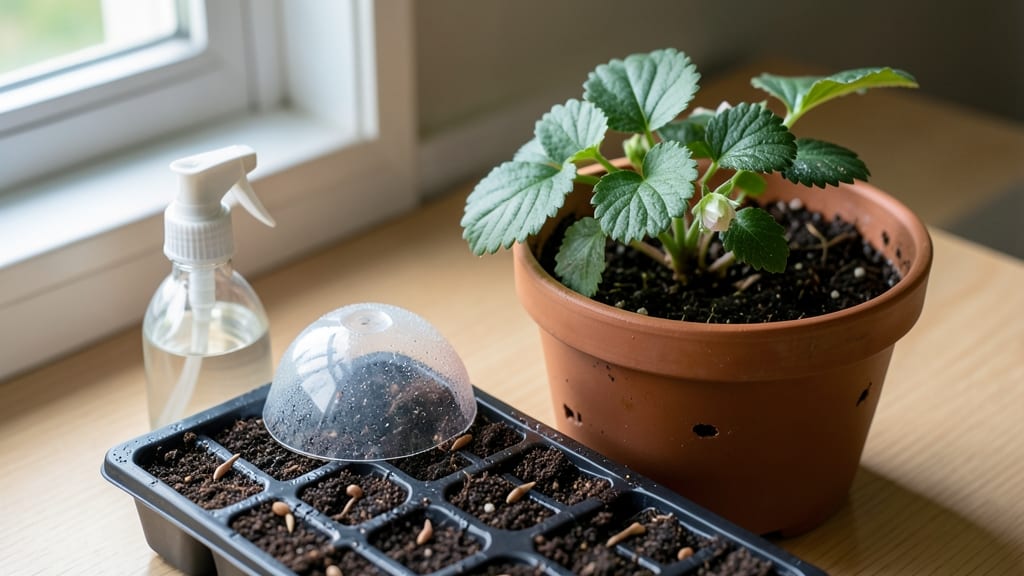
That first sweet strawberry from your kitchen countertop changes everything—how to grow strawberries from a strawberry indoors turns grocery store berries into lush, fruiting plants that produce year-round harvests—no greenhouse needed. The secret? Starting with a strawberry (not seed) and mimicking its natural growing conditions indoors.
You’ll need just three things: a shallow container, well-draining potting mix, and a bright windowsill or grow light. Unlike seeds, growing from a strawberry (like a runner or store-bought fruit) gives you faster results—plants fruit within 4-6 months instead of waiting a full year.
The key is keeping roots cool, leaves warm, and moisture consistent.
By summer’s end, you’ll have trailing vines heavy with fruit, and the smell of ripe strawberries will fill your home. The plants even rebloom in fall with the right care, giving you three harvests a year from a single strawberry. Plus, no more buying sad grocery store berries.
Works for any kitchen, balcony, or sunroom—even if you’ve never grown plants before. Here’s exactly how to turn that strawberry into a productive little plant factory.
📚 In This Guide
- What you need
- Instructions
- Tips and common mistakes
- Wrapping up and next steps
What you need
- ● Strawberry plant: A healthy, organic strawberry (preferably with runners or a small root system). Look for varieties like Alpine or Ever-bearing for indoor success!
- ● Container: A pot or tray with drainage holes, at least 6 inches deep and 12 inches wide (per plant). Plastic, terracotta, or fabric pots work great!
- ● Potting mix: A well-draining, sterile mix (e.g., 50% peat moss, 30% perlite, 20% compost). Avoid garden soil—it compacts and holds too much moisture.
- ● Drainage layer: Small rocks, gravel, or broken pottery pieces (1-2 inches deep) to prevent root rot.
- ● Fertilizer: A balanced, water-soluble fertilizer (e.g., 10-10-10 NPK) or organic options like fish emulsion. Dilute to half-strength for young plants.
- ● Watering can or spray bottle: With a gentle spray nozzle to avoid disturbing soil.
- ○ Grow lights (optional but recommended): A full-spectrum LED bulb or fluorescent light (12-16 hours/day) if natural light is limited.
- ● Pruning shears: For trimming runners or dead leaves.
- ● Humidity dome: A clear plastic cover to retain moisture while sprouting.
- ● Thermometer/hygrometer: To monitor temperature (60-75°F) and humidity (40-60%).
- ● Support stakes or trellis: If your strawberry variety trails (e.g., June-bearing types).
- ● Slow-release fertilizer pellets: For hands-off nutrition over 2-3 months.
Step-by-step instructions for growing strawberries indoors
Here’s how I’ve successfully grown lush, fruiting strawberry plants indoors—no greenhouse needed.
Select and Prepare Your Strawberry Plant
Choose a healthy June-bearing or everbearing variety with firm green leaves and white roots. If your strawberry came from a store, look for one with at least three leaves and no signs of rot or yellowing. Remove any damaged leaves or stems before planting.
Soak the roots in lukewarm water for 10-15 minutes to encourage root growth and remove any dirt clinging to them. This step is crucial because it helps the plant establish itself faster in its new container. After soaking, gently shake off excess water—you don’t want soggy roots sitting in standing water.
Choose the Right Container and Soil Mix
Use a 5- to 7-gallon container with drainage holes to prevent root rot. I recommend a fabric grow bag or a plastic pot with drainage—both work well for strawberries. Fill the container with a well-draining potting mix that’s specifically formulated for containers. Avoid garden soil, as it compacts easily and can suffocate roots.
Mix in perlite or vermiculite (about 10% of the total volume) to improve aeration and drainage. Strawberries hate soggy feet, so this extra step ensures excess water drains away quickly. Fill the container until it’s 2 inches below the rim, leaving room for watering and root growth.
Plant and Water for Initial Establishment
Place the strawberry plant in the center of the container, ensuring the crown (where the leaves meet the roots) sits just ½ inch below the soil surface. This positioning prevents the crown from rotting while allowing roots to spread easily. Gently press the soil around the base of the plant to secure it without compacting it too tightly.
Water thoroughly until water runs out of the drainage holes, then let the plant sit for 10-15 minutes to absorb moisture. After the initial watering, keep the soil consistently moist but not waterlogged. You’ll know it’s right when the top inch of soil feels damp to the touch but doesn’t feel soggy. Overwatering at this stage is the fastest way to kill your plant.
Provide Optimal Light and Temperature
Strawberries need at least 6-8 hours of direct sunlight daily to thrive indoors. Place your container near a south-facing window or under a grow light if natural light is insufficient. If using a grow light, position it 6-12 inches above the plant and keep it on for 14-16 hours per day to mimic daylight conditions.
Maintain a temperature between 60-75°F during the day and 50-60°F at night. Avoid placing the plant near drafts, heaters, or air conditioning vents, as sudden temperature swings can stress the plant. If your home runs cooler, consider using a small space heater or heat mat to keep the roots warm, especially in the early stages of growth.
Fertilize and Maintain for Fruit Production
After 4-6 weeks, when new leaves begin to emerge, switch to a balanced liquid fertilizer (like a 10-10-10 or 20-20-20 formula) diluted to half-strength. Fertilize every 2-3 weeks during the growing season to encourage strong root and leaf development. Avoid over-fertilizing, as this can lead to excessive leaf growth at the expense of fruit production.
Prune any yellow or diseased leaves immediately to keep the plant healthy. Once flowers appear, you can pinch off the first few blooms if your plant looks stressed—this redirects energy to root and leaf growth, resulting in a stronger plant and larger fruit later. Watch for white flowers and tiny green berries as signs that your plant is ready for fruiting.
Tips & tricks for perfect indoor strawberry growth
Indoor strawberry growing succeeds when you pay attention to the little details that make all the difference. Here's what I've learned after nurturing several thriving indoor strawberry plants.
Rooting Success: The white cap is where all the action happens—never submerge it in water beyond the base. I've found that using a clear glass lets you monitor root growth daily, which is especially motivating for beginners. Once roots reach 1-2 inches, transition to soil within 24 hours to prevent them from becoming waterlogged. The key is gentle handling—the roots are delicate at this stage.
Light Optimization: While 10-12 hours of light is ideal, quality matters more than quantity. If using a grow light, position it 6-12 inches above the plant and adjust based on leaf color—yellowing indicates insufficient light, while bleached leaves mean it's too intense. I rotate my plants weekly to prevent uneven growth toward the light source, which creates a more balanced plant structure.
Temperature Management: Maintaining that 60-75°F range is crucial, but humidity plays an equally important role in indoor environments. When your home runs warmer than 75°F, place the pot on a pebble tray with water to increase humidity around the plant. This mimics outdoor conditions and prevents the leaves from drying out, which can stunt growth.
Pruning Strategy: During the growing season, I remove runners to focus the plant's energy on fruit production rather than creating new plants. After harvest, I prune back leaves by two-thirds to simplify winter care. This dramatic pruning might seem counterintuitive, but it actually helps the plant redirect its energy to root development, setting it up for stronger growth in spring.
Pro Tips for Grow Strawberries From A Strawberry Indoors
- Indoor strawberry growing succeeds when you pay attention to the little details that make all the difference.
- Rooting Success: The white cap is where all the action happens—never submerge it in water beyond the base.
- Light Optimization: While 10-12 hours of light is ideal, quality matters more than quantity.
Frequently asked questions
Got questions about growing strawberries indoors? You’re not alone—let’s tackle the most common ones to set you up for success!
Can I grow strawberries indoors from any store-bought strawberry?
Not all store-bought strawberries are ideal! Look for organic, untreated berries with a green leafy top (the crown). Avoid conventionally grown strawberries treated with sprout inhibitors, as they won’t root. If unsure, opt for heirloom varieties or ask your local nursery for propagation-friendly options.
How long does it take for strawberries to grow indoors?
Patience is key! From planting the crown to seeing your first berries, it typically takes 4–6 months. Early stages focus on root growth (2–4 weeks), followed by leaf development (another 2–3 months). With proper care, you’ll harvest sweet rewards by late winter or early spring.
What’s the best temperature for indoor strawberry growth?
Strawberries thrive in 65–75°F (18–24°C) during the day and slightly cooler (55–65°F or 13–18°C) at night. Avoid drafts or direct heat sources like vents or radiators. If your home runs hot, a small fan or grow light timer can help regulate conditions.
Why aren’t my strawberry plants flowering or fruiting?
Several factors could be at play:
- Lack of light: Strawberries need 12–16 hours of light daily. Supplement with a grow light if natural light is insufficient.
- Insufficient nutrients: Use a balanced fertilizer (like 10-10-10) every 4–6 weeks once roots establish.
- Age of the plant: Young plants (under 3 months) may not flower yet. Be patient!
- Stress: Overwatering, root rot, or temperature swings can delay fruiting.
Can I reuse the same container year after year?
While possible, it’s best to replace containers annually to prevent soil depletion and disease buildup. If reusing, sterilize the pot with a 10% bleach solution, rinse thoroughly, and refresh the potting mix. Choose containers with drainage holes to avoid soggy roots.
Wrapping up and next steps
Growing strawberries indoors from a single strawberry is a rewarding and fun way to enjoy fresh, homegrown fruit year-round! 🌱 With the right setup—like a sunny windowsill, well-draining soil, and a little patience—you’ll soon be harvesting sweet, juicy berries.
Whether you’re a beginner or a seasoned gardener, this method proves that big harvests start small.
Now that you’re ready to grow, why not expand your indoor garden? Try propagating other fruits like herbs or microgreens next, or share your newfound skills with a friend! Happy growing—your future strawberry patch is waiting. 🍓✨