
Propagation
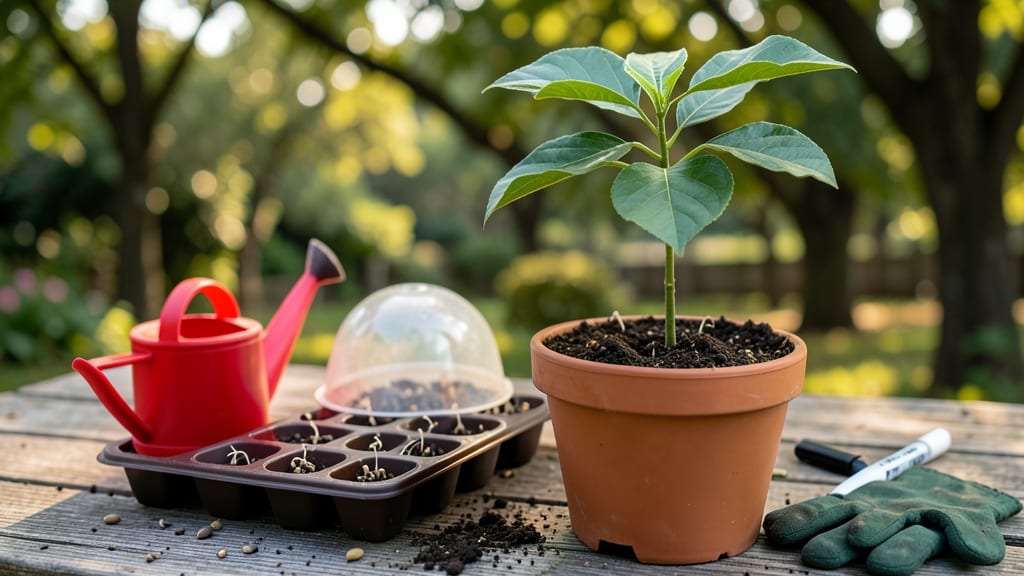
Six months from now, you could be tasting your first homegrown guava by learning how to grow a guava tree from seed. 🌱 The secret starts with a single seed—one that holds the potential for a tropical fruit tree in your own backyard, even if you've never grown one before.
Guava trees from seed grow slower than nursery plants, but the payoff is worth it. You'll need patience, a warm spot, and the right soil mix to kickstart germination.
Most seeds sprout within 2-4 weeks if kept consistently moist and warm, but some take up to 8 weeks—don't rush it.
By the time your seedling hits 6 months, you'll have a sturdy young tree ready for transplanting. The leaves will be glossy, the growth vigorous, and the promise of sweet, pink-fleshed fruit just a few years away.
This method works for tropical climates or as a houseplant in cooler areas. Here's how to turn that seed into a thriving tree!
📚 In This Guide
- What you need
- Instructions
- Tips and common mistakes
- Wrapping up and next steps
What you need
- ● Guava seeds: 3–5 fresh, plump seeds (harvested from ripe guava fruit—avoid seeds from store-bought guavas if possible, as they may be treated to prevent sprouting).
- ● Small seed trays or biodegradable pots: 2–3 (3–4 inches deep) with drainage holes. Pro tip: Paper egg cartons work in a pinch! 🥚💡
- ● Well-draining potting mix: 1–2 bags (look for a blend labeled for seedlings or tropical plants; avoid heavy clay soil).
- ● Spray bottle: 1 (for gentle watering).
- ● Plastic wrap or clear lid: 1 (to create a humidity dome).
- ● Sunlight access: A warm, sunny windowsill or a grow light (if natural light is limited).
- ● Watering can or cup: 1 (for established seedlings).
- ● Seedling heat mat: 1 (speeds up germination if temperatures dip below 70°F/21°C).
- ● Fertilizer (balanced, water-soluble): 1 small bottle (for transplanting, e.g., 10-10-10 NPK).
- ● Pruning shears: 1 (for trimming leggy seedlings later).
- ● Larger container (5+ gallons): 1 (for transplanting once seedlings are 6+ inches tall).
- ● Mulch (e.g., straw or coconut coir): A small bag (retains moisture and suppresses weeds).
Step-by-step instructions for growing guava trees from seed
Here's how to coax those tropical guava trees from tiny seeds into sturdy saplings ready for planting.
🌱 Step 1: Extract and Prepare the Seeds
Start with fresh guava seeds—remove them from ripe fruit and rinse off any pulp immediately. The outer seed coat is tough, so I soak them in warm water for 24 hours to soften it. This helps break dormancy and speeds up germination. Place them in a bowl of water, changing it every 8 hours to prevent mold.
After soaking, gently rub the seeds between your fingers to loosen the outer layer. You'll see a small crack appear—this is your signal the seed is ready. Don't scrub too hard, or you'll damage the embryo inside. Once cracked, let them dry on a paper towel for 1 hour before planting. This prevents rot when you bury them.
🪴 Step 2: Plant Seeds in Moist Potting Mix
Fill small pots (3-4 inches deep) with a well-draining potting mix—guava seeds hate soggy soil. I mix equal parts cactus/succulent mix and perlite for extra aeration. Moisten the mix until it's damp but not dripping, then plant 2-3 seeds per pot just below the surface (¼ inch deep).
Cover the pots with plastic wrap to create a greenhouse effect, which keeps humidity high and warmth consistent. Guava seeds germinate best in 75-85°F soil. Place the pots in a warm, bright spot—like on top of a refrigerator or near a sunny window. Avoid direct sunlight at this stage; seedlings can scorch before they even sprout.
💧 Step 3: Monitor Germination and Thin Seedlings
Germination takes 2-4 weeks, but patience is key—some seeds may take longer. Keep the soil evenly moist by misting lightly every 2-3 days, but never let it sit in water. You'll know moisture is right when the top inch feels damp but not wet. Once sprouts appear, remove the plastic wrap immediately to prevent fungal growth.
When seedlings reach 2 inches tall, thin them to the strongest one per pot. Use scissors to snip the others at the base—this prevents competition for nutrients. The winning seedling should have bold green leaves and a sturdy stem. If multiple sprouts are equally strong, leave the two best and transplant the rest later.
☀️ Step 4: Transition to Sunlight and Larger Pots
After 4-6 weeks, when seedlings have 4-6 true leaves, it's time to move them to 6-inch pots with fresh potting mix. Guava trees need full sun—6+ hours daily—so place them in the brightest spot you have. If growing indoors, supplement with a grow light for 12-14 hours a day. Without enough light, stems stretch weakly and leaves turn pale.
Water deeply when the top 1 inch of soil feels dry, but let excess water drain completely. Guava trees are drought-tolerant once established, but young seedlings need consistent moisture. You'll see strong growth when new leaves emerge every 2-3 weeks. This is your cue that the plant is thriving.
⏰ Step 5: Harden Off and Prepare for Outdoor Planting
Before transplanting outdoors, harden off the seedlings over 2 weeks. Start by placing them outside in a shaded, sheltered spot for 1 hour the first day, gradually increasing time and sun exposure. By the end of the period, they should tolerate full sun for 6+ hours. This toughens the plants and prevents shock.
Choose a warm season (after last frost) to plant outdoors in well-draining soil. Guava trees prefer sandy or loamy soil with a pH of 5.0-7.0. Dig a hole twice as wide as the root ball but no deeper. Water the seedling 1 day before transplanting to reduce stress. After planting, water deeply and mulch with 2 inches of organic mulch to retain moisture and regulate soil temperature.
Tips & tricks for growing guava trees from seed
Growing guava trees from seed can feel like waiting for a tropical vacation to arrive—patience pays off. Here are the secrets to turning those tiny seeds into thriving saplings.
Breaking Dormancy: The 24-hour soak in warm water is non-negotiable for guava seeds. I've learned the hard way that skipping this step can mean waiting months for germination. Change the water every 8 hours to prevent mold—this keeps the environment clean and oxygenated for the seeds. Think of it like giving your seeds a spa treatment before planting!
Soil Science: Guava seeds despise soggy soil, so that mix of cactus/succulent blend and perlite is your best friend. The perlite creates tiny air pockets that prevent rot while still keeping moisture. When planting those 2-3 seeds per pot at just ¼-inch deep, aim for consistency—too shallow and they won't anchor, too deep and they'll suffocate. The goal is to mimic their natural forest floor environment where they'd be lightly covered with organic matter.
Greenhouse Effect: That plastic wrap isn't just for show—it's creating a microclimate where humidity stays high and temperature remains stable. Guava seeds need that 75-85°F soil temperature to germinate properly. I place my pots on top of my refrigerator (the warm spot!) to maintain that perfect heat range. Pro tip: If condensation forms on the plastic, it's working—just make sure to remove it immediately after sprouts appear to prevent fungal growth.
Light Transition: The move from indirect light to full sun after 4-6 weeks is where many growers stumble. I recommend a gradual transition—move your seedlings to a bright windowsill first, then slowly increase their sun exposure over a week. Without this transition, you'll end up with leggy, pale seedlings that struggle to adapt. Think of it like sunbathing after winter: you wouldn't go from zero to full sun on day one!
Pro Tips for Grow Guava Tree From Seed
- Growing guava trees from seed can feel like waiting for a tropical vacation to arrive—patience pays off.
- Breaking Dormancy: The 24-hour soak in warm water is non-negotiable for guava seeds.
- Soil Science: Guava seeds despise soggy soil, so that mix of cactus/succulent blend and perlite is your best friend.
Frequently asked questions
Got questions about growing your own guava tree from seed? You’re not alone! Here are some of the most common queries—and their straightforward answers—to help you grow with confidence.
How long does it take for guava seeds to germinate?
Guava seeds typically sprout within 2 to 4 weeks if kept in warm, moist conditions (around 75–85°F). Patience is key—some seeds may take up to 6 weeks. Keep the soil consistently damp (not soggy) and place the pot in indirect sunlight to speed up germination.
Can I grow a guava tree indoors?
Yes, but with caveats! Guava trees thrive outdoors in tropical climates, but you can grow them indoors near a sunny window or under grow lights. Expect slower growth and smaller fruit. If indoors, ensure 6+ hours of sunlight daily and prune aggressively to manage size. A sunny balcony or greenhouse is ideal for cooler climates.
Will my seed-grown guava tree produce the same fruit as the parent?
Probably not! Seed-grown guavas are not true to type—meaning the fruit may differ in size, shape, or taste from the parent plant. For consistent results, graft a known variety onto your seedling later. If you’re okay with surprises, enjoy the adventure of discovering a unique guava!
What should I do if my guava seedling’s leaves turn yellow?
Yellow leaves usually signal overwatering, nutrient deficiency, or pests. Check the soil—it should be damp but not waterlogged. If roots smell sour or the pot feels heavy, reduce watering. For pests (like aphids or mites), wipe leaves with soapy water or use neem oil. Yellowing from lack of nutrients? Fertilize lightly with a balanced, citrus-friendly formula.
Can I plant guava seeds directly in the ground?
Direct planting is risky unless you live in a warm, frost-free climate. Young seedlings are delicate and may not survive cold snaps. Start indoors (or in a greenhouse) for 3–6 months to harden off the plant before transplanting. If you must plant outside, choose a sheltered spot and wait until nighttime temps stay above 50°F.
Wrapping up and next steps
Growing a guava tree from seed is a rewarding journey that connects you to nature’s bounty—and yes, you can enjoy sweet, tropical fruit in as little as six months! With the right patience, care, and a sunny spot, your tiny seed has the potential to become a lush, fruitful tree.
Now that you’re armed with the know-how, why not plant that seed today and watch your tropical promise take root? 🌱✨
Ready to nurture your future harvest? Start with one seed, stay consistent with watering, and soon, you’ll be savoring homegrown guavas straight from your backyard!