
Propagation
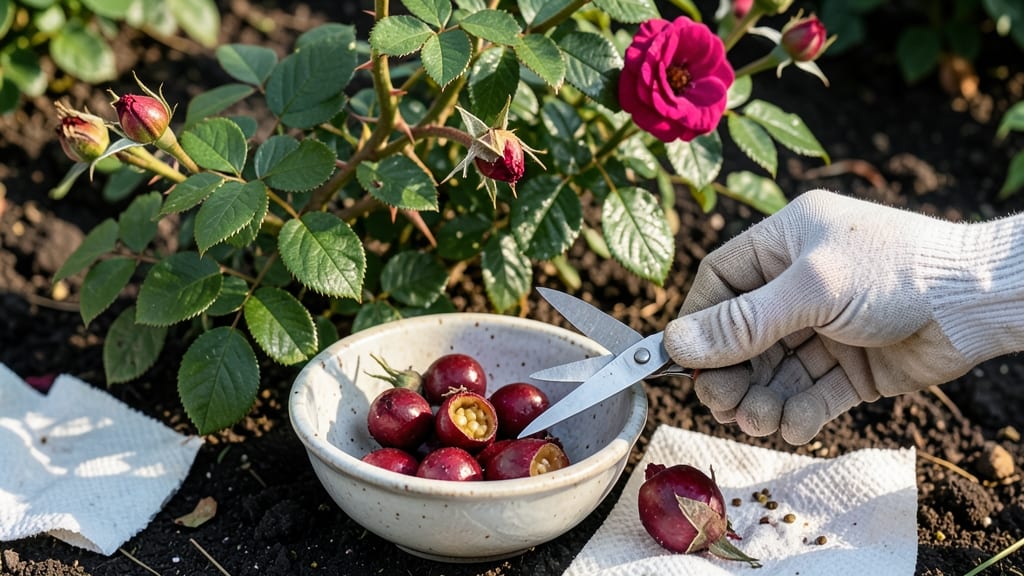
How to get rose seeds from the flower—those hypnotic pink rose hips hide a secret: tiny seeds that could grow your own roses. 🌹 I’ve collected seeds from my garden’s most stunning blooms, and the process is simpler than you’d think, though it takes patience. The catch? Hybrid roses won’t grow true to type, but heirlooms can produce stunning surprises.
Start by harvesting ripe hips in late fall or winter when they’re plump and deep red. Let them dry completely, then crack them open to reveal the seeds inside—each one a potential new plant.
The key to success lies in proper drying and storage, which boosts germination rates from near-zero to 30-50%.
After cleaning, you’ll need stratification—mimicking winter’s cold—to break seed dormancy. A simple DIY method works: mix seeds with damp sand, refrigerate for 4-6 weeks, then plant them in well-draining soil. Within weeks, you’ll see tiny sprouts pushing through, ready for their first taste of sunlight.
This method works best for heirloom roses, but even hybrid experiments can yield unexpected beauties. The real magic? Watching those first leaves unfurl, knowing you grew them from a seed you saved yourself. Let’s get those hips cracked open!
📚 In This Guide
- What you need
- Instructions
- Tips and common mistakes
- Wrapping up and next steps
What you need
- ● Mature rose hips: Collect fully ripe (deep red, orange, or purple) rose hips from hybrid tea roses, floribundas, or shrub roses—avoid climbers or once-blooming roses (they rarely produce viable seeds). You’ll need 5–10 hips for a good yield.
- ● Sharp scissors or pruners: Sterilized (rubbing alcohol wipe) to avoid disease transfer. Bypass pruners work best for clean cuts.
- ● Small bowl or container: For seed extraction (glass or ceramic preferred to avoid moisture absorption). Size: At least 4–6 inches wide.
- ● Water: Room-temperature, chlorine-free (use filtered or rainwater if possible).
- ● Paper towels or coffee filters: For drying seeds. Use unbleached, seed-free paper to prevent contamination.
- ● Small mesh bag or envelope: For seed storage (e.g., breathable organza bags or paper envelopes).
- ● Labeling supplies: Masking tape + marker (to note variety/date) or seed packets.
- ● Seed stratification kit: A mini fridge (34–40°F) or seed stratification chamber (speeds up germination).
- ● Hydrogen peroxide (3%): For 10-minute seed soak to disinfect and soften seed coats.
- ● Growing medium: Seed-starting mix (sterile, peat-free if possible) or coco coir pellets.
- ● Heating mat: Bottom heat (70–75°F) mimics natural conditions for faster sprouting.
- ● Clear plastic dome: Creates a humidity tent for seedlings.
Tips & tricks for perfect rose seed extraction
These little-known strategies will help you maximize your yield and nurture those delicate rose seeds from start to finish.
Harvest Timing is Everything: The 24-48 hour soak in Step 2 is your secret weapon—don't cut it short! This critical window softens the tough outer skin just enough to make seed extraction a breeze. I've found that adding a few drops of dish soap to the lukewarm water helps break down natural oils that might otherwise make the hips resistant to water absorption. This small addition makes all the difference when you're ready to slice open those plump pods.
Stratification Shortcut: While the 4-6 week cold stratification in Step 2 is ideal, I've discovered you can speed up the process slightly by placing the hips in a sealed plastic bag with a damp paper towel—this creates a more consistent moisture environment. Just remember to check weekly and keep them refrigerated at all times. The key is maintaining that perfect balance between moist and not soggy, which is exactly what the paper towel method achieves.
Seed Viability Test: During the water separation in Step 3, that float test is your quality control moment. Any seeds that float are empty shells—don't waste your time planting them! I've learned to be particularly vigilant with this step, as even a few empty seeds can throw off your entire germination batch. This simple test saves hours of disappointment later when you're waiting for sprouts that never come.
Germination Environment: The 65-75°F temperature range mentioned in Step 4 is crucial, but don't overlook the importance of that bright, indirect light. I've found a south-facing window works beautifully, but if your space gets too hot, move the trays back a few feet. The delicate seedlings can't handle direct sunlight at this early stage—think of it as their first sun protection lesson. A simple grow light on a timer can be a game-changer if natural light isn't sufficient.
Pro Tips for Get Rose Seeds From Flower
- These little-known strategies will help you maximize your yield and nurture those delicate rose seeds from start to f...
- Harvest Timing is Everything: The 24-48 hour soak in Step 2 is your secret weapon—don't cut it short! This critical w...
- Stratification Shortcut: While the 4-6 week cold stratification in Step 2 is ideal, I've discovered you can speed up ...
Frequently asked questions
Got questions about harvesting rose seeds? You’re not alone—growing roses from seed can feel like unlocking a secret garden! Here are some of the most common questions (and answers) to help you navigate the process with confidence.
Can I get seeds from any rose flower?
Not all roses produce viable seeds. Hybrid teas, floribundas, and grandifloras often yield sterile blooms, while wild roses, climbers, and old garden roses (like Rosa rugosa or Rosa gallica) are your best bets. Look for hip-shaped seed pods—if they’re hard and woody, they’re ready for harvesting!
How long does it take for rose seeds to germinate?
Patience is key! Rose seeds can take 30 to 90 days (or even longer) to sprout. Stratification (chilling) is crucial—plant them in fall or refrigerate them for 6–8 weeks before sowing. Keep soil consistently moist but not soggy during this time.
Why aren’t my rose seeds sprouting?
Seeds might fail to germinate due to poor stratification, old or dried-out seeds, or inconsistent moisture. Try soaking seeds in water for 24 hours before planting, or test viability by scratching the seed coat—if it’s hard and unbroken, it may need longer stratification.
Can I grow roses from store-bought flowers?
Probably not! Most commercial roses are bred for beauty, not seed production. They’re often hybrids or treated with chemicals to prevent seeding. Stick to seeds from organic, heirloom, or wild roses for the best results.
What’s the best time to harvest rose seed pods?
Wait until the pods turn brown, dry, and papery (usually late summer to fall). Harvest them before they split open naturally. Store them in a cool, dry place until you’re ready to plant—seeds stay viable for 1–2 years if stored properly.
Wrapping up and next steps
Getting rose seeds from your flower isn’t just rewarding—it’s a magical way to grow your own roses from scratch! 🌱 With just patience and a few simple steps, you can unlock the potential of those hypnotic pink pods and nurture them into new life.
Now that you know how, why not plant those seeds today and watch your garden bloom with heirloom beauty?
Ready to take the next step? Start with just one seed—experiment, learn, and enjoy the journey of growing roses that carry your unique touch. Happy gardening! 🌸