
Pests
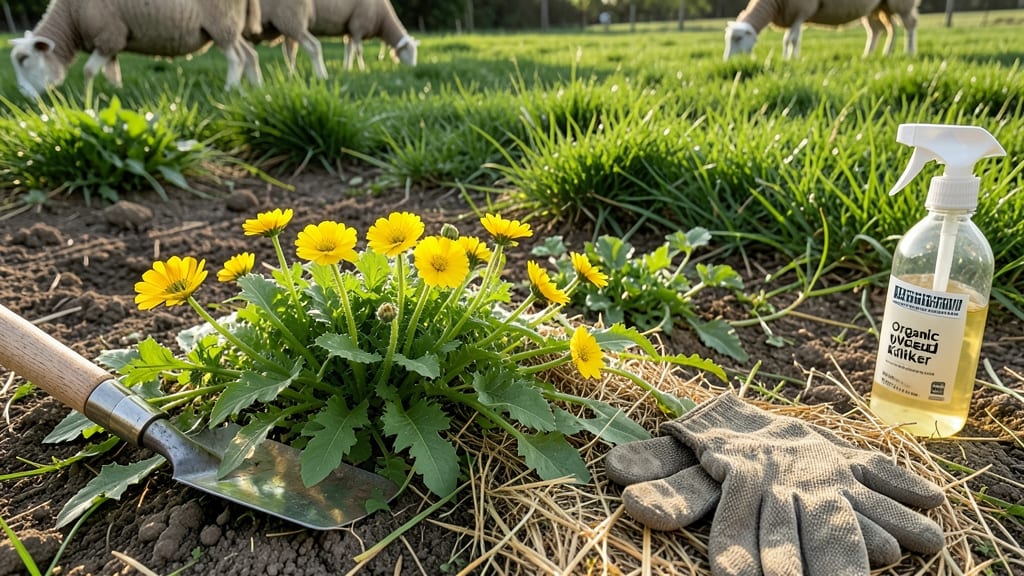
How to get rid of buttercups in pasture naturally—without chemicals or backbreaking work. 🌱 The smother-and-soak method works faster than manual pulling—eliminating them in 3-4 weeks while keeping your pasture healthy for livestock.
This approach combines cardboard smothering to block sunlight and vinegar soaking to kill roots. You’ll need basic supplies: thick cardboard, white vinegar, dish soap, and a spray bottle. The key is timing—target buttercups when they’re young and actively growing for best results.
By the end, your pasture will be weed-free and ready for grazing, with no lingering chemical residue. The method also prevents regrowth by targeting the root system, unlike surface treatments that fail to stop new sprouts.
Works for both small and large pastures, and it’s safe for animals once fully implemented. Let’s get those buttercups gone for good!
Why it happens
Buttercups (like Ranunculus species) don’t just pop up by accident—they thrive because of specific conditions in your pasture. Understanding why they take over is the first step to stopping them naturally. Here’s a breakdown of the key triggers, backed by science and actionable insights.
🌱 Overgrazed or Compacted Soil
Buttercups love disturbed soil, especially where grass struggles to regrow. When livestock overgraze or heavy machinery compacts the ground, it creates the perfect gap for buttercup seeds to germinate.
These hardy weeds exploit bare patches because their shallow roots can’t compete with deep-rooted grasses—but they outcompete other weeds in low-competition zones.
- Why it matters: Compacted soil reduces water infiltration, making conditions ideal for buttercups’ moisture-loving seeds.
- Actionable fix: Test soil density and aerate compacted areas to encourage grass recovery.
🌞 Excess Sunlight and Poor Grass Cover
Buttercups are heliophytes—they crave sunlight. In pastures with thin or patchy grass cover, these bright-yellow invaders soak up sunlight that grasses need to photosynthesize.
Even a 20% reduction in grass density can trigger a buttercup boom, as they germinate in spring (March–May) when soil is moist and competition is low.
Pro tip: Mow or graze pastures in late summer to weaken buttercups before they seed, but avoid cutting too short—this stresses grasses further.
💧 Irregular Water Availability
Buttercups thrive in moist but not waterlogged conditions. Their seeds germinate best in spring when soil moisture is high, but they drought-tolerant once established. If your pasture has:
- Poor drainage (e.g., low-lying areas)
- Sporadic irrigation or rainfall
- Shallow water tables
Key insight: Buttercups spread fastest in pastures with seasonal water stress—like after winter thaw or summer droughts.
🌿 Lack of Natural Predators or Competition
Buttercups have few natural enemies in pastures. While livestock may graze them, they often avoid the mildly toxic sap (which can cause mouth irritation). Meanwhile, their seeds spread via wind, water, and animal fur, creating a self-perpetuating cycle.
Without dense grass competition, they fill ecological niches left by overgrazing or poor seeding.
Pro tip: Introduce competitive grasses like orchardgrass or timothy, which outcompete buttercups for space and nutrients.
🌰 Seed Bank Persistence
Buttercup seeds can linger dormant in soil for years—some studies show up to 10+ years—waiting for the right conditions to sprout. A single mature buttercup can produce thousands of seeds, and even a 10% seed return rate means hundreds of new plants per season.
If your pasture had buttercups even 5 years ago, the seeds might still be hiding, ready to erupt.
Actionable alert: Test soil seed viability by collecting samples and germinating them in a controlled environment (e.g., moist paper towels). If buttercups sprout, you’ll know your "seed bank" is active.
Natural Pasture Revival Strategies
Buttercups may seem stubborn, but with the right approach, you can reclaim your pasture without harsh chemicals. Below are targeted solutions based on the root causes—so you can tackle the problem head-on while keeping your land healthy and sustainable.
If buttercups have taken over due to lack of competition, the fastest fix is smothering. This blocks sunlight, weakening the plants so they wither and die.
How to do it: 🔥 Cover with thick mulch – Use cardboard or thick layers of straw (4–6 inches) over affected areas. Secure with rocks or a tarp if wind is an issue. 🍳 Lay down black plastic – For large patches, smother with heavy-duty black plastic for 4–6 weeks in hot sun. This bakes out buttercups while suppressing weeds. 👨🍳 Plant a competitive cover crop – Fast-growing crops like ryegrass, clover, or buckwheat outcompete buttercups for nutrients and space.
💡 Pro Tip: Water the mulch 2–3 times per week to keep it damp—this speeds up decomposition and starves buttercups of light.
Buttercups thrive in wet, poorly drained pastures. If your land stays soggy, they’ll keep spreading. Fix the moisture first.
How to do it: 🌡️ Improve drainage – Dig shallow trenches or install French drains to redirect water. ✨ Aerate compacted soil – Use a garden fork or aerator to break up hardpan, helping water drain faster. 🎯 Choose drought-tolerant grasses – Replace buttercup-prone areas with orchardgrass, timothy, or fescue, which handle moisture better.
💡 Pro Tip: If your pasture floods often, consider raising soil levels in problem spots with compost or sand.
Buttercups love nitrogen-heavy soil. If your pasture has been over-fertilized, they’ll dominate. Rebalance the soil to weaken them.
How to do it: 📊 Test your soil – A simple pH and nutrient test (available at garden centers) tells you if you need lime (to raise pH) or sulfur (to lower it). 💪 Add phosphorus & potassium – Buttercups thrive when nitrogen is high but struggle with balanced NPK. Use a low-nitrogen, high-P/K fertilizer (like 5-10-10). 🥗 Mix in compost – Aged compost (not fresh manure!) improves soil structure while slowly releasing nutrients without feeding buttercups.
💡 Pro Tip: Avoid fresh manure—it’s a buttercup magnet! Use well-rotted compost instead.
For small, isolated patches, manual removal is the most eco-friendly method.
How to do it: 🔪 Pull when soil is moist – Buttercups come out easiest after rain. Grab the base (not just the flower) to avoid regrowth. 🌞 Solarize bare spots – After pulling, cover with clear plastic for 2–4 weeks to kill remaining roots with heat. 🚫 Avoid tilling – This spreads seeds! Instead, spot-treat with a vinegar + dish soap spray (1 gallon vinegar + 1 tbsp soap) for stubborn clusters.
💡 Pro Tip: Pull early in the morning when buttercups are limp—easier on your back!
Once you’ve cleared buttercups, prevent regrowth with these habits:
✅ Mow high & often – Keep grass 4–6 inches tall to block sunlight. ✅ Grazing management – Rotate livestock to prevent overgrazing in one spot. ✅ Introduce livestock that dislike buttercups – Goats and sheep often avoid them, while cattle may graze them down. ✅ Plant deep-rooted grasses – Bermuda, tall fescue, or switchgrass outcompete buttercups naturally.
💡 Pro Tip: Plant clover mixes—buttercups hate the competition!
Final Thought: Buttercups may be tough, but with smothering, soil balancing, and smart grazing, you can restore a lush, buttercup-free pasture—naturally. Start with the method that fits your pasture’s biggest issue, and stay consistent!
Frequently asked questions about natural buttercup removal
Why do buttercups keep coming back after I pull them?
Buttercups have deep taproots and a massive seed bank—even a small piece left in the soil can regrow. Always pull from the base and solarize the area afterward (cover with clear plastic for 2-4 weeks in summer) to kill remaining roots. Their seeds can stay dormant for 10+ years, so repeat treatments may be needed.
Is vinegar safe for livestock after treating buttercups?
Vinegar breaks down quickly and isn’t harmful once dry, but wait 48 hours before letting animals graze treated areas. For large pastures, use the smothering method (cardboard/plastic) instead—it’s completely livestock-safe and more effective for preventing regrowth.
Can I use corn gluten meal to prevent buttercups?
Corn gluten meal is great for preventing buttercups (it inhibits seed germination), but it won’t kill established plants. Apply 10-20 lbs per 1,000 sq ft in early spring before buttercups sprout. Combine it with smothering for best results—this two-pronged approach stops both new growth and existing weeds.
What’s the best time of year to tackle buttercups?
Target them in late spring (May-June) when they’re young and actively growing, or in early fall (September) before they set seed. Avoid treating in winter—they’re dormant, and you’ll miss the window to weaken their root systems before next year’s growth.
Will goats actually eat buttercups?
Goats rarely eat buttercups—their milky sap can irritate their mouths. However, they’ll graze down competing weeds, giving your grass a better chance to outcompete buttercups naturally. Pair goats with smothering methods for the most effective long-term control.