
Blooming
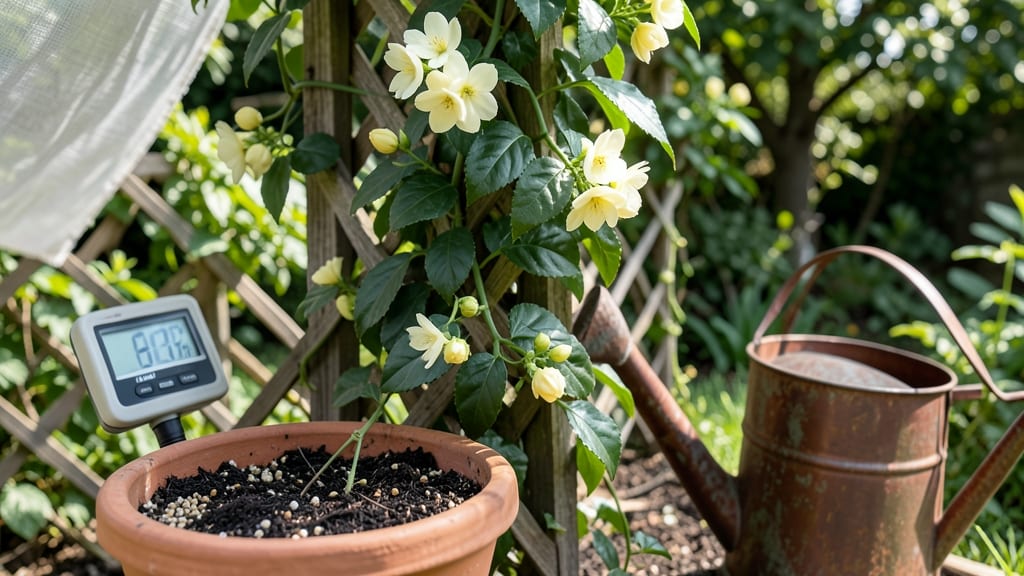
How to get your jasmine plant to bloom—start with sunlight and a little pruning love. 🌿 I’ve nursed stubborn jasmine plants back to blooming glory—what worked for me was 6+ hours of direct sun daily and strategic trimming after the last frost. The key isn’t just cutting branches; it’s teaching the plant to focus energy on flowers, not just leaves.
Most gardeners overlook the spring pruning window—right after blooms fade is when you shape the plant. Use clean shears to trim 1/3 of the oldest growth and open the center for airflow.
Indoor jasmines need bright windowsills or grow lights, while outdoor varieties thrive in zones 7-10 with summer heat. Too little light? That’s how you get lush foliage but no flowers.
By summer’s end, you’ll see glossy green leaves and—if you’ve pruned correctly—tiny buds forming. The secret weapon? A balanced fertilizer (like 10-10-10) applied every 6 weeks during growing season.
Over-fertilizing? That’s how you get lush foliage but no scent. The payoff? Clusters of star-shaped white blooms that perfume the air at dusk.
This works for both star jasmine (Trachelospermum) and Arabian jasmine (Jasminum sambac)—just adjust sunlight needs slightly. Whether you’re fixing a struggling houseplant or prepping outdoor vines, these steps turn "leafy but no flowers" into a fragrant, blooming reality. Let’s get those buds popping!
📚 In This Guide
- What you need
- Instructions
- Tips and common mistakes
- Wrapping up and next steps
What you need
- ● Jasmine plant: Choose a healthy Jasminum variety (e.g., Jasminum officinale, Jasminum sambac, or Jasminum polyanthum). Ensure it’s mature (at least 2–3 years old) for optimal blooming.
- ● Well-draining potting mix: A blend of 50% garden soil, 30% perlite or coarse sand, and 20% compost (for container plants). For in-ground planting, amend soil with organic matter like compost or aged manure.
- ● Pruning shears: Sharp, sterilized shears (or clean scissors in a pinch) to trim dead or overgrown branches.
- ● Fertilizer: Balanced liquid fertilizer: 10-10-10 or 20-20-20 (diluted to half-strength).
- ● Slow-release granular fertilizer: 14-14-14 or similar (sprinkle lightly around the base, 2–3 times per year).
- ● Phosphorus-rich fertilizer: (e.g., 5-10-10) to encourage blooming (apply in early spring).
- ● Watering can or hose: With a gentle spray nozzle for hydration without damaging foliage.
- ○ Support structure (optional): Trellis, stakes, or a sturdy wire frame for climbing varieties (e.g., Jasminum officinale).
- ● Sunlight: 6–8 hours of direct sunlight daily (morning sun is ideal; afternoon shade helps in hot climates).
- ● Temperature: Thrives in 60–85°F (15–30°C). Protect from frost (below 32°F/0°C) and extreme heat.
- ● Humidity: Prefers moderate to high humidity (mist leaves occasionally or use a humidity tray).
- ● Drainage: Ensure pots have drainage holes or plant in well-draining soil to prevent root rot.
- ● 🌡️ Test your soil: Aim for a slightly acidic to neutral pH (6.0–7.0). Adjust with lime (to raise pH) or sulfur (to lower it) if needed.
- ● ✨ Bloom boosters: Add a light dusting of Epsom salt (magnesium sulfate) to soil monthly during growing season for vibrant blooms.
- ● 🎯 Prune strategically: Use the shears to trim 1/3 of the plant’s height after blooming to encourage bushier growth next season.
Tips & tricks for perfect jasmine blooms
Common pitfalls—and how to sidestep every one—when nurturing your jasmine plant for those intoxicating blossoms.
Light Optimization: In Step 1, if your jasmine stretches toward the window (etiolation), it's begging for more light. I’ve found that rotating the pot quarter-turns every week ensures even growth and prevents lopsided exposure. For indoor plants, position it within 12 inches of the window—closer than that can scorch leaves, while farther away starves it of energy for blooms.
Watering Wisdom: The 1-1.5 inches per week guideline in Step 2 works best with a moisture meter. Stick it in the soil—if it reads 30-40% moisture, hold off on watering. Overwatering is the #1 killer of jasmine blooms; I’ve seen plants drown in saucers full of standing water. Always empty saucers after watering to prevent root suffocation.
Pruning Precision: When you trim back one-third of the oldest stems in Step 3, cut at a 45-degree angle just above a leaf node. This encourages bushier growth and more flower sites. I’ve noticed that stems pruned to 6-8 inches produce the most abundant blooms—shorter cuts redirect energy to flowering rather than vertical growth.
Fertilizer Timing: The switch to 5-10-5 fertilizer in Step 4 should happen when you spot tiny green buds forming. I apply half the recommended dose to avoid burning roots, and always water thoroughly before and after fertilizing. Too much nitrogen (the first number) pushes leafy growth at the expense of flowers, which is why I avoid fertilizing in winter entirely.
Pro Tips for Get Jasmine Plant To Bloom
- Common pitfalls—and how to sidestep every one—when nurturing your jasmine plant for those intoxicating blossoms.
- Light Optimization: In Step 1, if your jasmine stretches toward the window (etiolation), it's begging for more light....
- Watering Wisdom: The 1-1.5 inches per week guideline in Step 2 works best with a moisture meter. Stick it in the soil...
Frequently asked questions
Got questions about coaxing those dreamy jasmine blooms? You’re not alone! Here are answers to the most common queries—from timing tricks to troubleshooting woes.
How long does it take for a jasmine plant to bloom after planting?
Patience is key! Most jasmine varieties (like Jasminum officinale) take 1–3 years to mature and bloom after planting. Dwarf types may flower sooner (6–12 months), but consistent care—like full sun and balanced fertilizer—speeds up the process.
Why isn’t my jasmine blooming, even after pruning and sunlight?
No flowers? Check these culprits: over-fertilizing (too much nitrogen = leafy, not bloomy), lack of dormancy (jasmine needs winter rest), or root-bound pots. Try pruning after blooming to encourage new growth, and reduce water in late fall to trigger dormancy.
Can I force jasmine to bloom indoors, or is it better outdoors?
Outdoor jasmine thrives best (needs 6+ hours of sunlight), but Jasminum polyanthum (winter jasmine) can bloom indoors near a south-facing window. For potted plants, use grow lights (12–14 hours/day) and mimic outdoor conditions—cool nights, warm days.
Do I need to deadhead jasmine flowers for more blooms?
Yes! Deadheading (removing spent blooms) redirects energy to new flowers. Snip just above a leaf node with clean pruners. For Jasminum sambac (Arabian jasmine), deadhead daily to prolong blooming. Pro tip: Wear gloves—jasmine sap can irritate skin!
What’s the best fertilizer for jasmine blooms, and how often should I use it?
Use a balanced, bloom-boosting fertilizer (like 10-10-10 or 20-20-20) every 4–6 weeks during spring/summer. Switch to a low-nitrogen, high-phosphorus formula (e.g., 5-10-10) when buds form. Avoid fertilizing in fall/winter—jasmine rests then!
Can I grow jasmine from a cutting, and how?
Take a 4–6 inch cutting with 2–3 nodes, dip in rooting hormone, and plant in moist perlite or water. Keep in indirect light and maintain humidity (use a plastic bag). Roots form in 2–4 weeks. Transplant outdoors after danger of frost passes.
Wrapping up and next steps
Getting your jasmine plant to bloom is all about patience, the right care, and a little finesse! 🌸 With the perfect balance of sunlight, pruning, and seasonal adjustments, you’ll soon be rewarded with intoxicating fragrance and stunning flowers.
Remember, consistency is key—whether it’s deadheading spent blooms or ensuring adequate airflow.
Now that you’re armed with these secrets, why not share your progress? Snap a photo of your blooming jasmine and tag us—we’d love to see your hard work pay off! 📸✨ Next, explore advanced care tips to keep your plant thriving year after year.