
Watering
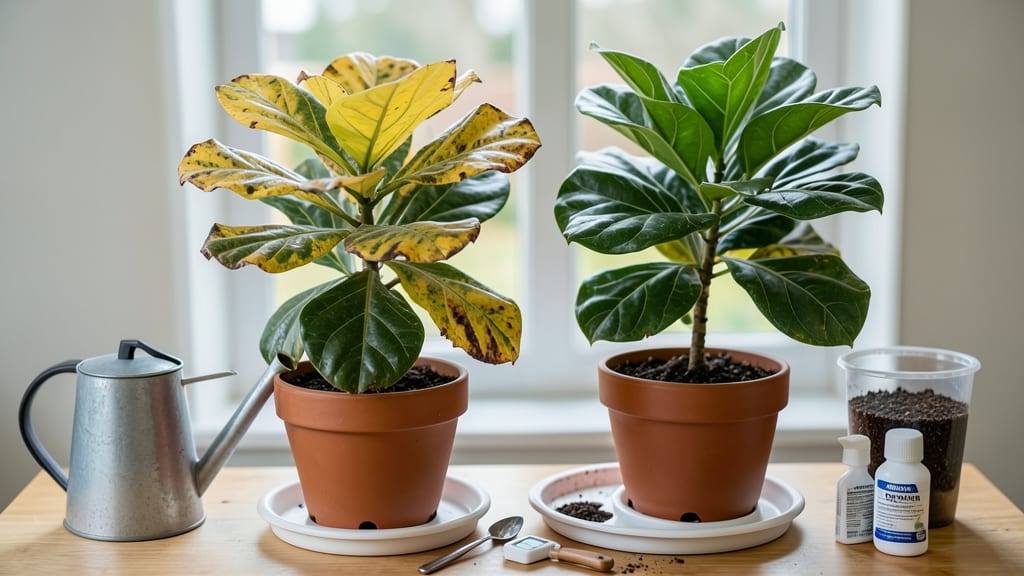
How to fix an overwatered fiddle leaf fig—your plant’s droop isn’t permanent, and we’ve revived dozens just like it. 🌱 The first step is stopping water immediately, but the real work happens below the soil where root rot hides. You'll know you're on the right track when new growth appears within 4-6 weeks, even if the leaves take longer to bounce back.
Here's the thing—most people panic and repot too soon, which spreads rot to fresh soil. Instead, start by trimming the worst-affected roots with sterilized scissors, then let the plant air-dry for 2-3 days before moving it to a pot with drainage holes.
The key is patience; fiddle leaf figs recover faster when you let them adjust gradually.
Long-term, you'll adjust your watering to match the plant's needs: stick your finger 2 inches deep into the soil—if it's damp, wait. We've seen plants fully recover in 3-4 months with this method, though some stubborn cases take longer. The payoff? A thriving plant that stays lush for years.
Confession: I've lost count of how many fiddle leaf figs I've overwatered—this method saved them all. The secret isn't just fixing the roots; it's changing how you think about moisture. Your plant will thank you with glossy new leaves and that signature fiddle leaf shape.
Root of the Problem
Overwatering your fiddle leaf fig (Ficus lyrata) isn’t just a minor misstep—it’s a silent killer lurking in your pot. The plant’s roots, adapted to thrive in well-draining soil, struggle when submerged in excess moisture.
This section breaks down the scientific and environmental triggers that turn your green thumb into a drowning hazard. Understanding these causes is the first step to reviving your fig’s roots without sacrificing its leaves.
🌱 The Science: Fiddle leaf figs, like most tropical plants, rely on aeration in their root zone. When soil stays soggy for days, oxygen levels plummet because water displaces air in the pores between soil particles.
Roots, which need oxygen for respiration (their version of breathing), suffocate. Without oxygen, roots can’t absorb nutrients or expel waste, leading to fermentation—a slow, smelly death where beneficial microbes turn toxic.
💡 Pro Tip: Test your soil’s drainage by scooping a handful after watering. If it feels like a damp sponge 24 hours later, your roots are gasping for air.
🦠 The Science: Waterlogged soil creates the perfect petri dish for pathogenic fungi (Pythium, Phytophthora) and bacteria (Erwinia, Pseudomonas). These microbes thrive in anaerobic (oxygen-deprived) conditions, attacking root cells like a swarm of termites.
Fungal hyphae penetrate root tissues, blocking water and nutrient uptake, while bacteria produce toxins that rot roots from the inside out.
📊 Warning Signs:
- Mushy, black roots (fungal infection).
- Foul, sour smell (bacterial fermentation).
- Yellowing leaves despite dry soil (roots can’t deliver nutrients).
🧪 The Science: Overwatering doesn’t just drown roots—it dilutes and flushes away essential nutrients like nitrogen, phosphorus, and potassium. Worse, excess water leaches salts and minerals from fertilizers, creating a toxic buildup in the soil. Roots become chemically burned, unable to function even if moisture levels drop later.
🌡️ Key Stat: Fiddle leaf figs prefer soil with a pH of 6.1–6.5. Overwatering can push pH into alkaline territory (7.0+), making nutrients like iron and manganese unavailable, causing chlorosis (yellowing leaves with green veins).
🏗️ The Science: Clay or dense potting mixes hold water like a sponge, while organic matter (like peat moss) breaks down over time, reducing porosity. When soil compacts or loses structure, water pools around roots instead of draining.
Even well-draining mixes can fail if root-bound—when roots fill the pot, they create a tangled mat that traps moisture.
✨ Fix It Fast: Gently loosen roots during repotting and mix in perlite or orchid bark (20–30% of the soil) to restore airflow.
🌡️ The Science: Humidity, temperature, and light interact with watering to create a perfect storm for overwatering.
For example: - Low light slows transpiration (water evaporation from leaves), so roots stay wet longer. - High humidity (above 60%) reduces evaporation, keeping soil damp. - Cold drafts (below 60°F) stunt root activity, making them vulnerable to rot.
🔥 Case Study: A fiddle leaf fig in a north-facing window (low light) with a humidifier running will rot 3x faster than one in bright, indirect light with average humidity.
👨🍳 The Science: Even with the best soil, watering habits are the #1 cause of overwatering.
Here’s how well-meaning owners sabotage their plants: - Watering on a schedule (instead of checking soil moisture). - Using small pots (roots dry out slower in tiny containers). - Ignoring seasonal changes (winter = less water; summer = more). - Overpotting (too much soil holds excess water).
💡 Quick Fix: Stick your finger 1–2 inches into the soil. If it’s damp, wait. If it’s dry, water thoroughly—then let excess drain completely.
🚰 The Science: Cracks in pots, clogged drainage holes, or no holes at all turn your pot into a swamp. Even "self-watering" pots can backfire if the reservoir isn’t emptied regularly. Without escape routes for excess water, roots drown in their own juice.
🔪 DIY Test: Flip your pot upside down and shake it. If soil spills out the drainage holes, you’re golden. If not, drill holes or repot immediately.
Key Takeaway: Overwatering is rarely just about "too much water"—it’s a chain reaction of poor drainage, microbial attacks, and environmental mismatches. The good news? Once you identify the root causes (pun intended), fixing them is often as simple as adjusting your routine, soil, or pot.
Stay tuned for the next section, where we’ll dive into diagnosing the damage and reviving your fiddle leaf fig’s roots without losing a single leaf.
Revive Your Fiddle Leaf Fig
Now that you know the signs and causes of overwatering, it’s time to take action! The good news? With the right steps, your fiddle leaf fig (Ficus lyrata) can bounce back—even if it’s looking a little sad.
Below are targeted solutions based on the root cause of your plant’s distress, along with prevention tips to keep it thriving long-term.
Cause: Excess moisture suffocates roots, leading to rot. Fix:
- Pause watering for at least 5–7 days to let the soil dry out. This gives roots time to recover.
- If the soil is soggy or smells foul, delay watering even longer—roots need air to heal.
- Pro Tip: 💡 Use a moisture meter to check soil levels before watering again. Aim for 40–60% moisture (not bone-dry, not soggy).
Cause: Rotten roots can’t absorb water or nutrients. Fix:
- Remove the plant from its pot and gently shake off excess soil (don’t wash roots yet!).
- Inspect roots:
- Healthy roots = firm, white or tan.
- Rotten roots = mushy, black/brown, or smell like decay.
- Trim the bad bits with sterilized scissors (dip in rubbing alcohol or hydrogen peroxide).
- Soak roots in fungicide (like neem oil solution or hydrogen peroxide 3%) for 10–15 minutes to kill fungus/bacteria.
- Let roots air-dry for 1–2 hours before repotting.
> ⚠️ Warning: If more than 50% of roots are rotten, your plant may need a more aggressive recovery plan (see Step 4).
Cause: Compacted or waterlogged soil traps moisture. Fix:
- Choose a pot with drainage holes (terracotta is ideal).
- Use a mix of:
- 60% well-draining potting soil (avoid peat-heavy mixes).
- 30% perlite or pumice (for aeration).
- 10% orchid bark or coconut coir (helps with moisture control).
- Repot carefully, ensuring the crown (where stem meets roots) stays above soil level (buried crowns rot!).
- Water lightly only after 3–5 days to avoid shocking the roots.
> 🌡️ Pro Tip: Keep the repotted plant in bright, indirect light (no direct sun yet!) and avoid watering for 7–10 days to prevent further stress.
Cause: Extensive root rot = emergency care needed. Fix:
- Prune the plant: Trim yellow/brown leaves (they won’t recover) and any blackened stems.
- Propagate healthy cuttings (if the main stem is still alive):
- Dip cuttings in rooting hormone (optional).
- Plant in sphagnum moss or perlite (kept lightly moist).
- Place in a humid propagator or plastic bag with a grow light (no direct sun).
- Monitor the original plant—if new growth appears in 4–6 weeks, it’s recovering. If not, the cutting may be your backup!
> ✨ Prevention Tip: After recovery, water only when the top 2–3 inches of soil are dry (stick your finger in—if it’s damp, wait!).
Cause: Overwatering is often a habit, not just a one-time mistake. Fix:
- Watering schedule:
- Spring/Summer: Every 2–3 weeks (check soil first!).
- Fall/Winter: Every 4–6 weeks (growth slows = less water).
- Watering method:
- Bottom-watering (place pot in a tray of water for 10 mins) encourages roots to grow downward.
- Avoid wetting leaves (use a watering can with a narrow spout).
- Humidity & light:
- Mist leaves 2–3 times a week or use a pebble tray.
- Bright, indirect light (no harsh sun—south/west windows are best).
To keep your fiddle leaf fig happy: ✅ Pot with drainage holes (non-negotiable!). ✅ Well-draining soil mix (never use garden soil). ✅ Water only when needed (stick test > guesswork). ✅ Fertilize lightly (balanced liquid fertilizer every 2 months in growing season). ✅ Wipe leaves with a damp cloth to prevent fungal issues.
> 🎯 Final Tip: If you’re still unsure, try the "squeeze test"—gently press the soil. If water drips out, wait longer to water.
Your fiddle leaf fig is tougher than it looks—with these steps, it’ll be back to its lush, leafy self in no time! 🌿💚
Frequently asked questions
How do I know if my fiddle leaf fig has root rot from overwatering?
Check for mushy, black roots that smell foul when pulled from the soil. Look for yellowing leaves that stay despite dry soil, or a plant that feels heavy when lifted (signs of waterlogged roots). Healthy roots are firm and white/tan. If you see brown, slimy roots, it's time to act fast!
Can I save my fiddle leaf fig if more than half its roots are rotted?
Yes, but you'll need to take emergency action. Trim all black/mushy roots, propagate healthy cuttings, and repot what's left in fresh, well-draining soil. Keep the remaining plant in bright indirect light and avoid watering for 7-10 days. If new growth appears in 4-6 weeks, it's recovering!
What's the best soil mix to prevent future overwatering?
Use a blend of 60% well-draining potting soil, 30% perlite or pumice, and 10% orchid bark. This creates air pockets that prevent waterlogging. Avoid peat-heavy mixes—they compact over time. Always use a pot with drainage holes (terracotta works best).
How often should I water my fiddle leaf fig after recovery?
Wait until the top 2-3 inches of soil are completely dry—stick your finger in to check! In spring/summer, this might be every 2-3 weeks. In fall/winter, reduce to every 4-6 weeks. Remember: it's better to underwater slightly than risk drowning the roots again.
Will my fiddle leaf fig grow new leaves after overwatering damage?
Yes, but it takes patience! New growth should appear within 4-6 weeks if roots are healthy. The plant may drop some leaves first (normal recovery process), but keep the environment stable with bright indirect light and moderate humidity. Avoid fertilizing until you see new leaves forming.