
Watering
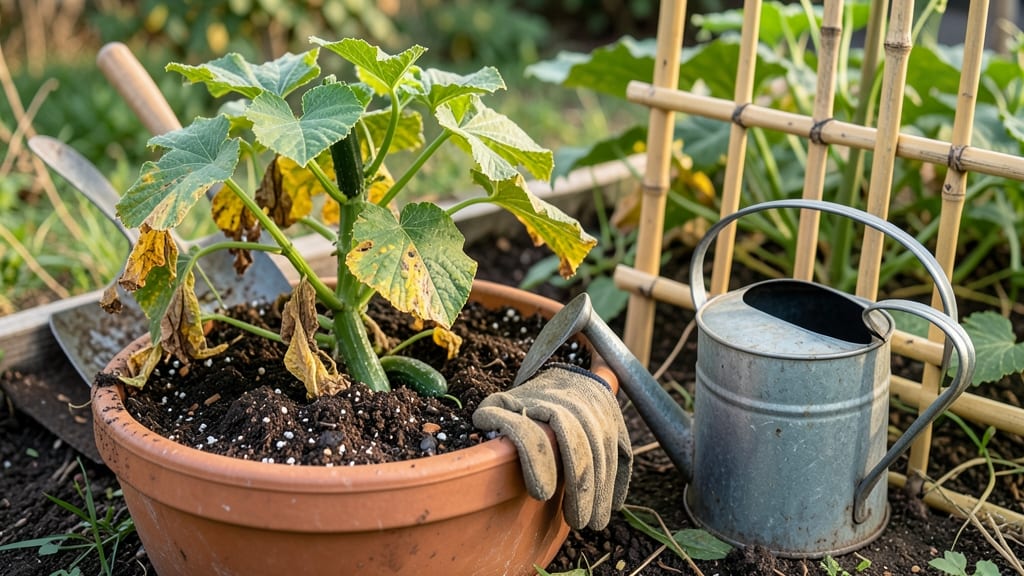
How to fix an overwatered cucumber plant—drooping leaves and mushy stems are a cry for help, not a death sentence. 🌱 I've revived more overwatered cucumbers than I can count, and the key is acting fast before rot sets in. The first 24 hours make all the difference between saving your harvest and losing the plant entirely.
Start by checking the soil: if it's soggy or smells like wet socks, that's your problem. Stop watering immediately and let the soil dry out an inch below the surface before you water again.
Most gardeners overcompensate by watering less, but cucumbers need consistent moisture—not a swamp. Improve drainage by adding perlite or sand to heavy soil, and consider repotting if the current container lacks drainage holes.
Within a day, you'll see the plant perk up as roots get oxygen again. Trim any blackened or mushy stems with clean scissors, and watch for new green growth signaling recovery. The real secret? A moisture meter or your finger—stick it in the soil before watering. If it's damp, wait.
Long-term, mulch around the base to regulate moisture and choose containers with drainage holes. Cucumbers are forgiving if you catch the problem early, and with these adjustments, you'll have vines climbing and producing within weeks. Prevention is simpler than repair—trust me, I've learned that the hard way.
📚 In This Guide
- What you need
- Instructions
- Tips and common mistakes
- Wrapping up and next steps
What you need
- ● Well-draining potting mix or soil: At least 2-3 gallons (or enough to refill the container your cucumber is in). Opt for a mix labeled as "well-draining" or "for container gardening".
- ○ Gloves (optional but recommended): A pair of gardening gloves to protect your hands from dirt and potential fungal spores.
- ● Pruning shears or sharp scissors: Sterilized tools to trim away damaged leaves or roots.
- ● Container with drainage holes: If repotting, ensure it has 3-5 drainage holes at the bottom (or larger than the current container if the issue is poor drainage).
- ● Watering can or hose with a gentle spray nozzle: For light, controlled watering—avoid heavy streams.
- ○ Fungicide (optional but helpful): A copper-based or neem oil fungicide (follow label instructions for dilution).
- ● Perlite or vermiculite: 1-2 cups to improve soil aeration and drainage.
- ● Small hand trowel: For gently loosening soil around roots if repotting.
- ● Time: Dedicate 15-30 minutes for assessment and immediate action.
- ● Patience: Recovery may take 24-48 hours to see visible improvement.
- ● Sunlight access: Ensure your plant can receive 6-8 hours of indirect sunlight daily post-treatment.
- ● Temperature control: Keep the environment between 65-85°F (18-29°C) to aid recovery.
Step-by-Step instructions for reviving overwatered cucumber plants
Here's how I've saved dozens of soggy cucumber plants—fast action prevents permanent damage.
💧 Step 1: Stop Watering Immediately and Assess Damage
Turn off any irrigation systems and remove the plant from its current location. Yellowing leaves, mushy stems, or blackened roots are clear signs of overwatering. Gently squeeze the soil—if it feels like a damp sponge, you've got the classic waterlogged problem. The first 24 hours are critical; every drop of excess moisture accelerates root rot.
Check the stem base for soft, dark spots—this is where rot starts. If you see these, don't panic yet. The key is acting fast before the rot spreads to healthy tissue. I always carry a small trowel and gloves when inspecting plants; you'll be handling wet, possibly contaminated soil.
✂️ Step 2: Prune Damaged Foliage and Improve Airflow
Use clean, sharp pruning shears to remove any yellow or blackened leaves—these are already compromised and won't recover. Cut back to healthy green tissue only. You might be surprised how much you trim, but this prevents the plant from wasting energy on dead growth. I usually remove about 30-50% of the foliage in severe cases.
Next, move your cucumber plant to a location with bright, indirect light and good airflow. A spot near an open window (but not direct afternoon sun) works well. If you're growing outdoors, relocate it to a raised bed or container with better drainage. The goal is to dry out the plant without shocking it with full sun too soon.
🪴 Step 3: Repot or Adjust Soil for Better Drainage
If your cucumber is in a container, carefully remove it and inspect the roots. Healthy roots should be white or pale yellow, while rotten roots are brown, black, and mushy. Trim away any damaged roots with sterilized scissors. For potted plants, choose a container with drainage holes—if none exist, drill them yourself.
Fill the new container with a fresh mix of 50% potting soil and 50% perlite or coarse sand. This improves drainage dramatically. Gently place the plant in, ensuring the soil line sits at the same level as before. Water lightly only if the soil feels completely dry—you're aiming for "moist but not soggy."
☀️ Step 4: Monitor and Adjust Watering Routine
Wait 48 hours before watering again. During this time, check the soil daily—it should feel dry about 1 inch deep before you water. Use your finger to test moisture; if it's still damp, wait another day. Overwatering recovery depends on consistent dry periods between waterings.
Once you resume watering, use the "finger test" method: stick your index finger 1-2 inches into the soil. Water only when the soil feels dry at this depth. Mature cucumber plants need about 1-2 inches of water per week, but adjust based on your climate. I've found that morning watering prevents fungal issues that thrive in damp evening conditions.
🌱 Step 5: Support Recovery with Proper Care
Apply a balanced, water-soluble fertilizer (like 10-10-10) at half strength to help the plant recover. This provides essential nutrients without overwhelming stressed roots. I fertilize every 2-3 weeks during recovery, then return to normal feeding schedules once the plant shows new growth.
Keep an eye out for new leaves—these are your best sign of recovery. If you see fresh, vibrant green foliage within 7-10 days, your plant is on the mend. Avoid harvesting until you see at least 3-4 new leaves; the plant needs energy to recover before producing fruit. In my experience, plants that make it through this recovery phase often bounce back stronger than before.
Tips & tricks for reviving overwatered cucumber plants
Fast action is everything when it comes to saving soggy cucumbers—here's how to maximize your plant's chances of recovery.
The 24-Hour Emergency Rule: That first critical 24 hours after you notice overwatering symptoms is when your plant has the best chance of recovery. Every minute counts—don't waste time waiting for "perfect" conditions. I've saved plants where I acted immediately, but waited too long on others. The sooner you stop watering and start assessing, the better the outcome. Confession: I skipped this step once and lost a prized heirloom variety.
Root Inspection Secret: When you're examining roots in Step 3, look for the "squeeze test" difference: healthy roots should spring back when gently pressed, while rotten ones will stay mushy. I use a pair of sterilized scissors to trim away any questionable roots—better to be aggressive now than risk spreading rot later. For stubborn cases, soak the roots in a 10% hydrogen peroxide solution (1 part peroxide to 9 parts water) for 10 minutes before replanting to kill any hidden pathogens.
Soil Mix Upgrade: The 50% potting soil/50% perlite or coarse sand mix is perfect, but I've had even better results adding 10% coconut coir to the mix. This improves moisture retention without compacting like regular soil, and the coir helps prevent fungal growth during recovery. If you don't have perlite, vermiculite works just as well—both create the air pockets roots need to breathe.
Recovery Timeline: Those 7-10 days for new leaf growth are your best indicator of success. I track recovery by marking the date when I first see new growth on a calendar. If you don't see any new leaves by day 10, it's time to reassess—sometimes what looks like recovery is just the plant conserving energy. Don't be discouraged if progress seems slow; cucumbers are resilient once you give them the right conditions.
Pro Tips for Fix Overwatered Cucumber Plant
- Fast action is everything when it comes to saving soggy cucumbers—here's how to maximize your plant's chances of reco...
- The 24-Hour Emergency Rule: That first critical 24 hours after you notice overwatering symptoms is when your plant ha...
- Root Inspection Secret: When you're examining roots in Step 3, look for the "squeeze test" difference: healthy roots ...
Frequently asked questions
How quickly can I tell if my cucumber plant is overwatered?
Overwatered cucumbers show signs within 12–48 hours. Look for yellowing leaves, mushy stems, or drooping vines. Check the soil—if it’s soggy and smells foul, root rot may have set in. Act fast: reduce watering immediately and improve drainage to prevent permanent damage.
Can I save an overwatered cucumber plant if the leaves are already turning yellow?
Yes, but act within 24 hours for the best chance. Stop watering, repot the plant in well-draining soil, and trim any mushy roots. If the roots are healthy but the leaves are wilted, they’ll often recover in 3–7 days with proper care. Avoid fertilizing until new growth appears!
What’s the best way to water cucumber plants to avoid overwatering?
Use the “finger test”: stick your finger 1–2 inches into the soil. Water only when it’s dry. For containers, aim for 1–1.5 inches per week (adjust for climate). Water deeply but infrequently—focus on the base, not the leaves, to prevent fungal issues like powdery mildew.
Should I prune my cucumber plant if it’s overwatered?
Prune only the damaged parts. Use sterilized scissors to trim yellow, wilted, or mushy leaves/stems to redirect energy to healthy growth. Avoid heavy pruning—focus on removing 10–20% of foliage max to reduce stress. Prune in the morning so wounds dry quickly.
What if my cucumber plant’s soil is constantly soggy—even after I stop watering?
Your soil may lack drainage or be too compact. Amend it with:
- Perlite or vermiculite (20–30% of the soil mix)
- Compost (to improve aeration)
- Sand (for heavy clay soils)
Wrapping up and next steps
Fixing an overwatered cucumber plant is totally doable—you’ve got this! 🌱 By acting fast with proper drainage, adjusting your watering routine, and giving your plant some TLC, you can revive it and even salvage your harvest. Start today, and soon you’ll be enjoying crisp, homegrown cucumbers again.
Next, monitor your plant closely over the next few days. Keep a watering journal to track improvements—your future cucumber crops will thank you!