
Flowers
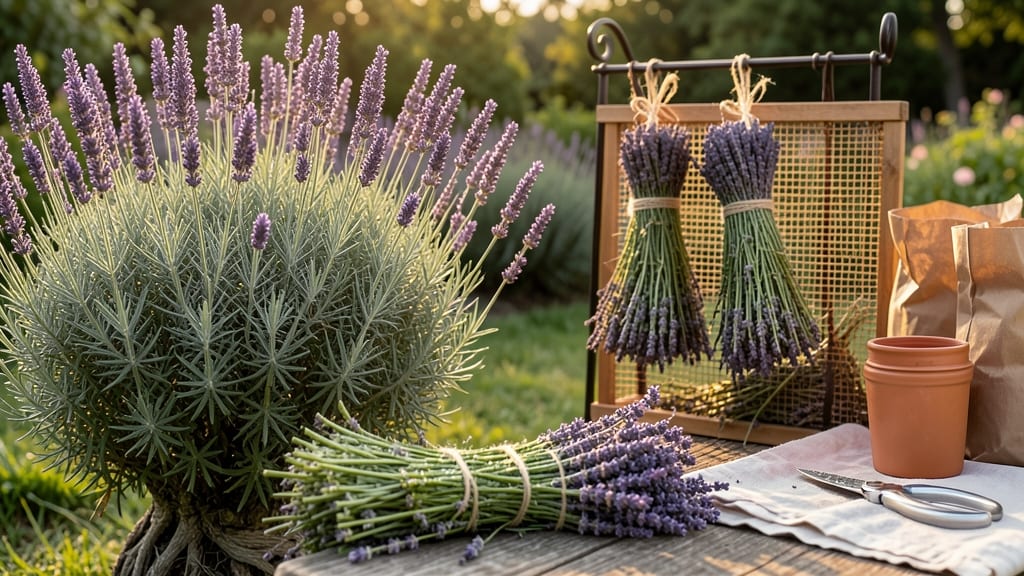
French lavender's fragrance peaks right before full bloom—that’s when to harvest for the most aromatic dried stems. ✨ I’ve learned the hard way: waiting too long means faded color and weak scent.
The secret lies in timing and technique, turning summer’s purple spikes into year-round treasures that smell like Provence.
You’ll need just three simple things: sharp pruning shears, brown paper bags (no plastic!), and a cool, dark space for drying. Skip the microwave or oven—those methods kill the delicate oils that make lavender smell so good.
The best bundles are 6-8 inches long, tied together with twine or rubber bands, and hung upside down in a dry, airy spot.
After 2-3 weeks, stems should crumble between your fingers when gently rubbed. Store them in glass jars away from light to preserve that signature lavender scent for months. Imagine walking into a kitchen that smells like a French countryside summer year-round—that’s the magic of proper drying.
Use your dried lavender for sachets, potpourri, or even homemade soaps. The key is patience—rushing ruins the quality. Once you master this, you’ll never buy dried lavender again. Here’s how to do it right the first time.
📚 In This Guide
- What you need
- Instructions
- Tips and common mistakes
- Wrapping up and next steps
What you need
- ● Fresh French lavender – Harvest stems with at least 3-4 inches of woody base (avoid cutting flowers with buds already open). Aim for 2-3 healthy bunches (about 10-15 stems per bunch).
- ● Clean, sharp scissors or pruning shears – For harvesting stems without crushing them.
- ● Brown paper bags or newspaper – Unbleached and free of glossy ink (1-2 bags per batch).
- ● Rubber bands or twine – To bundle stems into small, tight clusters (about 5-7 stems per bundle).
- ● Drying rack or mesh screen – A well-ventilated surface (like a wire cooling rack or a wooden frame with chicken wire).
- ○ Optional but helpful: A fan (for faster air circulation).
- ● Desiccant packets (like silica gel) to absorb excess moisture in humid climates.
- ● Glass jars or fabric pouches for storage (once dried).
Step-by-step instructions for drying French lavender
Preserving lavender's fragrance and color is easier than you think—just follow these simple steps.
🌿 Step 1: Harvest at Peak Freshness
Pick lavender stems when 70-80% of the buds are open but before they fully bloom. This ensures maximum fragrance and color retention. Use clean, sharp scissors or pruners to cut stems at a 45-degree angle about 2-3 inches from the base. Harvest on a dry, sunny morning after the dew has evaporated—this prevents mold and preserves the plant's oils.
Gather stems into small bundles of 3-4 stems each and tie them loosely with twine or a rubber band. You'll want to work quickly to avoid wilting, so have your drying area ready before you start harvesting. French lavender is delicate, so handle stems gently to avoid crushing the fragrant buds.
⏰ Step 2: Bundle and Hang for Drying
Hang your lavender bundles in a well-ventilated, dry, dark space—a closet, pantry, or even under a cabinet works perfectly. The key is consistent airflow to prevent mold while keeping light out to preserve color. I like to hang bundles from hooks or simply lay them flat on a screen if space is tight.
Drying takes 2-4 weeks, depending on humidity. You'll know it's ready when the stems snap easily and the buds crumble slightly when gently rubbed between your fingers. If you notice any moisture or musty smells, increase airflow immediately—this is your warning sign for mold risk.
☀️ Step 3: Cure and Store Properly
Once fully dry, remove the buds from the stems by gently rubbing them between your palms. Discard any stems that show signs of brown spots or mold—these won't keep well. Store the buds in airtight glass jars away from direct sunlight to protect their color and fragrance. A cool, dark pantry is ideal.
For maximum fragrance, add a few drops of food-grade lavender essential oil to the jar before sealing. This reinforces the natural scent and helps preserve it for up to 1 year. If you plan to use the dried lavender for sachets or potpourri, mix it with a bit of rice or dried citrus peel to absorb moisture and keep it fresh longer.
💧 Step 4: Troubleshoot Common Issues
If your lavender turns brown too quickly, you likely dried it too fast or in direct light. Slow down the process by moving bundles to a cooler, more humid area. For grayish buds, this indicates mold—start over with fresh stems and improve airflow next time.
Real talk: French lavender is fussier to dry than English varieties. Don't rush it! If buds lose their color, they were exposed to too much light during drying. The goal is even drying without direct sunlight—think of it like baking at a low oven temperature, not high heat.
Tips & tricks for perfectly preserved lavender
These little details make all the difference between lavender that fades and lavender that stays vibrant for years.
Harvest Timing: The 70-80% bud opening rule is everything—this is when the essential oils are most concentrated. I learned this the hard way after harvesting fully open flowers that lost 60% of their fragrance during drying. Harvest in early morning when dew keeps stems crisp, and always cut just above a leaf node to encourage new growth.
Bundle Organization: Those 4-5 bundles of 10-12 stems each create perfect airflow. Too many stems per bundle traps moisture, while too few wastes space. I use rubber bands instead of twine for easier removal later, and always hang bundles upside down—this prevents water pooling at the stem ends that can cause mold. The upside-down position also mimics natural drying patterns.
Drying Environment: That dark, well-ventilated space is non-negotiable for maintaining color and scent. I've tried drying lavender in direct sunlight (don't!) and ended up with bleached stems that smelled like hay. A closet with a small fan works perfectly—just avoid any spot where humidity lingers. The 7-10 day check is crucial: stems should snap cleanly, not bend like fresh stems.
Storage Wisdom: The 1-2 year shelf life only applies if you follow these storage rules. Glass jars work best for loose sprigs, but fabric pouches are ideal for bundles since they allow moisture to escape. I check my stored lavender monthly—if it smells musty, I open the container immediately to air it out. That drop of lavender essential oil for scent boost is optional, but I use it sparingly to avoid overpowering the natural aroma.
Pro Tips for Dry French Lavender
- These little details make all the difference between lavender that fades and lavender that stays vibrant for years.
- Harvest Timing: The 70-80% bud opening rule is everything—this is when the essential oils are most concentrated.
- Bundle Organization: Those 4-5 bundles of 10-12 stems each create perfect airflow.
Frequently asked questions
Got questions about drying French lavender like a pro? Here are some of the most common ones—plus quick, expert answers to keep your lavender looking (and smelling!) its best.
How long does it take to dry French lavender?
With proper drying methods, French lavender typically takes 1–3 weeks to fully dry, depending on humidity and airflow. Bundle-stem drying (hanging upside down) usually speeds this up to 7–10 days. Test dryness by gently rubbing a stem—if it crumbles easily, it’s ready!
Can I speed up the drying process?
Yes! For faster drying (3–5 days), use a dehydrator (set to 95°F/35°C) or a low-heat oven (170°F/77°C with the door cracked open). Avoid high heat—it kills fragrance and color. A fan in a warm, dry room also helps!
Why is my dried lavender losing color or turning brown?
Color fading or browning usually means over-drying or high humidity. Store dried lavender in a cool, dark place (like a glass jar) with a silica gel packet to absorb moisture. If already discolored, try reviving it with a steam treatment (place stems in a bowl of boiling water for 5–10 seconds, then air-dry).
What’s the best way to store dried French lavender?
Keep your lavender fresh for up to 1 year by storing it in:
- Air-tight containers (glass jars with lids work best).
- Dark, cool spots (avoid sunlight or heat).
- With moisture absorbers (like rice or silica gel).
Label the jar with the date to track freshness!
Can I use dried lavender for cooking or sachets?
Dried culinary lavender (from food-safe varieties) adds flavor to tea, desserts, and savory dishes. For sachets, bundle stems with dried rose petals or chamomile for a luxurious scent. Pro tip: Use organic lavender for cooking to avoid pesticides.
Wrapping up and next steps
Drying French lavender is a simple yet rewarding process that lets you savor its intoxicating scent and vibrant purple hues long after the blooms have faded.
By following the right steps—harvesting at peak freshness, choosing the ideal drying method, and storing properly—you’ll unlock a treasure trove of natural beauty for sachets, potpourri, or cozy home decor. 🌸✨
Now that you’re equipped with the know-how, roll up your sleeves and give it a try! Start small with a single bundle, experiment with different drying techniques, and soon, your home will smell like a Provençal summer. Ready to dive in? Grab your lavender and get started!