
Succulent
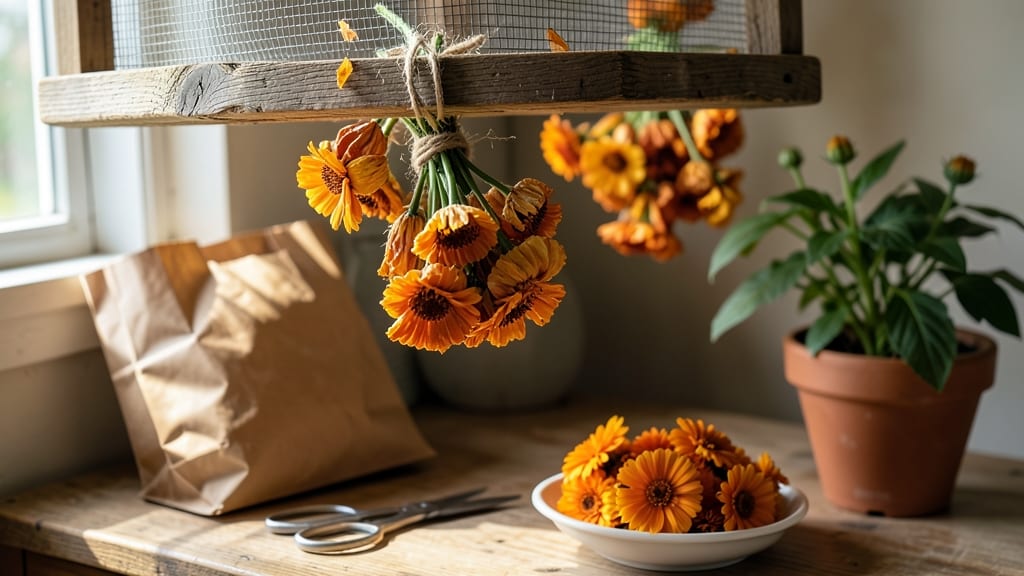
Drying calendula petals unlocks their golden beauty for salves, teas, and crafts. ✨ I’ve dried hundreds of batches, and the difference between crisp petals and brittle scraps comes down to just a few key steps—temperature, airflow, and patience.
Skip the guesswork and learn the foolproof method that preserves their vibrant color and healing properties.
You’ll need just three things: fresh calendula flowers (harvest when fully open but before seeds form), a well-ventilated space or dehydrator, and a dark, airtight container for storage. The process takes 3-7 days depending on your method, but the results—petals that stay bright and fragrant for months—are worth every minute.
No fancy equipment required; even a simple paper bag works in a pinch.
Once dried, these petals transform into soothing salves, healing teas, or delicate potpourri. The scent lingers like sunshine, and their anti-inflammatory properties make them a garden-to-apothecary staple. Store them in glass jars away from light to keep their potency and color intact for up to a year.
Whether you’re a beginner or a seasoned herbalist, this method adapts to your space—hanging bundles, air-drying on screens, or using a dehydrator at 95°F. The key is consistency, and I’ll show you exactly how to avoid the most common mistakes that turn petals to dust.
📚 In This Guide
- What you need
- Instructions
- Tips and common mistakes
- Wrapping up and next steps
What you need
- ● Fresh calendula flowers: Harvest petals when fully open and dry (avoid rain-dampened blooms). Aim for 1–2 cups (or ~50–100 individual flowers) for a small batch.
- ● Clean, dry surface: Use a baking sheet, wire rack, or paper towels (avoid plastic to prevent moisture buildup).
- ● Sharp scissors or pruners: For trimming stems to ½-inch lengths (speeds drying).
- ● Drying method choice: Air-drying: A cool, dark, well-ventilated space (e.g., pantry, closet with a fan).
- ● Dehydrator: Set to 95–115°F (35–46°C) for 2–4 hours.
- ● Oven: Preheat to lowest setting (170°F/77°C or less), prop door open with a wooden spoon, and dry for 1–2 hours.
- ● Air-tight storage: Glass jars (like mason jars) or paper bags with a silica gel packet to prevent humidity.
- ● Food dehydrator with mesh trays: Ensures even airflow for delicate petals.
- ● Silicon mat: For easy cleanup if using an oven.
- ● Labeling supplies: Masking tape + marker to note drying date/usage (e.g., "salve" or "tea").
- ○ Essential oils (optional): A drop of lavender or chamomile oil for infused drying (add after petals are fully dry).
Step-by-step instructions for drying calendula petals
Preserving calendula petals is simpler than you think—just follow these steps for vibrant, usable petals every time.
🌿 Step 1: Harvest Petals at Peak Freshness
Pick calendula flowers on a dry morning after the dew has evaporated. Look for fully open blooms with bright, unfaded petals—these yield the most vibrant dried flowers. Use clean, sharp scissors or your fingers to gently twist off the petals from the center, avoiding any green calyx or stem.
Work quickly to prevent wilting. If you can't process them immediately, lay the petals in a single layer on a clean towel in the shade. This prevents moisture buildup, which can cause mold during drying. Never harvest petals that are wet or damaged—they won't dry evenly and may spoil.
🌱 Step 2: Arrange Petals for Even Drying
Spread the petals in a single layer on a clean, dry surface like a mesh screen, parchment paper, or a wooden drying rack. Overcrowding traps moisture and leads to uneven drying or mold. Aim for petals spaced about ½ inch apart—this ensures airflow reaches every surface.
Choose a warm, dry location away from direct sunlight. A temperature between 70-85°F works best. Too much heat can bleach the petals, while humidity slows the process. If your space is damp, place a small fan nearby to gently circulate air without disturbing the petals.
💧 Step 3: Monitor and Rotate for Consistent Drying
Check the petals every 24 hours. They’re ready when they’re completely dry to the touch—no moisture should remain, and they should crumble slightly if rubbed between fingers. If some petals dry faster, rotate them so all pieces receive equal airflow.
Drying typically takes 3-7 days, depending on humidity and airflow. If petals feel damp after a week, they need more time or better ventilation. Store them in an airtight container once fully dry to preserve their color and potency.
✂️ Step 4: Store Dried Petals Properly
Once dry, transfer the petals to a glass jar with a tight-fitting lid. Add a silica gel packet if storing long-term to absorb any lingering moisture. Label the jar with the date—properly dried calendula keeps its color and medicinal properties for up to 1 year.
Keep the jar in a cool, dark place, like a pantry or cabinet. Exposure to light or heat can fade the petals and degrade their beneficial compounds. For culinary uses, store in smaller portions to minimize exposure to air each time you open the jar.
Tips & tricks for perfectly preserved calendula petals
Between us, the difference between vibrant dried calendula and sad, faded petals often comes down to these small but critical details.
Harvesting Timing: I can't stress enough how important that dry morning is—dew-damp petals will never dry properly. If you must harvest later in the day, wait until the flowers are completely dry to the touch. And here's what nobody tells you: even a few minutes of direct sunlight before harvesting can cause the petals to start wilting prematurely, which ruins the drying process entirely.
Drying Surface Selection: While mesh screens and parchment work perfectly, I've found that a wooden drying rack with raised slats actually creates the best airflow pattern. The slight elevation prevents any potential moisture buildup on the bottom surface. If you're using parchment, poke a few small holes with a fork to allow air circulation underneath.
Rotation Strategy: The 24-hour rotation check isn't just about timing—it's about technique. When you rotate, gently flip each petal rather than just rearranging them. This exposes fresh surfaces to the airflow and prevents any one side from drying too quickly while the other stays damp. Think of it like turning a roast in the oven—consistent exposure is key.
Storage Wisdom: That 1-year shelf life assumes perfect conditions. For maximum potency, I store my dried calendula in amber glass jars (they block light better than clear glass) and add a small packet of uncooked rice instead of silica gel—the rice absorbs moisture without the chemical smell. For culinary uses, portion into small jars so you're not opening the main container repeatedly.
Pro Tips for Dry Calendula
- Between us, the difference between vibrant dried calendula and sad, faded petals often comes down to these small but critical details.
- Harvesting Timing: I can't stress enough how important that dry morning is—dew-damp petals will never dry properly.
- Drying Surface Selection: While mesh screens and parchment work perfectly, I've found that a wooden drying rack with raised slats actually creates the best airflow pattern.
Frequently asked questions
Got questions about drying calendula petals? You’re not alone! Here are some of the most common queries—and their straightforward answers—to help you master the process like a pro.
How long does it take to dry calendula petals completely?
Drying time depends on your method, but most calendula petals are fully dry in 1 to 3 weeks when hung in bundles. If using a dehydrator (set to 95°F/35°C), they’ll dry in 24 to 48 hours. Test for readiness by gently crumbling a petal—if it snaps easily, it’s dry! Patience is key here, as over-drying can make them brittle.
Can I speed up the drying process?
Yes! While air-drying is safest, you can shorten the process with a dehydrator or even your oven (set to its lowest heat, door cracked open). For extra speed, place petals on a screen or mesh tray in a warm, well-ventilated spot. Just avoid direct sunlight—it can bleach the petals and degrade their medicinal properties.
What if my calendula petals develop mold or mildew?
Mold is a red flag! If you spot fuzzy spots or dark discoloration, discard the batch immediately. To prevent this, ensure petals are completely dry and stored in a cool, dark place with good airflow. If humidity is high, use a silica gel packet or a small fan to keep air circulating.
How do I store dried calendula petals for later use?
Store your dried petals in airtight glass jars or fabric bags (like muslin) to preserve their potency. Keep them in a cool, dark place (like a pantry or fridge) for up to 1 year. Avoid plastic containers—they can trap moisture and encourage mold. Label your jars with the date to track freshness!
Can I dry calendula leaves too, or just the petals?
You can dry both petals and leaves, but they have different uses! Petals are ideal for teas, salves, and infusions, while leaves (though smaller) can be dried for potpourri or herbal blends. Just remove any thick stems first—they take longer to dry and can harbor moisture. Leaves may also turn brown but stay usable!
Wrapping up and next steps
Drying calendula petals is a simple yet rewarding process that unlocks their beauty and healing potential! Whether you’re crafting soothing salves, brewing calming teas, or adding a pop of color to homemade projects, fresh petals can be transformed into long-lasting treasures with just a little patience.
Now that you know the best methods—air-drying, oven-drying, or dehydrator-drying—it’s time to get creative!
Ready to turn your garden into a natural apothecary? Start small—pick a sunny day, gather your supplies, and experiment with different drying techniques. Before you know it, you’ll have a stash of vibrant, aromatic calendula ready for all your wellness and crafting needs. Happy drying! 🌼✨