
Pruning
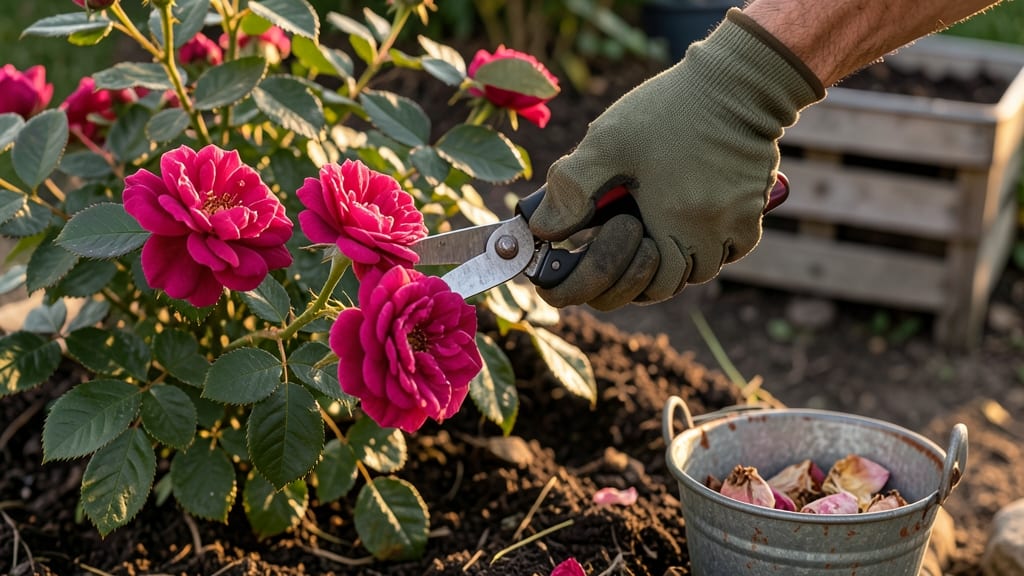
Your floribunda roses could bloom nonstop this summer with just 10 minutes of work. ✂️ I’ve deadheaded dozens of bushes, and the difference between a single flush of flowers and months of vibrant blooms comes down to one simple technique—cutting at the right spot.
The key is timing: deadhead right after petals fade but before seed pods form. Use clean pruners and snip just above a 5-leaf node (not a bud) to encourage bushier growth. Most gardeners mess this up by cutting too far back or leaving stubs—both stunt future blooms.
You’ll see new buds forming within 2-3 weeks, and the plant will redirect energy from seed production to more flowers. A well-maintained floribunda can produce three to five bloom cycles per season instead of just one. Works for all floribunda varieties, from ‘Iceberg’ to ‘Julia Child.’
Here’s how to do it without turning your roses into a tangled mess.
📚 In This Guide
- What you need
- Instructions
- Tips and common mistakes
- Wrapping up and next steps
What you need
- ● Bypass pruners – Sharp, clean bypass pruners (not anvil-style) for precise cuts. Choose 5-inch or 6-inch handles for better leverage. (1 pair)
- ● Garden gloves – Heavy-duty, nitrile-coated gloves (size medium/large) to protect against thorns. (1 pair)
- ● Disinfectant – 70% isopropyl alcohol or a bleach solution (1 part bleach to 9 parts water) to sterilize tools between cuts. (small spray bottle or wipe)
- ● Trash bag or bucket – A heavy-duty trash bag (10+ gallon) or 5-gallon bucket for spent blooms and debris.
- ○ Sharpie or permanent marker – For marking stems if you’re optionally tagging for future reference. (1)
- ● Loppers – 8-10 inch loppers for thicker stems (if your floribundas have woody growth). (1 pair)
- ● Hand pruners with crimping or anvil blades – Only if you’re dealing with diseased stems (sterilize thoroughly!).
- ● Compost bin or bin liner – To recycle pruned material instead of tossing it.
- ● Knee pad or stool – For comfort if you’re working on low-growing or sprawling bushes.
- ● Hose with spray nozzle – To rinse tools and stems post-pruning (keeps diseases at bay!).
Step-by-Step instructions for deadheading floribunda roses
Here's how I keep my floribundas blooming all season—no fancy tools, just sharp eyes and steady hands.
✂️ Step 1: Identify the Right Flowers to Trim
Wait until a bloom has fully faded and its petals start to drop naturally. This tells me the flower has finished its life cycle and is ready for removal. Grab spent blooms gently but firmly—don't yank stems, which can damage the plant. I like to work early morning when dew is present; the stems are easier to spot and cut cleanly.
For floribundas, look for clusters where multiple blooms grow on a single stem. Only remove the individual spent flowers, not the entire cluster. This encourages new buds to form lower on the stem. If you see green buds forming below a faded bloom, leave it alone—the plant is already preparing new flowers.
✂️ Step 2: Make Clean Cuts at the Right Spots
Use sharp, clean pruners or bypass shears to make your cuts. I always sterilize my tools with rubbing alcohol between plants to prevent disease spread. Cut just above a set of five-leaflet leaves (called a "leaf cluster") or a healthy outward-facing bud. This is where new growth will emerge.
Never cut into old wood—the brown, woody stems that have no leaves. You'll know you're cutting correctly when you see fresh green growth below your cut. For floribundas, I aim to cut at a 45-degree angle about ¼ inch above the leaf cluster. This prevents water from pooling on the cut and causing rot.
✂️ Step 3: Thin Out Crowded Clusters for Better Airflow
While you're deadheading, use this chance to improve airflow through the plant. Floribundas can get dense, and crowded stems invite fungal diseases. Look for clusters where stems are growing too close together. Remove entire stems that are crossing or rubbing against others—these are prime spots for disease.
I usually thin about one-third of the oldest stems in each cluster. This might sound drastic, but it encourages the plant to put energy into producing new, healthier growth. You'll see the difference in just a few weeks—fewer crowded stems mean bigger, healthier blooms.
💧 Step 4: Water and Fertilize After Pruning
Give your roses a deep watering right after deadheading. The roots will thank you for the moisture, especially if you've made several cuts. Water deeply until you see water running out of the drainage holes in the pot or 6 inches into the soil for in-ground plants. This encourages roots to grow deeper for better stability.
Follow up with a balanced rose fertilizer (10-10-10 or similar) to replenish nutrients lost during pruning. I like to use a slow-release granular fertilizer around the base of the plant. This gives the roots a steady supply of nutrients as they recover from the pruning and start producing new growth. Don't fertilize if your roses are already showing new buds—wait until they've opened fully.
☀️ Step 5: Monitor and Repeat Weekly
Check your floribundas every 5-7 days during peak blooming season. This keeps you ahead of the game—you'll catch spent blooms before they turn into seed pods, which saps energy from new growth. I set a reminder on my phone for every Saturday morning to do a quick once-over.
Watch for new buds forming at the base of where you made your cuts. These are your reward for proper deadheading! If you see leaves yellowing or wilting after pruning, it might mean you cut too far into old wood. Next time, aim higher—you want to see fresh green growth below your cuts, not just bare stems.
Tips & tricks for perfect floribunda rose care
These simple tricks will help your floribundas stay vibrant and blooming all season long.
Timing Tip: Early morning is the best time to deadhead—dew makes stems easier to see and cut cleanly. The cooler temperatures also reduce stress on the plant. I always do my deadheading right after watering, which makes the stems more pliable and less likely to tear. This also helps me spot any weak or diseased stems that might need extra attention.
Cutting Technique: When making your 45-degree angle cuts in Step 2, visualize the cut as a slice of pizza—this angle prevents water from pooling on the stem, which could lead to rot. If you're using shears, hold them at a slight angle to achieve this cut without straining. For stubborn stems, I like to make a small nick first to guide the cut—this keeps me from cutting too far into old wood.
Pruning Strategy: In Step 3, when thinning crowded clusters, focus on removing stems that are crossing or growing inward. These are the ones that block airflow and create prime spots for fungal diseases. I like to think of it as giving my roses a "haircut"—just like humans, roses need proper airflow to stay healthy! After thinning, I always give the plant a gentle shake to check for any hidden buds that might have been obscured by dense growth.
Post-Pruning Care: After deadheading, I always do a quick inspection of the leaves. If I see any yellowing or spots, I'll remove those leaves too—they're often early signs of disease. This might seem like overkill, but it saves me from bigger problems later. The deep watering in Step 4 is especially important after removing multiple stems, as the plant needs to replenish moisture lost during pruning.
Pro Tips for Deadhead Floribunda Roses
- These simple tricks will help your floribundas stay vibrant and blooming all season long.
- Timing Tip: Early morning is the best time to deadhead—dew makes stems easier to see and cut cleanly. The cooler temp...
- Cutting Technique: When making your 45-degree angle cuts in Step 2, visualize the cut as a slice of pizza—this angle ...
Frequently asked questions
Got questions about deadheading floribunda roses?
Here are the answers to the most common ones—so you can keep those blooms coming all summer long!
When is the best time to deadhead floribunda roses?
Deadhead after a flower fades but before its hips (seed pods) form. For floribundas, this usually means trimming spent blooms in late spring through early fall. Avoid pruning in extreme heat or cold—aim for morning or evening when the plant is hydrated and stress-free.
Do I need special tools to deadhead floribunda roses?
Not necessarily! While sharp bypass pruners or clean garden shears make the job easier, you can use your fingers for small stems. Just sterilize your tools with rubbing alcohol first to prevent disease. A small bucket for clippings keeps your workspace tidy.
What if I skip deadheading—will my floribunda roses still bloom?
Yes, but with fewer and shorter blooms. Deadheading redirects the plant’s energy from seed production to new growth and flowers. If you’re short on time, focus on removing the largest spent blooms—even partial deadheading helps!
My floribunda roses are dropping buds before they open. Did I deadhead wrong?
This could signal stress from over-pruning or environmental factors (like heat or drought). Check for:
- Pruning too close to joints (leave ¼" above a leaf node).
- Uneven watering—keep soil consistently moist.
- Pests or black spot fungus (treat with neem oil if needed).
Can I deadhead floribunda roses in winter?
Nope! Floribundas are dormant in winter—pruning now can stimulate weak growth or damage buds. Wait until early spring (when new shoots appear) for a light shaping trim. Focus on deadheading only after the last frost.
Pro Tip:
For continuous blooms, deadhead every 5–7 days during peak season. Use the "third bud" rule: Cut just above the third leaf node below the bloom to encourage branching.
Wrapping up and next steps
Deadheading your floribunda roses might seem like a small task, but it’s the secret to a showstopping summer garden! By removing spent blooms and pruning strategically, you’ll encourage lush, continuous flowers and keep your roses healthy.
Think of it as a quick, rewarding ritual—just a few minutes now means months of stunning blooms later.
Ready to level up your rose care? Grab your pruners and give it a try—your garden (and future self) will thank you! For even more tips, check out our guide on seasonal rose maintenance to keep those blooms coming all year.