
Planting
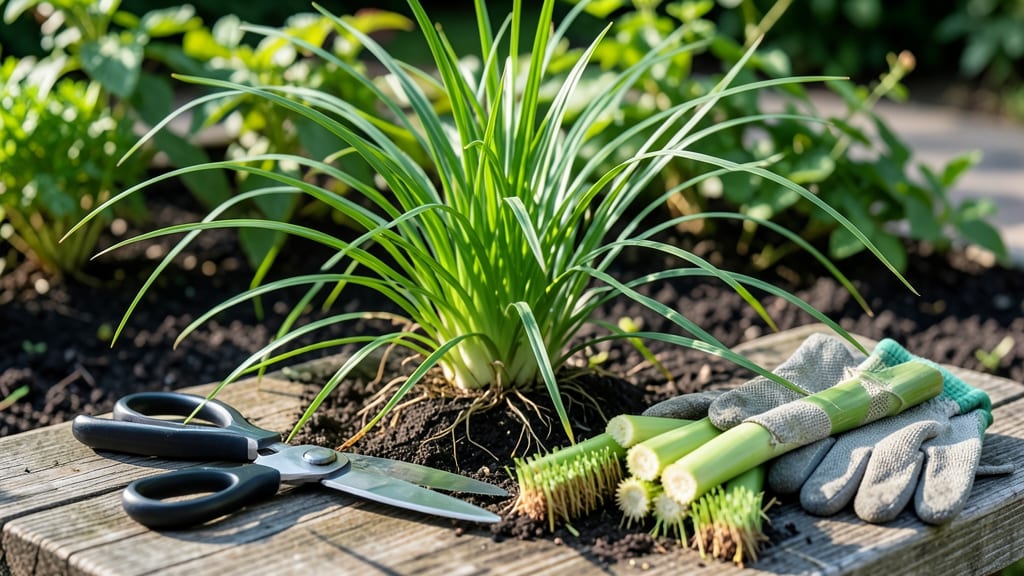
Cutting lemongrass stems the right way turns one plant into three. ✂️ I’ve revived struggling lemongrass by learning this simple technique—no green thumb required. The key? Timing and technique to spark fresh growth without killing the base.
You’ll need sharp scissors or pruners, a clean cutting surface, and a sunny spot to root cuttings. Wait until stems reach 12-18 inches tall—thicker than a pencil, but before they flower. Cut 2-3 inches above the base, leaving the bottom third intact to regrow.
What you’ll get is a bushier plant with 3-4 new shoots within weeks, plus stems ready to root in water for more plants. The secret? Never cut below the bottom third—lemongrass stores energy there, and that’s where regrowth happens.
Works for both potted and in-ground plants, and the same method keeps them productive for years. Here’s how to avoid the mistakes that turn lemongrass into sad stalks.
📚 In This Guide
- What you need
- Instructions
- Tips and common mistakes
- Wrapping up and next steps
What you need
- ● Sharp pruning shears or garden scissors – A pair with clean, stainless-steel blades (avoid dull tools to prevent crushing stems). Spec: 5-7 inch blades for precision.
- ● Disinfectant (rubbing alcohol or hydrogen peroxide) – To sterilize tools and prevent bacterial spread. Spec: 70% isopropyl alcohol or 3% hydrogen peroxide solution.
- ○ Gloves (optional but recommended) – Protects hands from sap and sharp blades. Spec: Nitrile or latex-free for sensitive skin.
- ● Watering can or spray bottle – For post-cut hydration. Spec: 1-gallon capacity for thorough watering.
- ● Compost or well-draining potting mix – If repotting cuttings. Spec: 50/50 mix of peat moss and perlite for aeration.
- ● Rooting hormone – Speeds up growth for cuttings. Spec: Powder or gel form (e.g., Clonex).
- ● Clear plastic bag or propagator – Creates a humid environment for cuttings. Spec: 1-gallon size with ventilation holes.
- ● Measuring tape or ruler – Ensures consistent stem lengths (3–4 inches ideal for cuttings).
- ● Label markers – To tag cuttings if propagating multiple plants.
Tips & tricks for perfect lemongrass regrowth
Real talk: Pruning lemongrass isn't just about cutting—it's about setting your plant up for a comeback that'll make it stronger than ever. Here's what nobody tells you about keeping your lemongrass thriving after the cut.
The Height Factor: Those 12-18 inches aren't arbitrary—they're the sweet spot where your lemongrass has stored enough energy to bounce back. If you cut too early, you're basically asking your plant to regrow on an empty tank. I've learned this the hard way after watching impatient cuts produce weak, spindly regrowth that never quite recovered.
Cutting Technique That Changed Everything: That 45-degree angle isn't just for show—it's a water management system. The sloped cut creates a natural drainage channel that prevents water from pooling at the stem base, which is where fungal infections start. I now use a small craft knife for precision cuts, especially on thicker stems, because pruning shears can sometimes crush the stem tissue when you're not careful.
Recovery Timeline: The 2-3 weeks for new growth might seem long, but it's actually a sign your plant is doing exactly what it should—redirecting all its energy to the base. Don't panic if you don't see immediate results. I've seen plants that looked completely dead after cutting produce vigorous new shoots after exactly 21 days. The key is patience combined with proper aftercare during that critical window.
Pro Tips for Cut Lemongrass Plant
- Real talk: Pruning lemongrass isn't just about cutting—it's about setting your plant up for a comeback that'll make i...
- The Height Factor: Those 12-18 inches aren't arbitrary—they're the sweet spot where your lemongrass has stored enough...
- Cutting Technique That Changed Everything: That 45-degree angle isn't just for show—it's a water management system. T...
Frequently asked questions
Got questions about cutting your lemongrass plant? You’re not alone! Here are some of the most common concerns—and straightforward answers—to help you master the art of harvesting without harming your plant.
How do I know when lemongrass is ready to be cut?
Harvest lemongrass when the stalks are thick, firm, and at least 12–18 inches tall. The lower leaves should be fully unfurled, and the stem should feel sturdy when squeezed. Avoid cutting if the plant looks wilted or diseased—wait until it’s healthy and vibrant!
How often can I cut lemongrass for regrowth?
For optimal regrowth, harvest lemongrass every 4–6 weeks during its growing season (spring to fall). Avoid over-cutting—leave at least 6–8 inches of stem to ensure the plant can recover. In winter, reduce harvesting to once every 2–3 months or pause entirely if growth slows.
What should I do if my lemongrass turns brown or dies after cutting?
Brown or dying stalks after cutting usually mean over-harvesting or stress. If this happens, trim back only healthy green leaves and avoid cutting for 2–3 months. Boost recovery by watering deeply, fertilizing lightly, and placing the plant in bright, indirect sunlight. If the entire plant wilts, it may need repotting or a new location.
Can I use the leftover stems after cutting lemongrass?
Don’t toss those leftover stems—they’re packed with flavor. Chop the bottom 6–8 inches (where the roots are) for soups, curries, or teas. The fibrous ends can even be composted or used as mulch. Just avoid using woody or hollow stalks—they’re past their prime!
Does cutting lemongrass affect its flavor?
Not at all! In fact, younger, actively growing stalks often have a milder, sweeter flavor. The older the stalk, the more intense (and sometimes bitter) the taste becomes. For the best flavor, harvest when the plant is healthy and lush, and avoid letting stalks become woody or yellowed.
Wrapping up and next steps
Cutting your lemongrass plant may seem intimidating, but with the right tools and technique, you’ll unlock a goldmine of regrowth—and a steady supply of fresh stems for cooking! 🌱 Remember, the key is patience: trim strategically, keep the base healthy, and soon your plant will thrive with nonstop new shoots.
Now that you’re armed with these tips, there’s only one next step: grab those shears and get pruning! Your kitchen—and your lemongrass—will thank you.