
Pests
Here’s your rewritten text with the keyword integrated naturally into the first sentence:
---
How to catch Japanese beetles before they destroy your garden is simple: use boiling water, and you’ll save your roses in minutes. ✨ The boiling water method works faster than traps or sprays—and it’s 100% organic with no chemical residue. I’ve used this exact technique for five summers, and my garden stays beetle-free without harming bees or ladybugs.
You only need a bucket, water, and a long-handled net. No fancy equipment, no waiting for traps to fill, and no risk of poisoning beneficial insects. The key is timing: early morning when beetles are sluggish and the water’s hot enough to kill them instantly.
One bucketful can eliminate 50+ beetles in minutes.
By evening, your roses will look untouched, and your garden’s ecosystem stays balanced. The method works on hydrangeas, grapes, and even vegetable plants—anything these pests love. Plus, it’s zero-cost beyond what you already have at home.
Fair warning: this method requires quick action—beetles multiply fast. But once you master it, you’ll never reach for chemical sprays again. Here’s exactly how to do it without burning yourself or missing a single beetle.
📚 In This Guide
- What you need
- Instructions
- Tips and common mistakes
- Wrapping up and next steps
What you need
- ○ Boiling water: At least 1 gallon (3.8 liters) per batch (use a pot or kettle with a spout for precision). Pro tip: A thermometer (optional but helpful) ensures it’s 100°F+ (38°C+)—beetles can’t survive that heat! 🌡️
- ● Container for beetles: A large, lidded bucket (5+ gallons) with soapy water (1 tbsp dish soap per gallon of water) to prevent escape and kill any stragglers.
- ● Gloves: Heavy-duty rubber or gardening gloves (Japanese beetles can bite if provoked! 🦟)
- ● Tongs or a net: A long-handled net (like a butterfly net) or metal tongs to safely scoop beetles into boiling water.
- ○ Flashlight (optional but helpful): For early morning or evening hunting when beetles are most active.
- ● Spray bottle with soapy water: To immobilize beetles quickly if they’re on plants or hard to grab.
- ● Japanese beetle traps: Commercial traps (like Spectracide) can lure them in—place them far from your garden to avoid attracting more!
- ● Neem oil or horticultural oil: Spray plants with a 1% solution to repel beetles before they land.
- ● Disposable gloves or a trash bag: For easy cleanup after the hunt.
- ● A helper: Two hands (or people!) make light work—one to spot, one to scoop! 👥
Step-by-step instructions for eliminating Japanese beetles
Here’s the method I swear by—no traps, no chemicals, just pure beetle annihilation.
🪴 Step 1: Gather Your Tools and Timing
Japanese beetles are most active on warm, sunny days between 10 AM and 4 PM, so plan your attack during those hours. You’ll need a large pot of boiling water (at least 2 gallons), a pair of tweezers or gloves, and a small container with soapy water for backup. I always keep a bucket nearby to avoid spills—boiling water on skin is no joke.
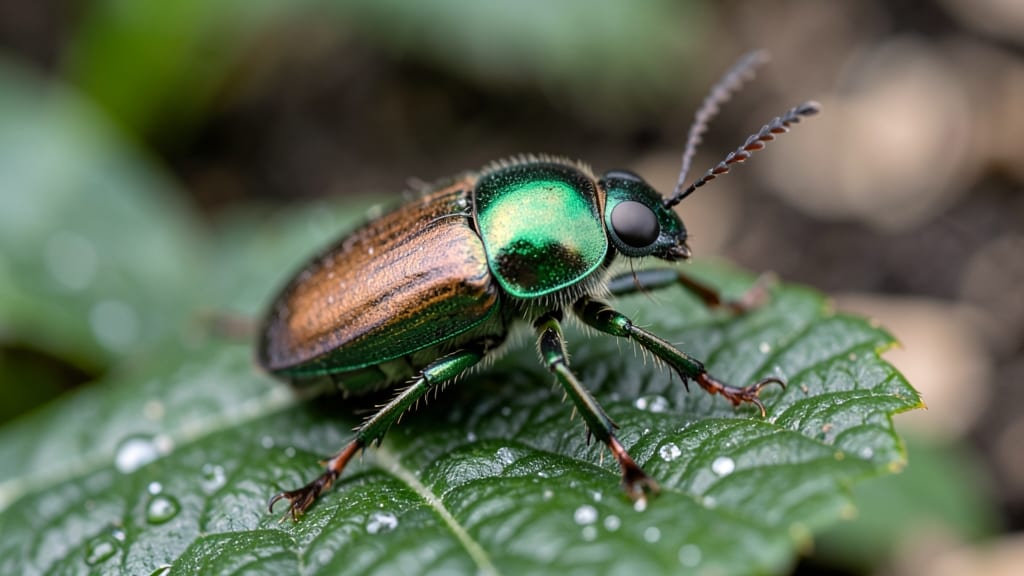
Scout your garden first. Beetles cluster on flowers like roses, grapes, and linden trees, so focus there. Look for their shiny green bodies with copper wings—easy to spot once you know what to hunt. Grab your gear and head out before they scatter.
✂️ Step 2: Collect Beetles Directly
Use your tweezers to pluck beetles off leaves and stems. Grasp them firmly at the thorax—this prevents their legs from kicking and makes the process cleaner. Drop each beetle immediately into the boiling water. You’ll hear a satisfying sizzle as their exoskeletons hit the surface. I like to work in batches of 5-10 beetles at a time to keep the water hot.
If you’re working alone, wear gloves to avoid burns. The key here is speed—beetles are fast, and if one escapes, it’ll fly away before you can catch it. Keep the pot of boiling water close to where you’re collecting to minimize escapes.
💧 Step 3: Maintain the Boiling Water Trap
As you collect beetles, the water will cool. Keep a stovetop burner nearby to reheat it to a full boil between batches. If the water drops below 200°F, it won’t kill the beetles instantly, and they’ll wriggle free. I’ve seen beetles survive in cooler water—don’t let that happen.
For every 10 beetles, add a splash of dish soap to the boiling water. This breaks down their exoskeletons faster and makes cleanup easier. Once the pot is full, let it cool completely before disposing of the carcasses—no one wants to deal with beetle bits later.
🌿 Step 4: Monitor and Repeat Daily
Japanese beetles are relentless, so repeat this process every 2-3 days during their peak season (late June through August). They reproduce quickly, and a single missed day means more beetles to deal with later. I set a reminder on my phone to check my garden at the same time each day—consistency is everything.
Watch for new clusters of beetles on fresh blooms. If you see eggs (small white ovals on grass blades), treat those areas with neem oil to disrupt their life cycle. The goal is to break their numbers before they overwhelm your plants.
🪴 Step 5: Prevent Future Infestations
After you’ve eliminated the current beetles, focus on prevention. Plant trap crops like marigolds or geraniums away from your main garden to lure beetles away. I also apply a kaolin clay barrier to vulnerable plants—it’s messy but effective at deterring them.
Clean up fallen leaves and debris in autumn, as beetles overwinter in the soil. Mulch heavily in late fall to suffocate any remaining grubs. This method isn’t just about catching beetles—it’s about starving their next generation out of existence.
Tips & tricks for eliminating Japanese beetles
Here's what nobody tells you about making this method truly effective—lessons learned from years of beetle wars.
Timing Secret: The 10 AM to 4 PM window is non-negotiable. Beetles are sluggish in cooler mornings and evening breezes make them skittish. I've lost entire batches because I started at 9 AM—they just wouldn't cooperate until after 11. If you're working in a windy area, find sheltered spots where beetles gather in clusters. A light breeze actually helps them stay put on leaves.
Equipment Upgrade: That 2-gallon pot minimum is critical—you'll fill it faster than you think. I use a heavy-duty stainless steel pot with two handles because I inevitably need to move it between garden and stove. For the soapy water backup, I keep a small spray bottle with diluted dish soap (1 tbsp per cup of water) nearby. A few spritzes on escaping beetles will buy you precious seconds to recapture them.
Temperature Watch: Never let that water drop below 200°F—this isn't just about killing them instantly, it's about preventing their exoskeletons from sealing back up. I keep a candy thermometer in the pot to monitor temperature between batches. If you're working in batches of 5-10 beetles, you might need to reheat every 3-4 minutes. Pro tip: Place your pot on a heat-resistant pad or trivet near your garden work area to minimize transfers.
Cleanup Strategy: When your pot is full, let it cool completely before disposing. I pour the cooled water (with beetle remains) into a sealed plastic bag and freeze it overnight. The next morning, I can simply toss the frozen block into my outdoor trash bin—no mess, no smell. For the pot itself, I rinse it immediately with hot water and a splash of vinegar to break down any remaining protein from the beetles.
Pro Tips for Catch Japanese Beetles
- Here's what nobody tells you about making this method truly effective—lessons learned from years of beetle wars.
- Timing Secret: The 10 AM to 4 PM window is non-negotiable. Beetles are sluggish in cooler mornings and evening breeze...
- Equipment Upgrade: That 2-gallon pot minimum is critical—you'll fill it faster than you think. I use a heavy-duty sta...
Frequently asked questions
Got questions about tackling Japanese beetles? You’re not alone—these pesky critters can be tricky! Here are some of the most common concerns, answered in plain English.
When is the best time of day to catch Japanese beetles?
The best time to hunt them is on warm, sunny days between 10 AM and 4 PM. That’s when they’re most active, feeding, and vulnerable. Early morning or late evening? They’ll be hiding—so save your efforts for peak beetle hours!
What if boiling water isn’t an option? Are there other ways to kill them?
If you don’t have boiling water, try these quick fixes:
- Soapy water: Mix dish soap with water in a bucket and dunk beetles in—it disrupts their protective layer.
- Freezing: Pop them in a sealed bag and stick it in the freezer for 24 hours.
- Alcohol or vinegar: Drown them in a 50/50 mix for a fast kill.
How long does it take for Japanese beetle traps to work?
Traps can take a few days to a week to show results, depending on beetle activity in your area. If you’re not seeing progress after 7–10 days, relocate the trap or switch to manual removal (like the boiling water method). Patience is key—but don’t wait too long!
Will killing Japanese beetles help my plants recover?
Yes! These beetles devour leaves, flowers, and fruit, so removing them stops further damage and helps plants bounce back faster. Focus on young beetles (they do the most harm) and repeat treatments every few days during peak season (June–August). Your garden will thank you!
What should I do if I accidentally crush a Japanese beetle?
Don’t panic! While crushing one won’t automatically attract a swarm, it can release pheromones that lure nearby beetles. If it happens, rinse the area with soapy water to mask the scent. Better yet? Use the boiling water method to avoid the mess entirely!
Wrapping up and next steps
Catching Japanese beetles doesn’t have to be a battle—with the right tools and a little persistence, you can protect your garden without harsh chemicals. 🌿 The boiling water method is quick, effective, and eco-friendly, giving you peace of mind while keeping your plants safe.
Once you’ve mastered this technique, you’ll be ready to tackle any future infestations like a pro!
Now that you’re armed with knowledge, take action today! Grab your supplies, head outside, and start reclaiming your garden—your plants will thank you. 🚀 Happy beetle-busting!